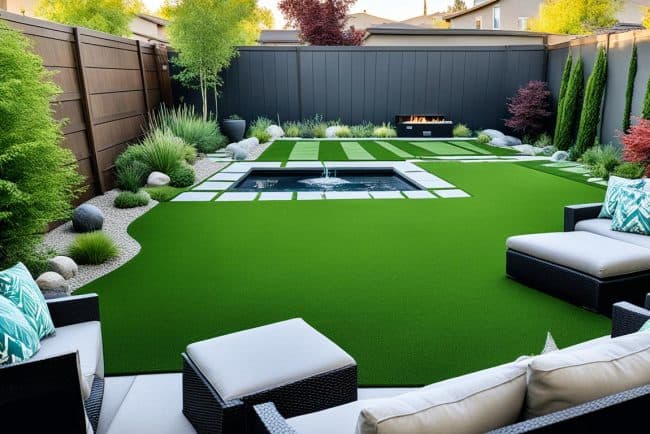
Eco-Friendly Design for Artificial Grass

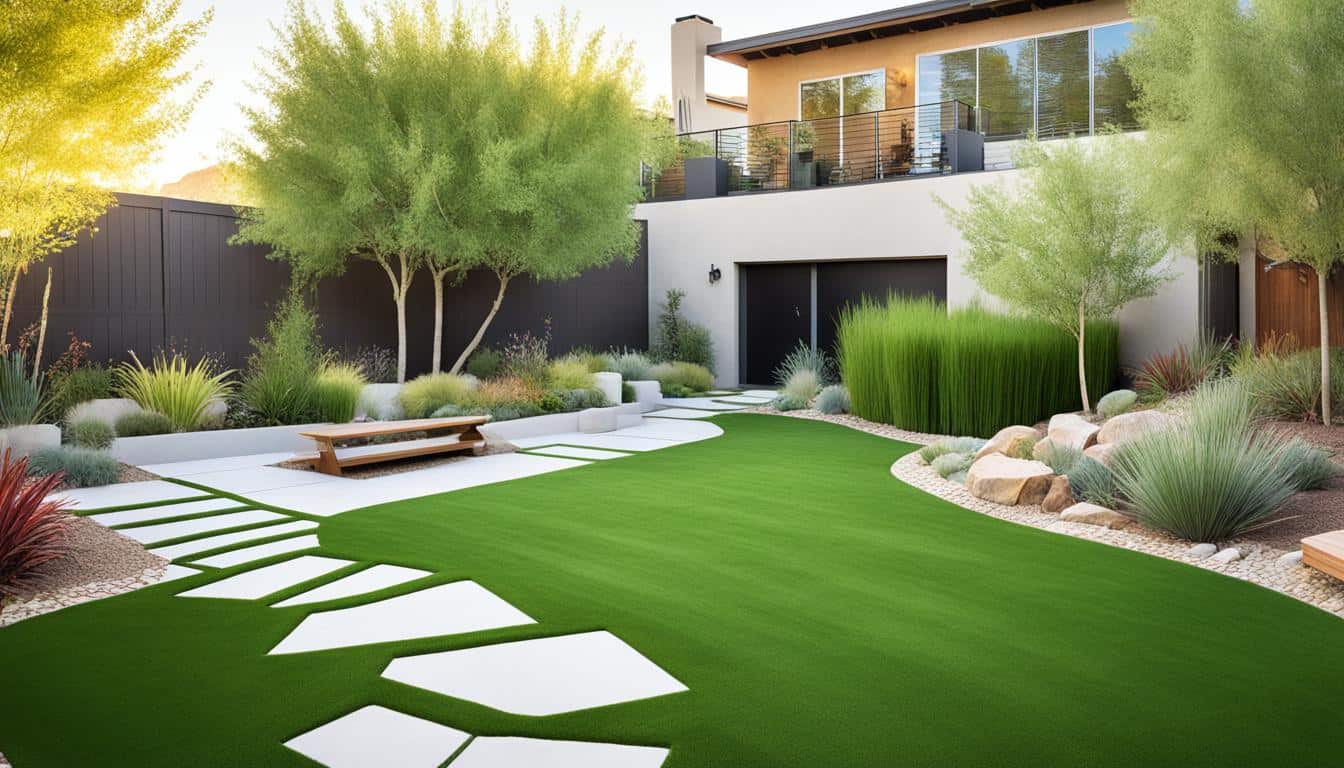
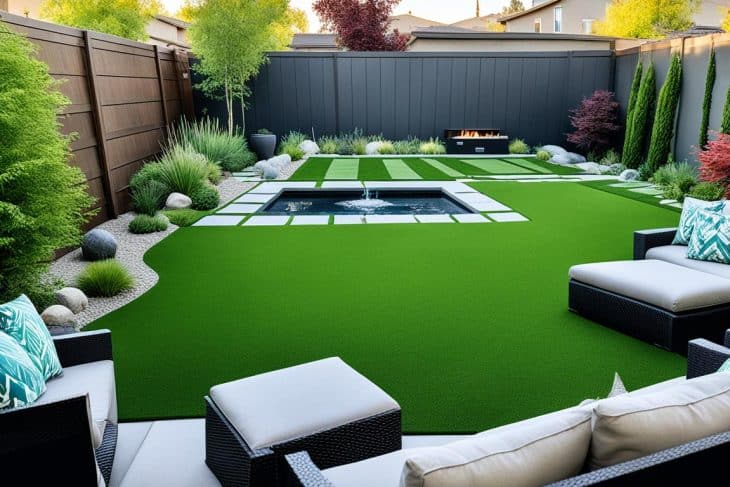
Outdoor water use makes up nearly 30% of a household’s water use in the US, says the Environmental Protection Agency. Many people now choose eco-friendly artificial grass, saving thousands of gallons of water each year. This choice not only looks great but also helps the environment.
By selecting turf made from recycled materials, I help conserve resources and reduce my carbon footprint. It feels good to have a beautiful yard that’s also kind to the planet. Eco-friendly artificial grass is a smart move for the environment and our homes.
The benefits of artificial grass aren’t just about beauty. It’s also safe for my family and pets since it doesn’t need harmful chemicals. Every piece of synthetic grass makes our planet healthier. Let’s explore how choosing eco-friendly artificial grass can make a big difference for our yards and Earth.
Key Takeaways
- Eco-friendly artificial grass saves thousands of gallons of water each year.
- Using artificial grass increases durability and reduces the need for regular maintenance.
- Eliminating harmful chemicals promotes a safer environment for families and pets.
- Sustainable turf options contribute to lower carbon emissions and reduced resource use.
- Artificial grass often features materials that are 100% recyclable, enhancing sustainability.
- Investing in eco-friendly designs results in significant long-term cost savings.
Understanding Eco-Friendly Artificial Grass
Eco-friendly artificial grass is a durable, sustainable choice for landscaping. It uses modern materials that are good for the planet. Learning about its makeup, and how it helps the environment, shows why many homeowners like it.
Definition and Composition
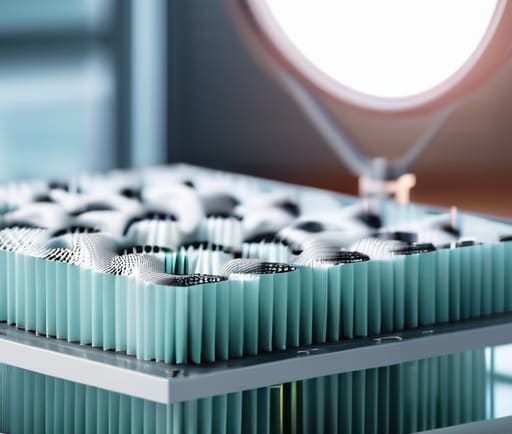
Eco-friendly artificial grass, or synthetic turf, is made with polyethylene, rubber grains, and sand. It includes safe additives like soybean oil, which help it last longer and break down easier. This unique composition makes it different from other types, which aren’t as eco-friendly.
Key Environmental Benefits
The environmental benefits of eco-friendly artificial grass are huge. It helps save up to 22,000 gallons of water each year in a single home. This is big for saving water, especially where drought is common. It also means no need for harmful pesticides, keeping families safe and improving air quality.
Impact on Water Usage
This artificial grass greatly reduces water use since it needs very little irrigation. This means lower water bills and less work in the yard for homeowners. Its installation supports green living, making it popular with those who care about the planet.
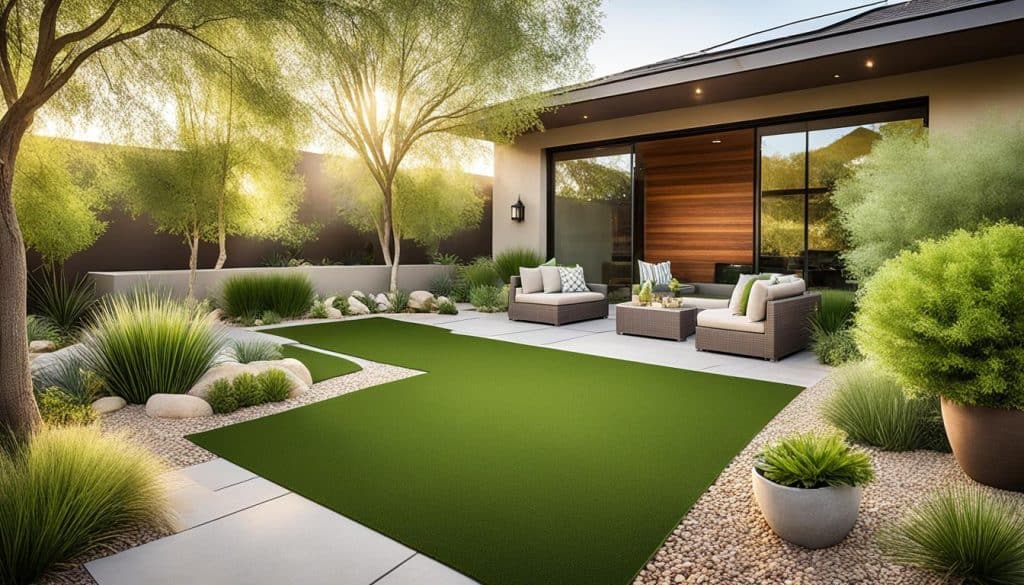
Eco-Friendly Design: Benefits of Sustainable Turf
Sustainable turf offers many advantages that go beyond just looking good. It shows the value of water saving, health, and safety benefits that come with choosing synthetic lawns. This choice is part of a bigger movement towards eco-friendly designs.
Water Conservation and Cost Savings
Saving water is a major benefit of sustainable turf. Traditional grass can use about 320 gallons of water each day. Synthetic turf doesn’t need water, which saves money on water bills and helps local water supplies. In fact, real grass uses about 55 gallons of water per square foot every year. Switching to synthetic grass is a way to fight against high water use in homes.
Choosing sustainable turf also means spending less on maintenance. Without the need for weekly lawn mowing, you cut down on pollution. This is like not driving a car over 300 miles every week. It can reduce a family’s carbon footprint by around 480 pounds each year.
Health and Safety Benefits
Sustainable turf brings health and safety perks for people and the planet. It’s often made from recycled materials like eco-friendly rubber from tires. This promotes recycling and keeps waste out of landfills. It helps create a cleaner and safer environment.
With synthetic lawns, there’s no need for harmful chemicals used in maintaining regular grass. This means healthier soil and waterways, leading to a better ecosystem. Synthetic turf also stops harmful runoff, such as grass bits, from entering our rivers, leading to cleaner water.
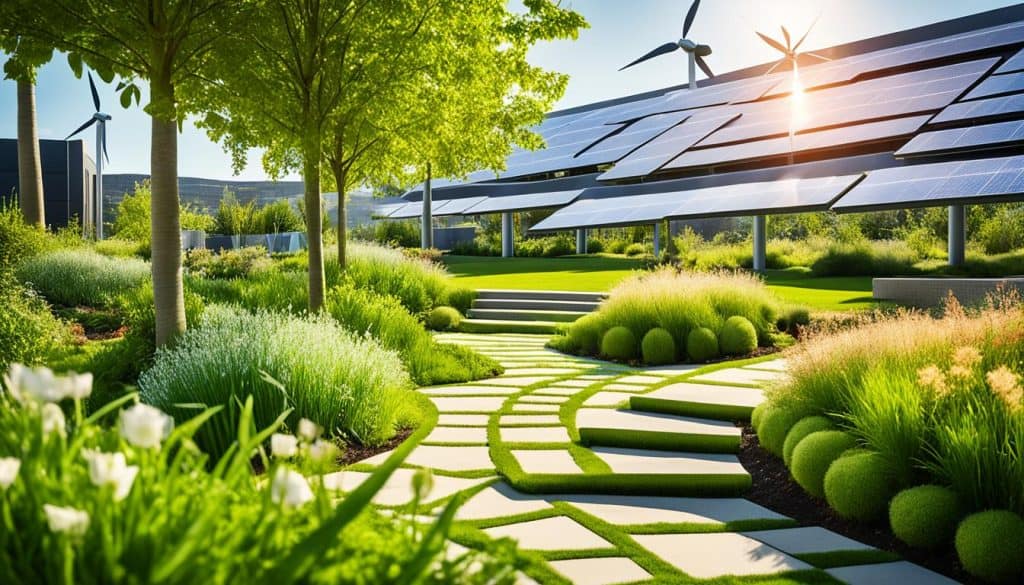
In summary, choosing sustainable turf helps conserve water and saves money. It also avoids harmful chemicals, making outdoor areas safer and healthier. This is good for both families and the environment.
Installation of Eco-Friendly Artificial Grass
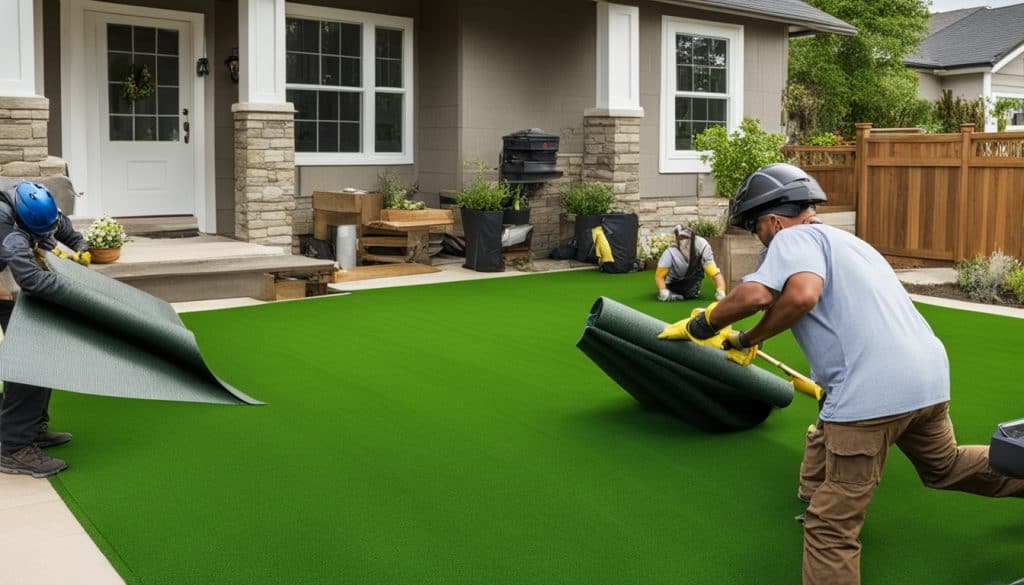
Putting in eco-friendly artificial grass comes with many pluses, especially for making a green outdoor space. It’s key to get the area ready right so it lasts. Let me walk you through what needs to be done, starting with clearing the spot well.
Clear the Area for Installation
To start, I make sure to clear out where the grass will go. That means getting rid of old grass, trash, and weeds. This step is very important for a flat surface, which helps with drainage and lays the turf better. If the ground isn’t prepared well, you could end up with bumps and uneven spots that look bad and don’t work right.
Add a Base Layer for Stability
Next, I put down a base layer to add stability. This base acts like a foundation for the artificial grass, giving it extra support and keeping it from moving. Usually, it’s made of crushed rock or another solid material that drains well. A solid base layer makes the grass last longer and helps save water by managing runoff. This keeps your turf looking good and green-friendly for a long time.
Maintenance Tips for Eco-Friendly Turf
Keeping your eco-friendly turf in top shape is key. Tips for good turf care can make it last longer and stay beautiful. This involves regular cleaning, such as brushing and rinsing, and removing any debris correctly.
Regular Brushing and Rinsing
For great looking turf, brush it often. This keeps the fibers straight and attractive. Washing it gets rid of dirt and keeps it fresh. I suggest cleaning the turf weekly, especially if it gets a lot of use. Doing this keeps your turf clean and healthy.
Debris Removal Techniques
Removing debris is crucial for your turf’s look and smell. Use plastic rakes for this. It prevents harm to the turf and infill. Make debris clearing a regular task. This avoids bad smells and keeps your lawn looking and feeling great.
Customizable Options in Eco-Friendly Design
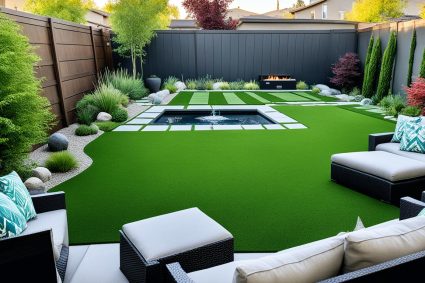
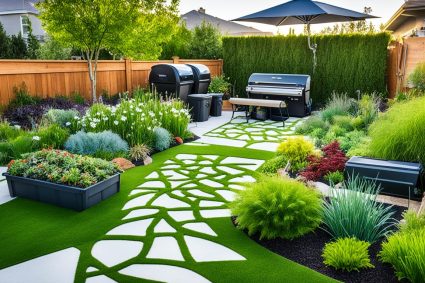
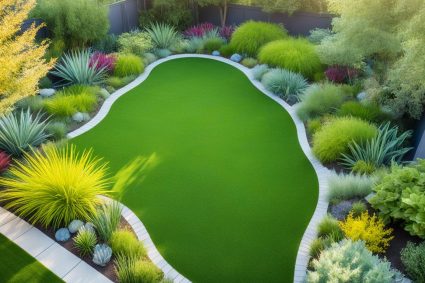
Exploring eco-friendly design for artificial grass reveals a wide range of customizable options. These options let me choose colors, lengths, and textures. They fit my landscaping needs perfectly. Whether it’s a bright green or a more natural look, the choices available let me design an outdoor space that suits my style. Plus, it stays eco-friendly.
Customizable artificial grass improves my garden’s look and supports my green values. It lets me adjust the product to what I like, keeping my outdoor area fresh. By doing this, I can make a lawn that looks great and is good for the planet. This flexibility is key to creating a green lawn that matches my taste and helps the environment.
Choosing artificial grass with these options makes me feel I’m choosing wisely for my outdoor space. It mixes good looks with green living, making a yard that’s both pretty and kind to the earth. This choice underlines my pledge to be eco-friendly in my home’s design.