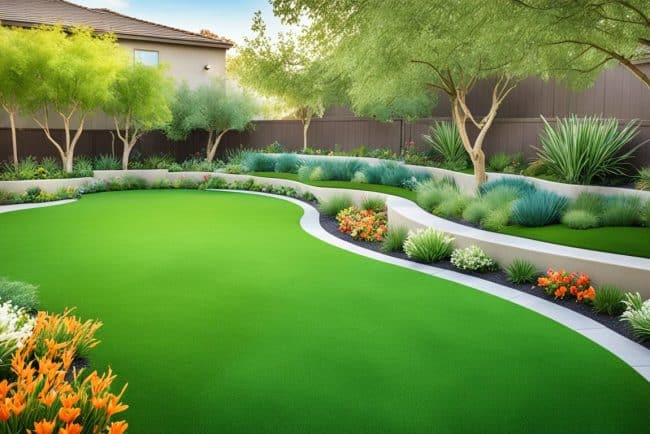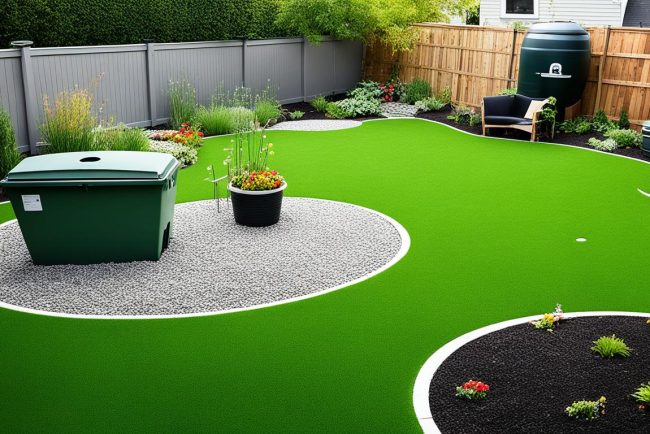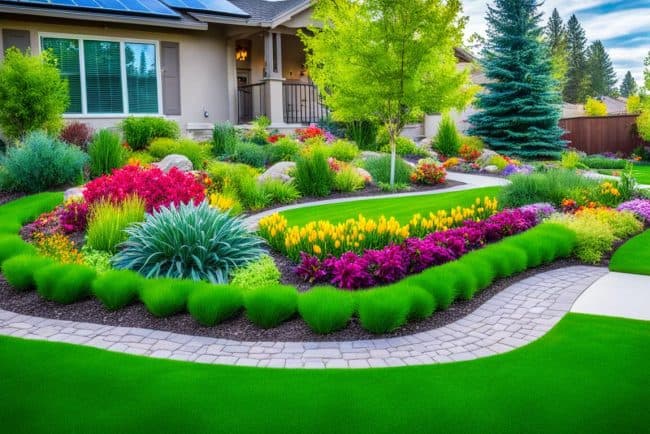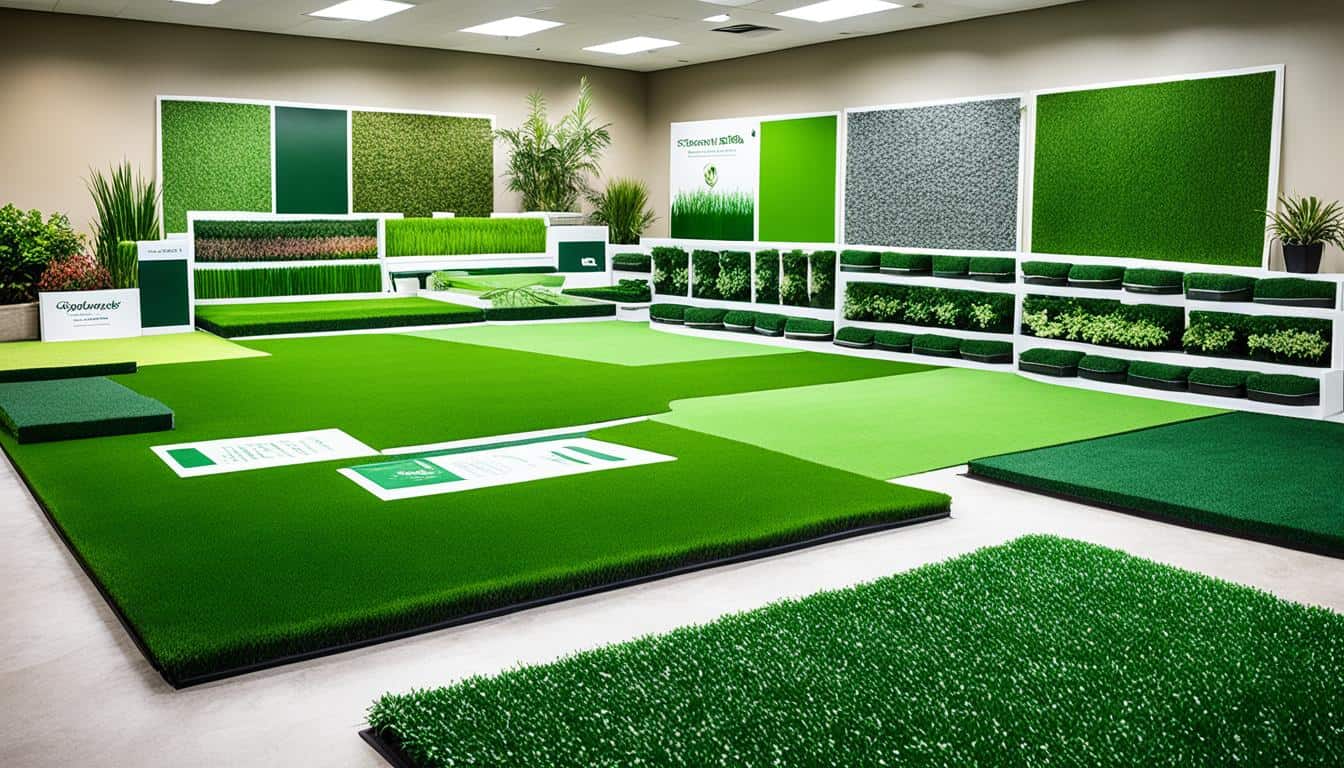
Welcome to my comprehensive guide on the top synthetic lawns. The rise of artificial turf makes picking the right one vital. It boosts your outdoor area and cuts down on upkeep. This introduction sets the stage for my in-depth synthetic turf reviews ahead. It helps you make wise decisions for your yard.
We’ll look at top-quality artificial grass focusing on key aspects like face weight and pile height. The aim is to choose grass that looks good and lasts long. I’ve pulled together expert advice and thorough research for you. Let’s explore these best artificial grass options and possibly find the perfect match for your lawn.
Understanding Artificial Grass: A Comprehensive Overview
In recent times, picking artificial grass has become a must for those wanting better outdoor areas. Many choose this fake grass because it has many pluses. It’s used a lot, from homes to businesses.
What is Artificial Grass?
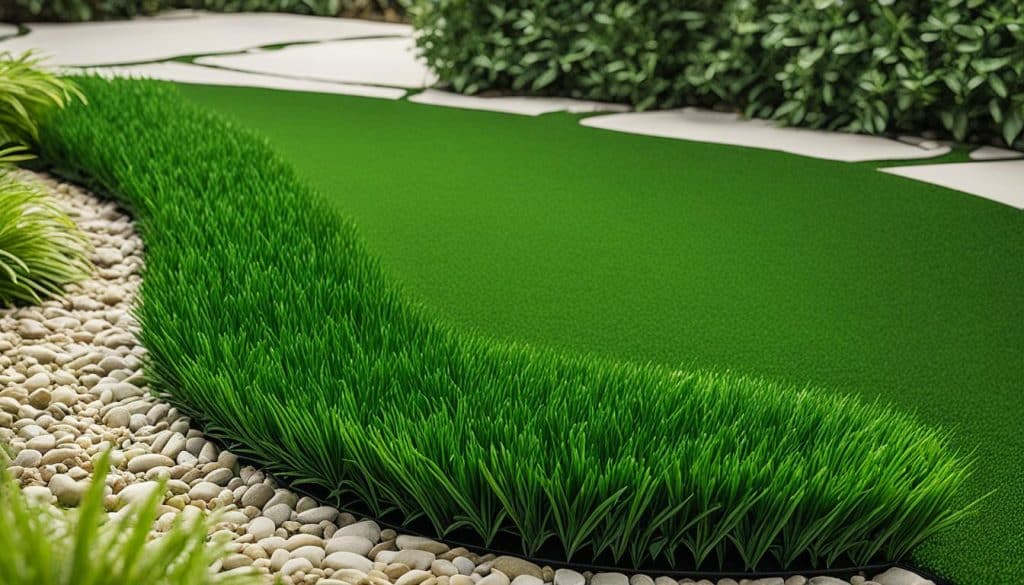
Artificial grass is fake strands that look like real grass. It’s made from materials like polyethylene, polypropylene, and nylon. Different kinds are good for various places. You can use artificial grass for many things, from gardens to business spots.
Benefits of Artificial Grass
Synthetic turf looks good and has lots of benefits:
- Year-Round Greenness: It always looks fresh and green, no matter the season.
- Low Maintenance: Easy to take care of, no need for mowing or watering.
- Safety: It’s safe around pools because there’s no chemical risk.
- Durability: Lasts a long time, between 15-20 years, if you keep it up well.
Popular Uses for Synthetic Turf
Synthetic turf’s flexibility means it’s great for many places. Here are some common uses:
- Residential lawns
- Commercial landscapes
- Playgrounds and recreational areas
- Pool sides, helping with too much water and people walking around.
How to Choose the Best Artificial Grass for Your Needs
Choosing artificial grass comes down to many important things that affect how it looks and works outdoors. Knowing these things helps make sure you pick the perfect synthetic turf. You’ll need to think about where you’ll use it, how it looks, and the grass’s physical traits.
Factors to Consider When Selecting Synthetic Grass
From my experience, picking synthetic grass means considering a few key points. These points include:
- Intended Use: Decide if the grass is for play areas, decorative spots, or sports fields. This choice impacts the kind of grass you need.
- Foot Traffic: High-traffic areas need tough turf that stays looking good.
- Aesthetics: Grass appearance is key. Short grass looks neat, while longer grass feels lush and soft.
- Climate Considerations: Some grass types do better in certain climates, especially in extreme heat or rain.
Pile Height, Weight, and Density Explained
Pile height is crucial when choosing artificial grass. It usually varies from 0.5 to 4.0 inches. For busy areas, you want a pile height of 2.5 to 3.0 inches. However, less busy spots do well with grass that’s 3.5 to 4.0 inches tall. The height affects how the grass looks and its durability against foot traffic.
The weight of the grass is also important because it relates to its density. Face weights range from 30 to 90 ounces per square yard. For places near water, like by a pool, at least 70 ounces per square yard is best for toughness and handling foot traffic. A higher weight means denser, higher-quality grass that lasts longer.
Looking at both pile height and grass density helps choose turf that meets your needs well. These choices help you make a smart pick and ensure a lovely, welcoming outdoor space.
Artificial Lawn Picks: My Top Recommendations
In my quest for top-notch artificial grass, I discovered several standout choices. They boast high quality and adaptability. My favorites are durable, look real, and drain water well.
Each option has undergone thorough testing. Things like material quality, how tall the grass is, and protection from the sun were considered.
Detailed Reviews of Each Pick
- Petgrow PG1-4: Great for places with some foot traffic. It has a drainage system that stops water from collecting, perfect for patios and decking areas.
- Goasis Lawn: It looks very real and is UV resistant. This means it keeps its bright color even in sunlight, making your lawn look amazing for a long time.
These options tick all the boxes for important criteria. They are very durable due to high density and can absorb shocks well. This makes them a solid choice for various uses of fake grass.
Criteria for Review Selection
When I reviewed these products, I looked at important aspects:
- Durability: More density means the grass lasts longer, resisting daily wear and tear.
- Authenticity: The grass’s look is key. Realistic textures and colors make your outdoor area welcoming.
- Color Variety: Options with different colors ensure your lawn matches your garden theme.
- Drainage Efficiency: A good backing is essential. It must let water and pet waste drain easily for easy upkeep.
Features That Matter: Understanding Turf Terminology
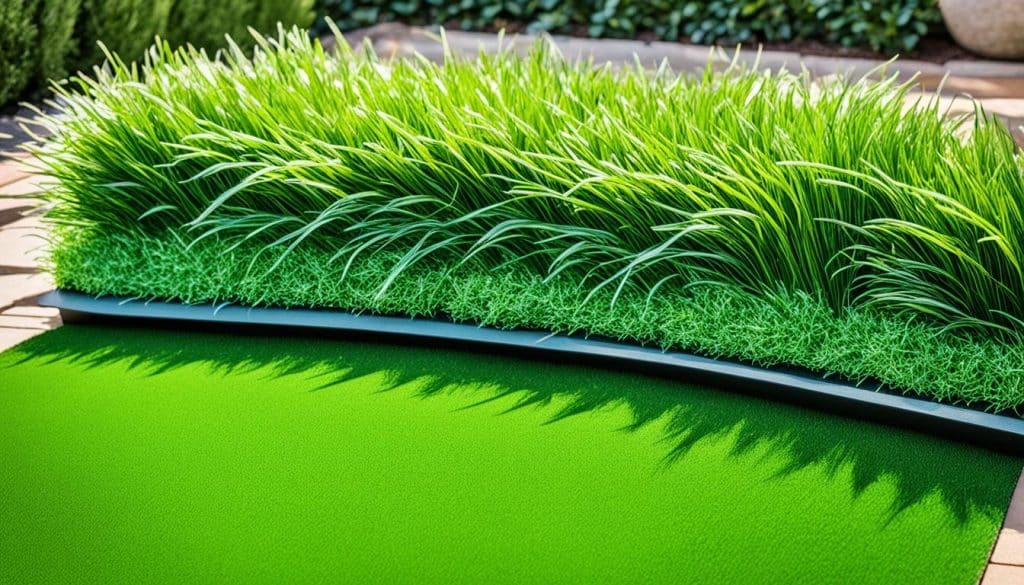
Choosing the right artificial grass is easier when you know some key terms. Every part, from the type of yarn to the backing, matters for how your lawn will look and feel. We’ll look at these important terms to help you make a better choice.
Yarn Types: Polyethylene, Polypropylene, and Nylon
The type of yarn affects the look and feel of your turf. Polyethylene yarn is soft and looks real, perfect for decorative or family yards. Nylon is tough, lasting longer but feels less soft. Polypropylene is good for places that don’t get much foot traffic because it’s affordable but not very durable. Thinking about these yarn types helps pick the best turf for your needs.
Importance of Turf Backing and Drainage
The backing of turf is crucial for water drainage and lasting a long time. A turf with hole-punched backing lets water flow better. This is ideal for wet areas, like around pools. The right drainage keeps your lawn looking great, without puddles.
Role of Infill and Antimicrobial Additives
Infill helps your turf stay in good shape and shields it from the sun. Options include silica granules and rubber. Also, antimicrobial additives keep your turf fresh by fighting off mold and bad smells. These extras contribute to a long-lasting, clean lawn.
Comparing Artificial Grass to Natural Grass
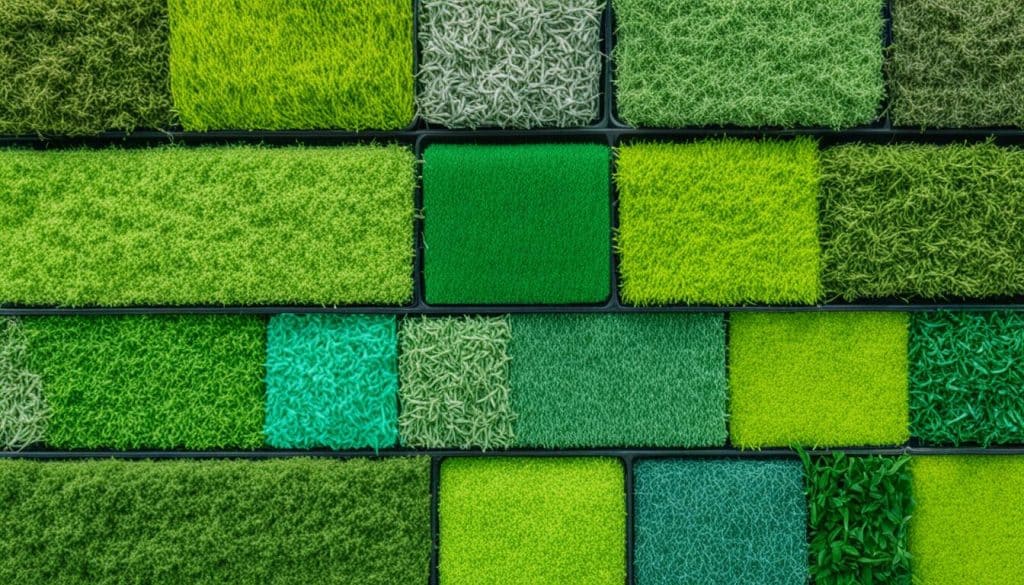
Choosing between artificial and natural grass, especially near pools, involves weighing several pros and cons. Synthetic turf stands out because of its non-slippery surface, cleanliness, and good water drainage. These qualities keep the pool area neat and safe, reducing mud and cleaning efforts. It also cuts down on pests and allergens, making outdoor time more pleasant.
Pros of Synthetic Turf Around Pools
Synthetic turf’s big plus is it needs less upkeep than natural grass. There’s no need for watering, mowing, or fertilizing. This means saving time and money. While artificial grass costs more upfront, around $9,000 for 1,000 square feet, it’s cheaper in the long run. Maintaining real grass can cost up to $35,500 over 25 years, making the synthetic option attractive.
Cons: What to Consider About Artificial Grass
However, artificial grass has its downsides too. The initial cost is high, and it can get hot in direct sun. Also, keeping it smelling fresh, especially with pets, may require additional upkeep. Knowing these points helps weigh artificial versus natural grass carefully. This enables me to choose what best fits my yard and lifestyle.