Did you know an artificial lawn can last nearly 20 years? This fact is impressive given how natural grass often needs lots of care and water. In this piece, we’ll delve into common questions about synthetic grass. From safety and environmental benefits to installation and upkeep, everything you need to know is here. If you’re thinking about getting artificial grass, this guide will ease your worries and highlight its advantages.
Key Takeaways
- Artificial grass is designed to last between 10 to 20 years, depending on usage and quality.
- Installation generally takes one to three days for standard residential applications.
- Artificial lawns are eco-friendly and can significantly conserve water resources.
- Costs for artificial grass can vary widely, from $9.99 to $28.95 per square meter.
- Quality landscaping can yield a return on investment of up to 100%.
- Maintenance is minimal; regular rinsing and brushing keep your lawn looking fresh.
- Warranties often cover fading, workmanship, and materials, ensuring long-term satisfaction.
What is Artificial Lawn and How Does it Work?
Artificial lawn is a modern solution that looks like real grass. It offers many practical benefits. It uses special materials and technology for durability and beauty. Understanding the artificial lawn definition shows why it’s becoming so popular.
Understanding Synthetic Grass
Synthetic grass is made from high-quality fibers that feel like real grass. The making of synthetic grass includes steps like extrusion and tufting. This makes turf that comes in different lengths and textures. Knowing how artificial grass works helps us see its benefits.
Applications of Artificial Grass
Synthetic grass is very versatile. It’s great for homes because it needs little upkeep and stands up to weather. It’s also used in places like sports fields and parks. Synthetic grass looks good and is better for the environment than regular grass.
Environmental Impact of Artificial Lawn
Many homeowners like artificial grass for its good looks and low upkeep. But, we must think about what it does to our planet. It offers a green look all year without the hard work of real grass. Yet, its impact on our environment needs close attention.
Is Artificial Grass Safe for the Environment?
Artificial grass can harm our environment in several ways. Creating and keeping it up adds 527 tons of CO2 equivalents, which is a lot. It’s made of plastics like polyethylene and polypropylene, which can pollute our waters and lands with tiny plastic bits.
While it’s true that this fake grass doesn’t need harmful chemicals, getting rid of it poses big challenges. Even with possible recycling, too much ends up in dumps since recycling synthetic fibers is tough.
Water Conservation Benefits
Artificial lawns have a big plus: they save a lot of water. Real grass uses up to 30% of a homeowner’s water, especially in hot weather. But fake grass needs no watering at all.
This is great for dry places since it cuts water use. Cities benefit too. Less watering means cleaner rivers and streams because there’s less dirty runoff.
Installation Considerations for Artificial Lawn
Considering artificial grass? It’s important to know about the different surfaces it can go on. This knowledge can save you time and improve your project’s outcome. Artificial grass is versatile. It fits a variety of places meeting both looks and use needs.
Can You Install Artificial Grass on Different Surfaces?
Different surfaces are no problem for artificial grass installations. You can choose from:
- Concrete: This is easy to work with because it needs little prep. Just add a base, roll out the grass, and secure it.
- Natural Soil: If using soil, remove any plants first. You typically remove about 4 inches of turf, then add gravel and granite for a solid base.
- Wooden Decking: Decks need special attention. Make sure there’s good drainage and use infill to keep it stable.
How Long Does Installation Take?
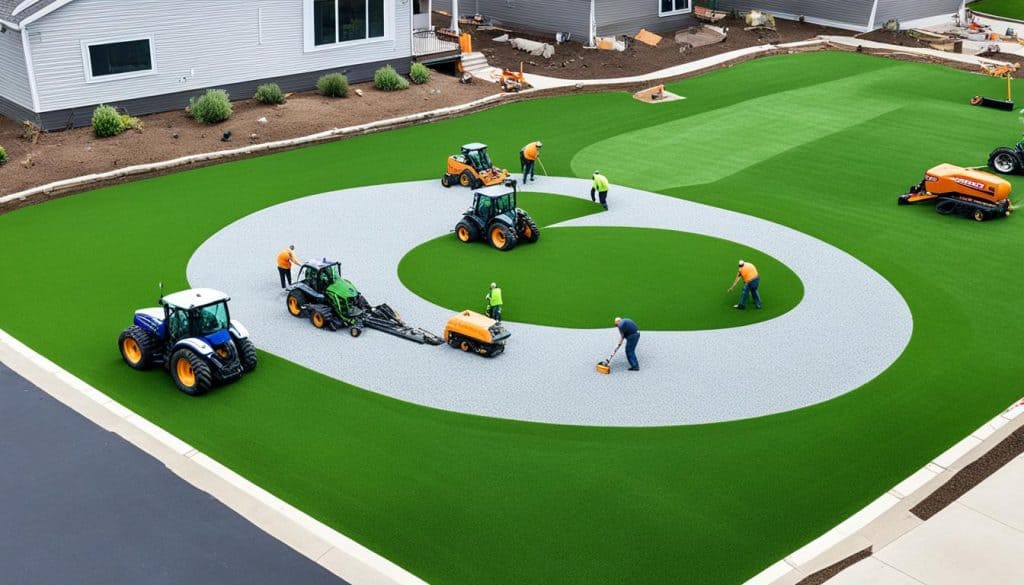
The time to install artificial lawns depends on the project’s size and details. Most are done in a few days. The main factors are:
- Site Preparation: Clearing the site and getting the base ready can affect the timeline.
- Professional Help: Pros can work faster and better than doing it yourself.
- Weather Conditions: Bad weather can cause delays.
Talk to a pro early to get a clear timeline. This helps make sure your artificial grass installation goes well.
Artificial Lawn FAQs
It can be hard to pick the right artificial grass with so many choices out there. Different types meet different needs, like for fun or looks. We’ll answer some common questions about the types of artificial grass and installation costs.
What Types of Artificial Grass are Available?
Knowing the kinds of synthetic turf helps in choosing wisely. The key varieties are:
- Residential turf: Great for yards, gardens, and kids’ play spots.
- Pet-friendly grass: Made tough for animals, with good drainage.
- Sports turf: Tough for sports fields, stands up to a lot of use.
- Landscape turf: For adding greenery without the upkeep of real grass.
How Much Does It Cost to Install Artificial Grass?
Know the costs of artificial grass before you buy. Prices change based on quality and the job’s complexity. Usually, it’s $8 to $20 per square foot. This price includes:
- Quality of turf: Better quality lasts longer and needs less upkeeping.
- Installation size: Bigger jobs may get cheaper rates per square foot.
- Professional installation: Paying for installation helps ensure it lasts long and looks good.
Paying for synthetic grass can save money later, like on water bills—up to 70% within years. It might pay off in just four years. This makes it a smart choice if you want to save money on landscaping.
Maintenance Requirements for Artificial Lawn
Maintaining an artificial lawn is easier than you might think. It just takes some regular care. This care makes sure your synthetic grass looks good and lasts longer. Simple steps such as removing debris and rinsing the turf are key.
How Do I Keep My Artificial Grass Clean?
Cleaning artificial grass is easy. I’ve found that rinsing it regularly helps keep it free of dust, pollen, and pet waste. A quick spray with a garden hose every few weeks does the trick. It keeps the grass looking nice with little effort.
What Maintenance Does Fake Grass Require?
The care needed for artificial grass involves a few key steps. Here’s what I do:
- Remove debris: I make sure to clear off leaves and twigs often.
- Rinse periodically: I use water to get rid of dirt and dust.
- Cross brushing: This helps the blades stand up and look natural.
- Stain management: I quickly clean up any spills to avoid stains.
- Weed control: Sometimes weeds appear, but they’re easy to pull out.
- Moss treatment: In damp areas, I use moss treatment twice a year.
Caring for synthetic grass saves time and money you’d spend on real grass. A little effort keeps my yard looking good. With the right care, it can stay beautiful and useful for 15 to 25 years.
Safety and Health Aspects of Artificial Lawn
The safety of artificial grass is key for families with children and pets. Modern technology has improved artificial grass. This makes it safer. Kid-friendly turf doesn’t have harmful chemicals. Many are made with hypoallergenic materials. They’re good for sensitive skin.
Is Artificial Grass Safe for Kids?
Safety is my top thought for children’s play areas. Kid-friendly turf is softer than real grass. It reduces the impact if a child falls. This is crucial in playgrounds. Some companies do extra safety tests to make play safer.
Companies now check for harmful chemicals in synthetic grass. This makes artificial grass areas safer. Keeping the turf clean is important. It lets kids play without danger.
Is Artificial Grass Dog-Friendly?
Pet owners often ask if dogs are safe on artificial grass. Many types today are pet-safe. They’re tough enough for pets and easy to clean. Good drainage keeps away bad smells. This creates a safe area for pets.
Pet-safe turf means my dog can play without mess or danger. Some turfs are made extra strong for pets. They’re safe for pets to enjoy. The low upkeep gives me peace of mind. I know it’s a good choice for my pets.
Durability and Lifespan of Artificial Lawn
The lifespan of artificial grass often ranges from 20 to 25 years with the right care and installation. It’s toughness depends largely on the materials’ quality and installation methods. A well-built turf base, for example, is key for good drainage and prevents wear.
This base extends the grass’s lifespan by helping it handle daily use well. Warranties from brands like Bella Turf often cover 10 to 15 years. This shows their products are built to last. Yet, artificial grass frequently exceeds these warranty periods, proving its longevity.
However, how much the lawn is used also affects its lifetime. High-traffic areas might wear out quicker than places used less. Regular maintenance is not hard but very important. Removing debris, controlling weeds, and occasional rinsing keeps it in top shape.
Staying ahead of repairs and maintaining its look ensures it stays great for many years. A top-notch artificial lawn cuts down on constant care and boosts property value. It’s a smart choice for those wanting a lovely, enduring yard.