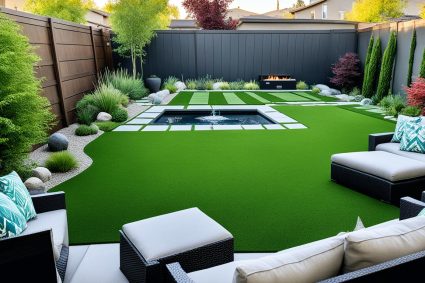
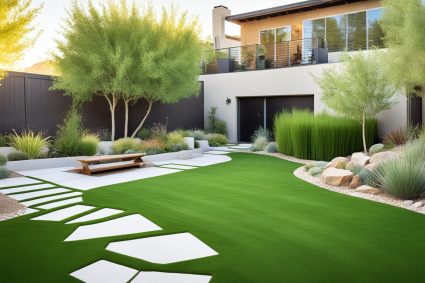
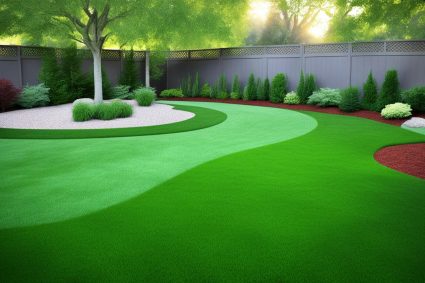
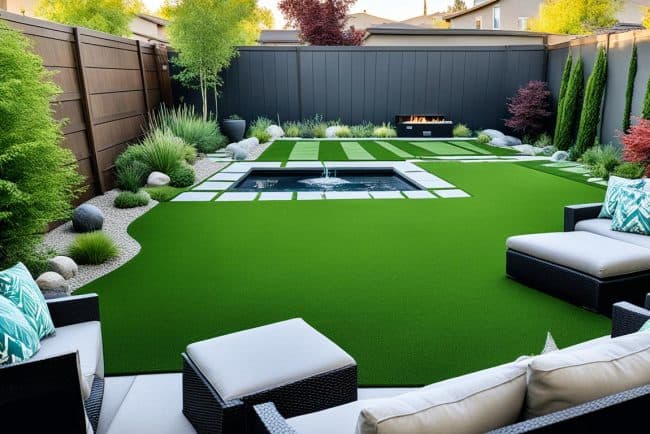
Eco-Friendly Lawn Design with Artificial Turf

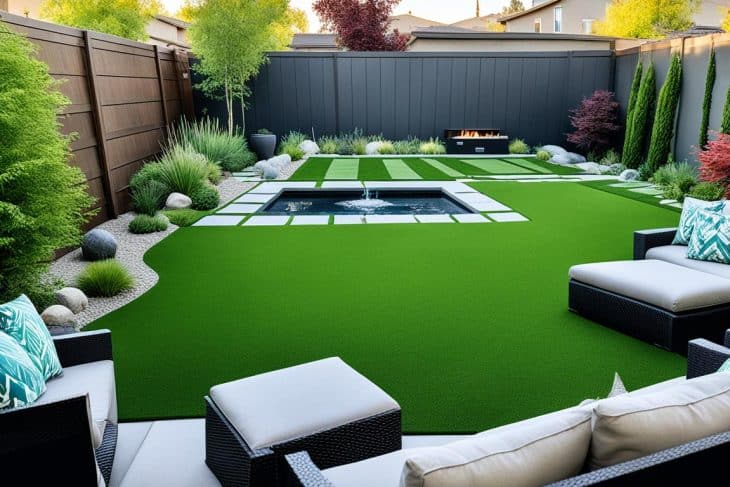
In some parts of the US, regular lawns need more than 50% extra water compared to eco-friendly options. Many people, concerned about the environment and water use, choose eco-friendly lawn design with artificial turf. This choice not only looks great but also saves water and makes lawn care easier on the planet.
Switching to artificial grass cuts down on daily watering and harmful chemical use. I believe it makes your yard look amazing while being kind to the Earth. In this article, we’ll explore the benefits of artificial turf, from the materials used to how it’s installed and cared for. Learn how to get a beautiful, eco-friendly yard.

Understanding Eco-Friendly Artificial Grass
Society now seeks sustainable options for outdoor areas. Eco-friendly artificial grass is a top choice. It looks like real grass but needs less upkeep. Choosing eco-friendly artificial grass makes outdoor spaces look good. It also helps the environment.
What is Eco-Friendly Artificial Grass?
Eco-friendly artificial grass cuts down on water use. It also avoids harmful chemicals. This grass can save a household up to 22,000 gallons of water yearly. It’s made from safe, non-toxic materials. This lessens its environmental impact.
Materials Used in Eco-Friendly Turf
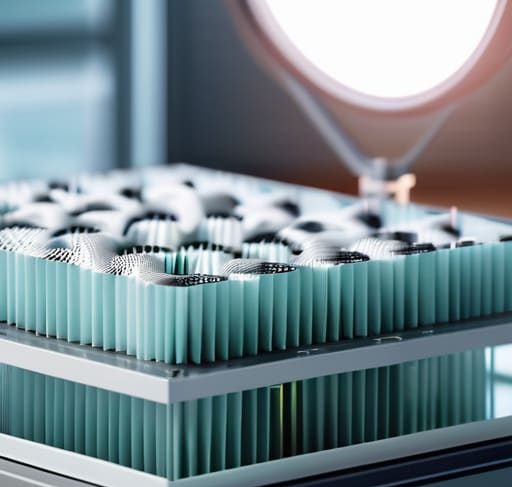
The artificial grass of today uses eco-friendly materials. One example is soybean oil for the backing. Many types also use recycled materials for the fibers. This supports recycling efforts. USDA certification means these products meet strict environmental rules. It helps people trust in their green choices.
Environmental Benefits of Artificial Turf
Artificial turf offers key environmental benefits, including sustainable practices. Its most notable advantage is saving water. Traditional grass needs a lot of water, using up to 300 gallons daily per American household. Artificial grass needs no regular watering, saving thousands of gallons each year. Over turf’s life, the water savings can reach hundreds of thousands of gallons. This huge cutback in water use is vital for conserving the environment.
Water Conservation Achievements
Homeowners who choose artificial turf save water and ease the burden on city water sources. Natural lawns use about 10,000 gallons of water from municipal supplies every year. Synthetic lawns avoid this, letting rainwater help other plants or landscaping. Moving to artificial turf improves local water management. It makes more water available for important needs.
Reduction in Chemical Usage
Switching to artificial turf also cuts down on chemicals. Regular grass needs fertilizers, pesticides, and herbicides, which can harm our ecosystem and health. With artificial turf, these chemicals aren’t necessary. This reduces the use of harmful chemicals in gardens. It keeps kids and pets safe while playing on the lawn. It also helps the environment. Turf makers aim to use non-toxic materials, part of a larger movement to lessen dangerous lawn care chemicals.
Eco-Friendly Lawn Design Principles
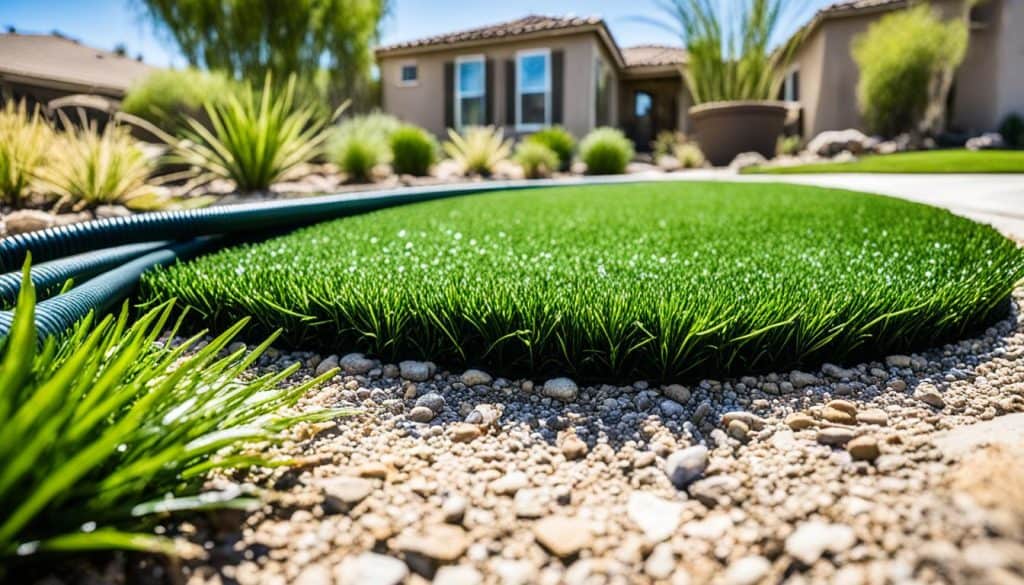
In my quest for a green yard, adding local plants is key. This method boosts my yard’s look and helps nature thrive. By picking various native plants, I make a space where animals can live happily. This also cuts down on yard work and saves water and energy.
Incorporating Native Plants
Using local plants can cut water use by half versus exotic plants. These natives do well in our weather, needing less fertilizer and water. They help make our surroundings sustainable by using what nature gives. Plus, they help local bugs and birds by providing homes and food.
Creating Biodiverse Outdoor Spaces
Creating areas rich in different plants makes a strong, beautiful ecosystem. Using layers of plants, like ground covers and trees, looks good and fights erosion and weeds. It lets over 30 kinds of birds live in my yard, connecting me to nature. Using special paving that lets water through helps the ground absorb rain, keeping things balanced.
| Principle | Benefits |
|---|---|
| Native Plants | Reduce water consumption by up to 50% |
| Biodiversity | Attracts various wildlife, including over 30 bird species |
| Layered Plantings | Reduces soil erosion and weed growth |
| Permeable Surfaces | Minimizes runoff and enhances groundwater recharge |
These green design ideas not only make my yard look great but also show love for the planet. They let me have a thriving garden that’s good for the earth.
Installation of Eco-Friendly Artificial Grass
Installing artificial grass can make any outdoor space look vibrant and is easy to take care of. I see the value in this process as it helps my yard last longer and look nice. Knowing how to do it right will help get a perfect result and keep it working well.
Key Steps for Proper Installation
The first step is clearing the area. This means removing old grass and any litter, to start with a clean surface. Then, I lay a strong base, usually crushed rock or gravel. This base gives stability and helps with drainage. Next, putting down a weed barrier is important. It stops weeds from growing under my synthetic grass, making it last longer.
Laying the turf out nicely is my next move. I use special staples to keep it in place so it won’t shift later on. Lastly, adding the right infill material is key. It keeps the grass standing up and looking real. And it makes the artificial grass comfy for all kinds of fun activities.
Understanding the Base Layer Requirements
Choosing and putting in the base layer is critical for my artificial grass project. A good base supports and drains water to avoid puddles. I often use crushed stone or gravel, pressed down tight. This makes a firm foundation. The base should be 2 to 4 inches thick, depending on how much use the area will get. Here’s a quick look:
| Base Layer Component | Purpose | Recommended Thickness |
|---|---|---|
| Crushed Stone | Stability and drainage | 2 – 4 inches |
| Weed Barrier | Prevent weed growth | N/A |
| Infills Material | Prevent matting and enhance feel | N/A |
Mixing these parts together makes sure my artificial grass looks great and lasts. This means I’ll have a nice outdoor space to enjoy for a long time.
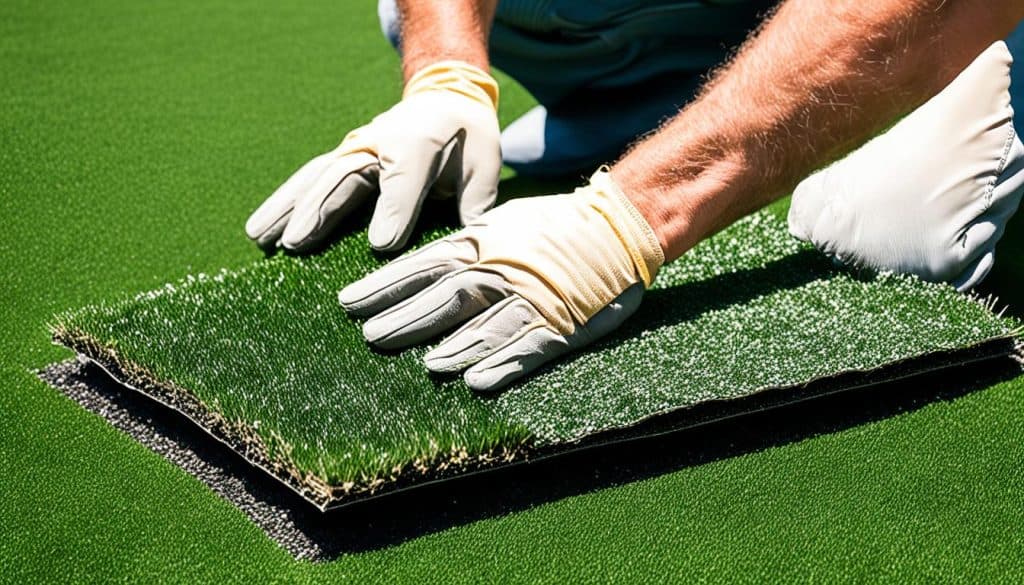
Maintenance for Long-lasting Artificial Turf
To keep my artificial turf looking great, I follow certain maintenance steps. Artificial grass needs little upkeep, but some care is vital. I clean it regularly to keep its bright look and ensure it’s safe for my family and pets.
Essential Maintenance Practices
I regularly clear away leaves and twigs to prevent the turf fibers from matting. I use plastic rakes and leaf blowers to keep it clean. Quickly dealing with spills helps keep my turf looking good and hygienic. I use safe, pet-friendly cleaners for any stains and to keep the area smelling fresh.
Regular Cleaning Recommendations
Rinsing the turf is a main cleaning method for me. It helps remove dirt and small particles. I spot clean any pet messes to prevent smells and stop bacteria from growing. I also pay attention to fall leaf buildup to avoid drainage issues. These steps help my turf last longer and look better.