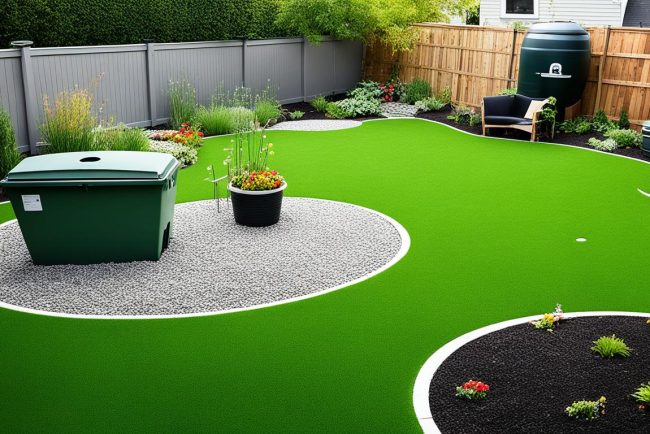
Sustainable Lawn Alternatives with Artificial Grass

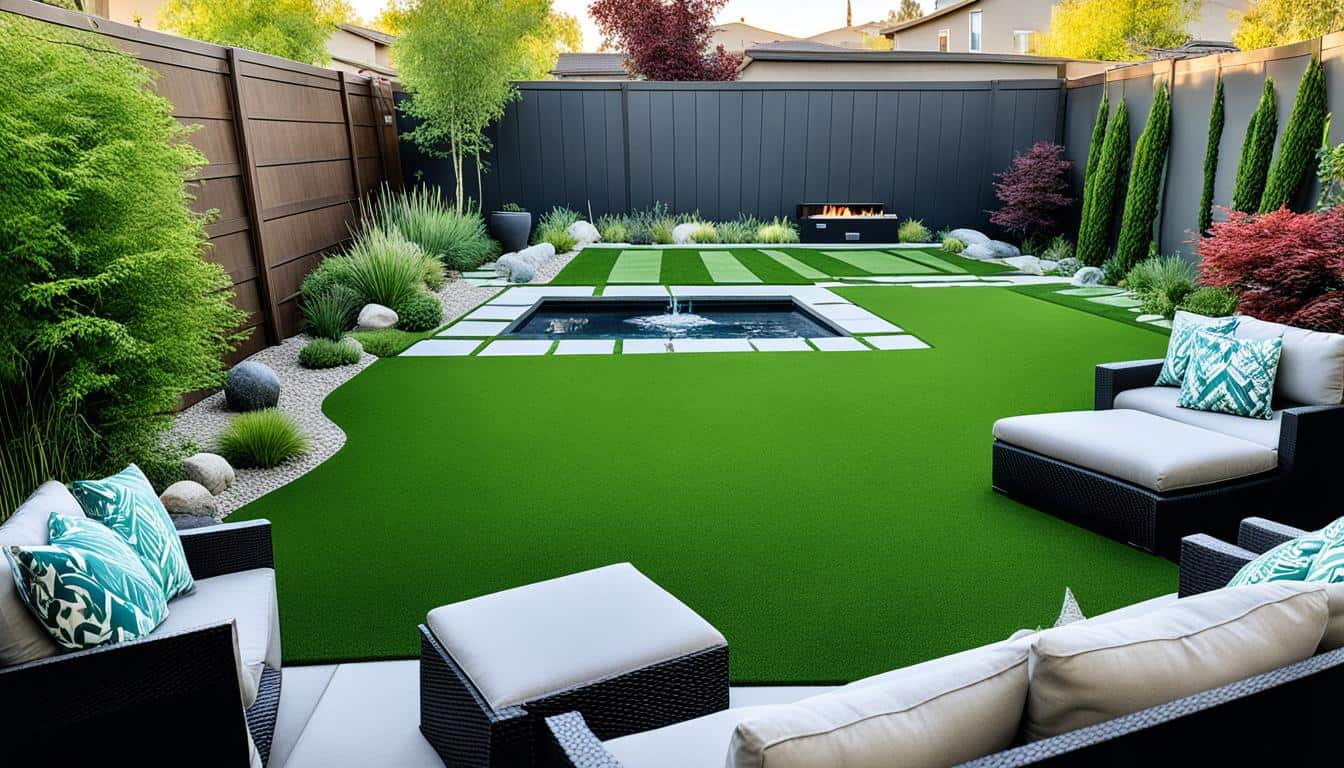
Did you know traditional grass lawns need up to 5 liters of water per 10 square feet? This fact shows why we need sustainable lawn options. As water worries grow, folks like me are picking eco-friendly choices such as artificial grass. These green solutions cut down water use and help our city water systems. Moving to sustainable lawns boosts our local green spaces, making them healthier with less work and cost.
Key Takeaways
- Traditional lawns use lots of water, so we need green alternatives.
- Artificial grass is low in upkeep, perfect for eco-conscious gardens.
- Choosing sustainable lawns helps our planet and reduces carbon footprints.
- Xeriscaping and clover lawns greatly cut down on water needs.
- Switching to alternative yards saves money over time.
Understanding Sustainable Lawn Alternatives
Sustainable lawn care means choosing options that lower our impact on the environment. Traditional lawns need a lot of water, about 3 trillion gallons yearly. They also cause pollution from fertilizers and pesticides. By choosing sustainable landscapes, we help the environment find its balance.
Xeriscaping is about creating beautiful landscapes without needing much water. It’s been around for over 40 years but hasn’t caught on everywhere. Adding plants like clover can cut your water use by 30%. A great choice for this is Pennington Smart Seed Clover + Grass Mix. It makes your lawn drought-resistant and helps pollinators, while also being easy to care for.
There are groundcover plants, like creeping thyme, sedums, and mosses, that don’t need much upkeep. Creeping thyme stays short, can handle dry conditions, and works well in different types of lawns. Moss is good for shady spots and acidic soil, offering a green solution for those searching for lawn alternatives.
Wildflower meadows bring life and color to gardens, drawing in helpful insects. Using the right wildflower seed mix, such as those from Pennington, makes your garden a feast for the eyes and helps nature. This move from neat lawns to lively meadows is good for local wildlife, welcoming hummingbirds and butterflies.
Foodscaping combines beauty and practicality by using edible plants like dinosaur kale and heirloom eggplants in garden designs. This approach not only makes your space look good but also lowers the carbon footprint from food transport. As people learn more about sustainable gardening, many are starting to use these innovative ideas.
Advantages of Artificial Grass for Eco-Friendly Yards
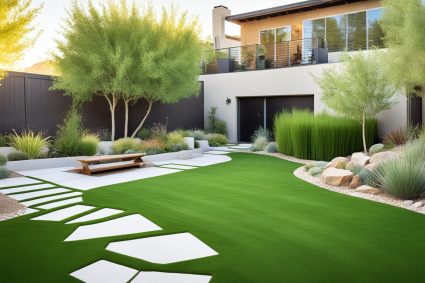
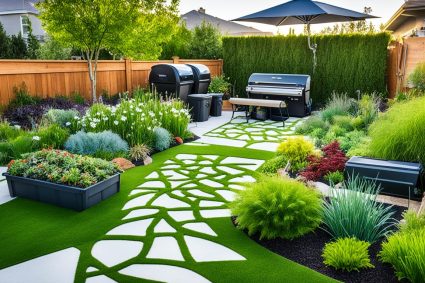
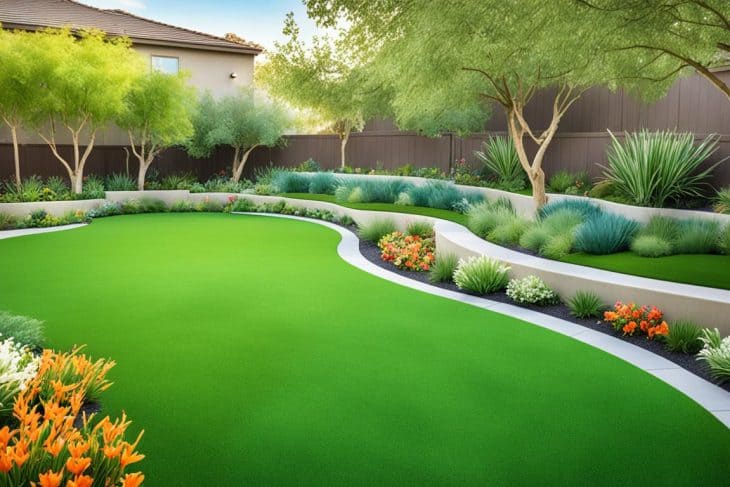
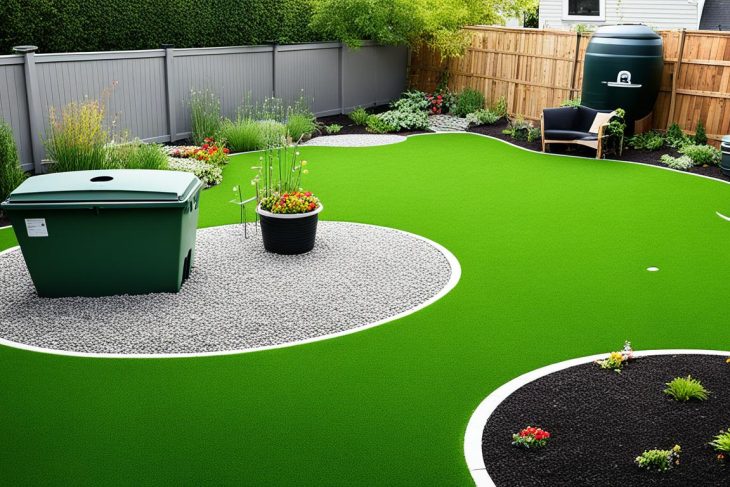
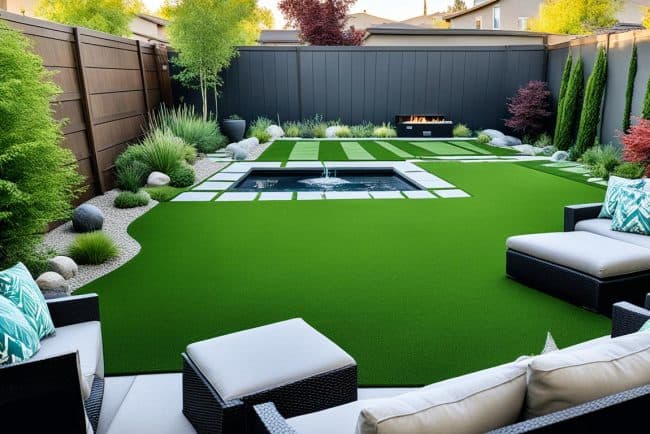
Artificial grass is great for those who care about the environment. It’s really good at water savings. A family can use 22,000 gallons less water a year by choosing synthetic turf. This helps our local water supplies a lot.
Artificial grass also means less air pollution. It doesn’t need mowers or other gas-powered tools, which lowers carbon emissions. Switching to this grass can save money on water and yard care over time.
This type of turf stays green and nice looking all year, even in busy spots. It only needs simple cleaning now and then. This is much easier than the constant work real grass requires.
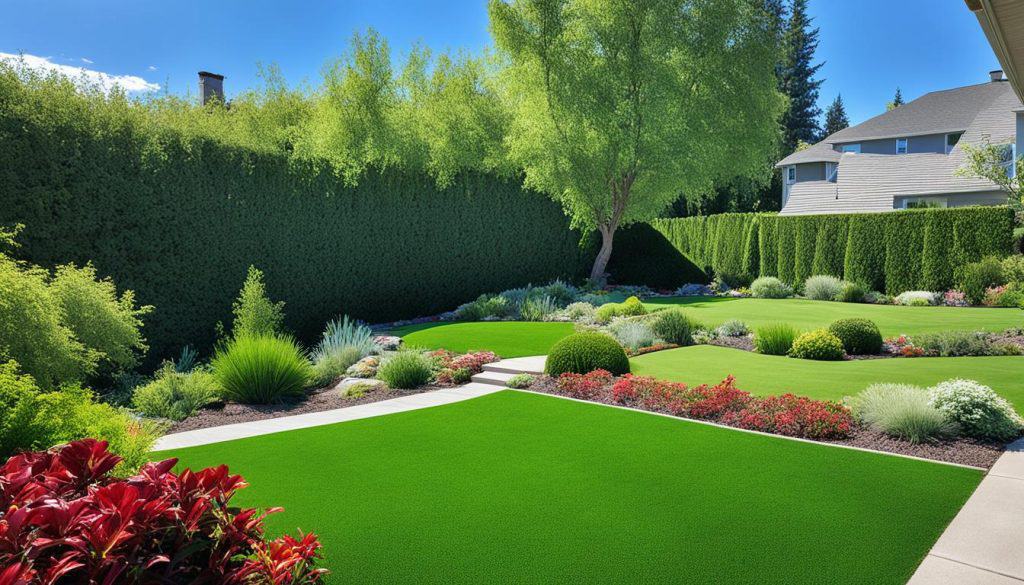
Choosing synthetic grass is also healthier for our planet. It cuts down on the need for chemicals that can harm our water. It makes outdoor areas safer for kids and pets, cutting down on allergens.
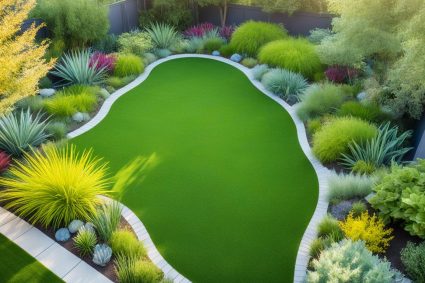
The benefits of artificial grass show how eco-friendly it is. It combines caring for our planet with keeping yards looking good. Families can have lovely green spaces and help the environment too.
Sustainable Lawn Alternatives: Exploring Real Options
Sustainable landscaping is a chance to change how we see our outdoor areas. Lawns use up to 90% of garden water. This pushes many of us to find eco-friendly plants that use fewer resources. Alternatives like groundcovers and native plants save water and make our yards look better.
In Australia, local grass types cut down on water and fertilizer costs. These grasses grow well in their home environment. They’re perfect for eco-friendly landscaping. In places like Maryland, new laws push for landscaping that saves water and helps local wildlife.
I really like alternatives to grass, such as fine leaf fescues and micro-clover. They don’t need much mowing or water. Micro-clover is great because it fixes nitrogen in the soil. It does this naturally and needs little care.
Then, there are groundcovers like creeping Charlie and red creeping thyme. They’re pretty and easy to care for. They grow well in many places without much water. This makes them great for eco-friendly living. Ornamental grasses resist diseases and pests naturally.
Meadow gardens bring in diverse life and don’t need regular mowing. Making a meadow in Maryland can take three years. But, the end result is a lively landscape that helps pollinators. Using sustainable landscaping makes our yards beautiful and helps the planet. Exploring these options lets us create yards that are good for the earth and great to look at.
Groundcovers: A Low-Maintenance Green Turf Option
Groundcovers are becoming a popular choice for those who prefer not to spend much time on lawn care. They are easier to maintain than traditional lawns. Plus, they’re good for the planet. There are many types that fit different needs and looks for your yard.
Best Groundcovers for Your Region
It’s crucial to pick a groundcover that grows well where you live. Here’s a list of some great options:
| Groundcover | Height | Growth Rate | Sunlight Requirement | Water Needs |
|---|---|---|---|---|
| Lilyturf | 8-16 inches | Fills spaces quickly | Partial to full sun | Moderate |
| Creeping Thyme | 3-6 inches | Spreads 6 inches/year | Full sun to partial shade | Less than turf |
| Golden Creeping Jenny | Less than 3 inches | Moderate | Full to partial sun | Requires some watering |
| Clover | 6-12 inches | Spreads quickly | Full sun | Low |
| Creeping Sedums | 4 inches | Drought-tolerant | Full sun | Minimal |
Pros and Cons of Groundcovers
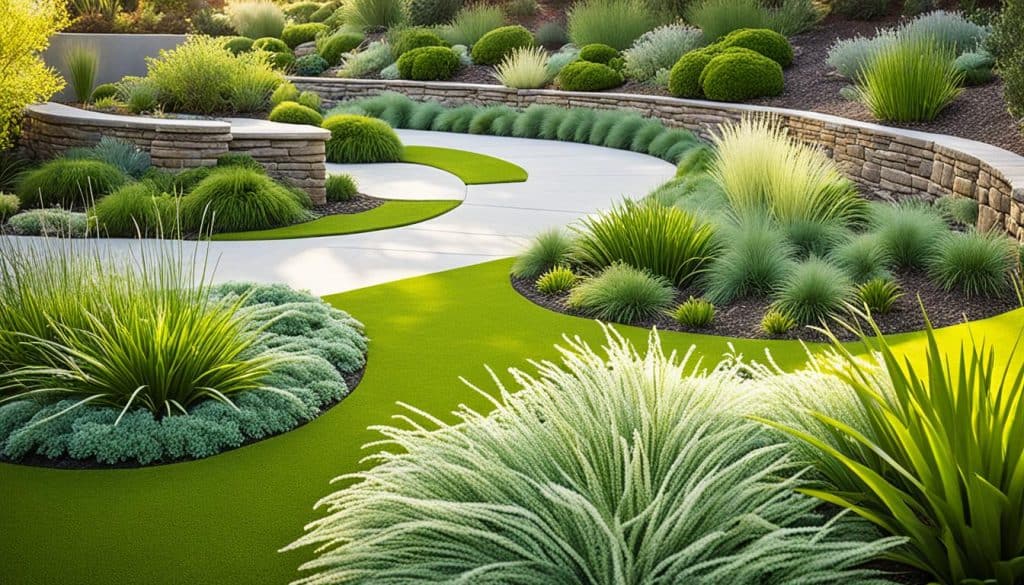
Choosing low-maintenance groundcovers comes with both ups and downs. Their good points include:
- Erosion Control: They keep the soil in place, which is especially helpful on slopes.
- Pollinator Attraction: Many attract bees and butterflies with their flowers.
- Minimal Upkeep: They don’t need much work, saving you time and money.
However, these plants are not perfect. Some might grow too much and invade spaces. They may also take a while to get established.
To keep your yard looking its best, pick the right plants and watch how they grow. This way, you’ll have a yard that’s both easy to care for and good for the environment.
Native Plants: Enhancing Biodiversity in Your Lawn
Using native plants in my yard has been amazing for increasing biodiversity. They fit perfectly with our local weather, needing less water and care. These plants do more than make my yard look nice. They help local animals and promote eco-friendly gardening.
Native species draw in pollinators, which is a big plus. By planting various native flowers, I’ve made a pollinator-friendly garden. This is crucial for bees, butterflies, and other helpful bugs. A lawn full of wildflowers needs little water but supports a lot of wildlife.
Plants like clover improve the soil without needing fake fertilizers. And creeping thyme does great in my garden because it doesn’t need much water and keeps pests away. This is especially handy in dry periods.
Choosing moss is another way to have a yard that’s easy to take care of. It keeps moisture in and helps clean the air. By picking these native plants, I’m helping make a better ecosystem. It’s one without harmful chemicals that hurt important bugs and birds.
I’ve seen good results from natural ways to help the soil, like using lawn clippings and leaf mulch. Adding things like birdhouses brings more wildlife to my yard. It turns my garden into a lively spot for birds and other animals.
If you want your garden to be more eco-friendly, go for native plants. Keeping invasive plants out helps native ones grow well. This careful choice in landscaping makes my place beautiful. It also helps the environment, making a green haven for us all.
Creating Wildflower Meadows for Sustainability
Wildflower landscapes offer a stunning, sustainable choice over regular grass lawns. They’re not just pretty. Low-maintenance meadows boost biodiversity and support local wildlife. In the US, the 24 million acres of lawn harm natural habitats as cities grow. Wildflower meadows can lessen these effects.
There are two meadow types: annual and perennial. Annual meadows need new plants each year and might bring in non-native species. Perennial meadows, however, grow for two to three years but need less care after that. They use native wildflowers and grasses, helping both the look of your garden and the local animals.
Wildflower meadows offer many benefits. The grasses help manage weeds and provide food and shelter for animals. Birds and bugs, crucial for eco-friendly gardens, find homes and meals here. It’s important to pick plants that fit your local climate to make your meadow thrive.
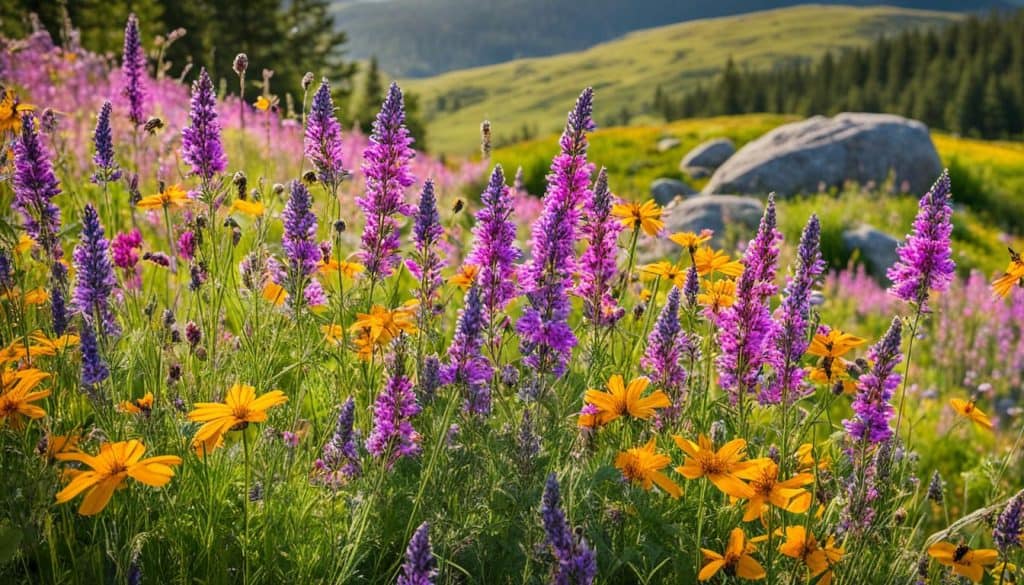
Creating a meadow starts with clearing the old plants. April is a good planting time in most places. Unlike lawns that need lots of work—about 70 hours yearly—meadows only require a few mows. They also save water and fuel by needing less care.
Plus, choosing various native flowers means your garden will bloom in different colors all season. As I turn my yard into a wildflower meadow, I’m helping wildlife and the planet.
| Meadow Type | Maintenance Level | Time to Establish | Habitat Support |
|---|---|---|---|
| Annual | High | 1 Year | Depends on species |
| Perennial | Low | 2-3 Years | Strong |
Reducing Water Usage with No-Mow and Low-Mow Grasses
Choosing no-mow and low-mow grasses helps save water in our gardens. These grass types need little care and grow strong on their own. They have deep roots that can go down 10 feet, needing less water than regular lawns. This is great for saving water, especially in dry places.
Kurapia is a special kind of groundcover that spreads wide and needs little water. It stays green all year and likes sandy soils. There are new kinds, like Kurapia New White and Kurapia Pink, you can buy online. They are tough and look good too.
Buying Kurapia is a smart money choice. For covering about 97 square feet, 72 plugs cost between $173 and $187. Sod for the same area is pricier, ranging from $315 to $340. This choice saves money over time and is better for the planet because it cuts down on mowing.
Changing how you water makes these grasses even better. Watering three times a week for five minutes can cut water use by nearly 60%. This drops weekly water use from 2,250 gallons to around 960 gallons. It shows how efficient these grass types are.
The benefits don’t stop at saving water. Taking care of your lawn this way keeps saving water for the long run. Doing things like aerating and overseeding helps these grasses thrive. Using products like EveryDrop™ makes them even more water-wise.
| Feature | Traditional Turf | No-Mow/Low-Mow Grasses |
|---|---|---|
| Water Requirement | High (varies by species) | Low (e.g., Kurapia) |
| Mowing Frequency | Regular (frequent) | Infrequent to None |
| Maintenance | Regular (fertilizing, weeding) | Minimal (occasional weeding) |
| Cost (approx.) | High (installation + upkeep) | Moderate (initial purchase + low upkeep) |
| Suitability for Drought | Poor | Excellent |
Transforming Your Yard with Rock Gardens and Hardscapes
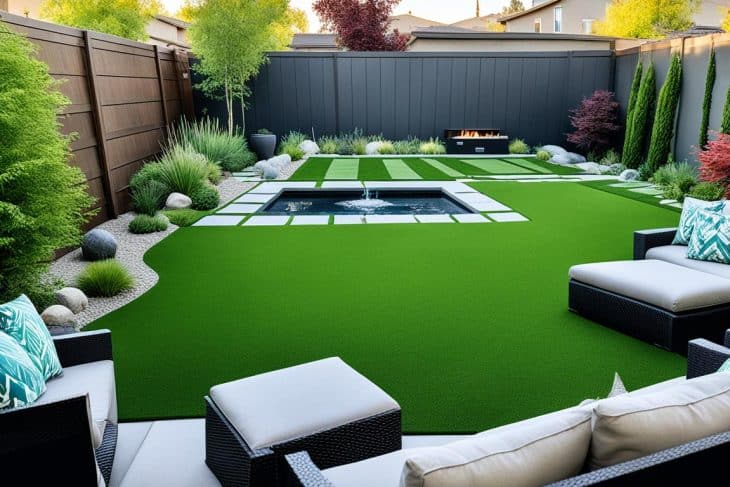
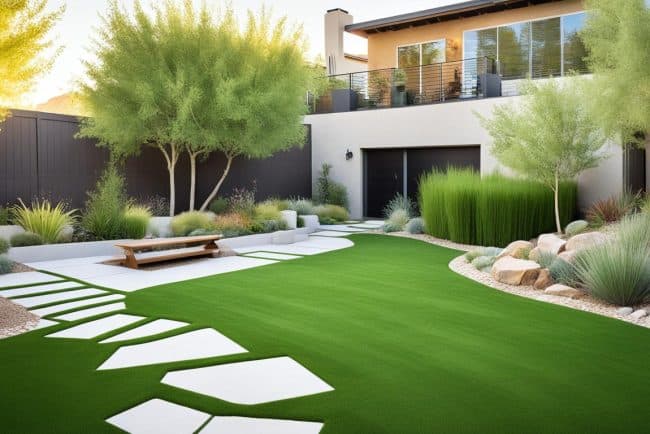
On my path to sustainable landscaping, I found the mix of rock gardens and hardscapes rewarding. They allow me to cut down on regular grass areas while adding exciting features. Using stones, gravel, and sand saves water and cuts maintenance, making outdoor enjoyment easier.
Adopting this method aids in growing drought-resistant gardens. By adding native plants to hardscape designs, I attract helpful wildlife, boosting my yard’s ecosystem. These plants need less fertilizer and pesticides, helping pollinators and reducing greenhouse gases.
To beautify your yard with hardscaping, try mixing rocks, paths, and plants. This blend looks good and is good for the soil and stops erosion. Rock gardens offer a creative outlet and are a top choice for eco-friendly yards, cutting lawn care needs.