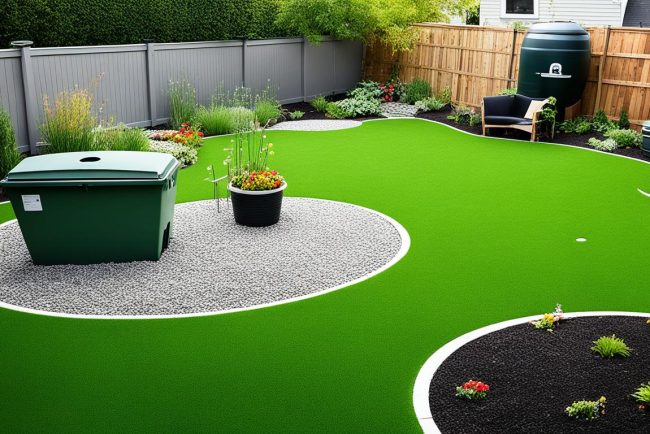
Sustainable Landscaping Tips with Artificial Grass

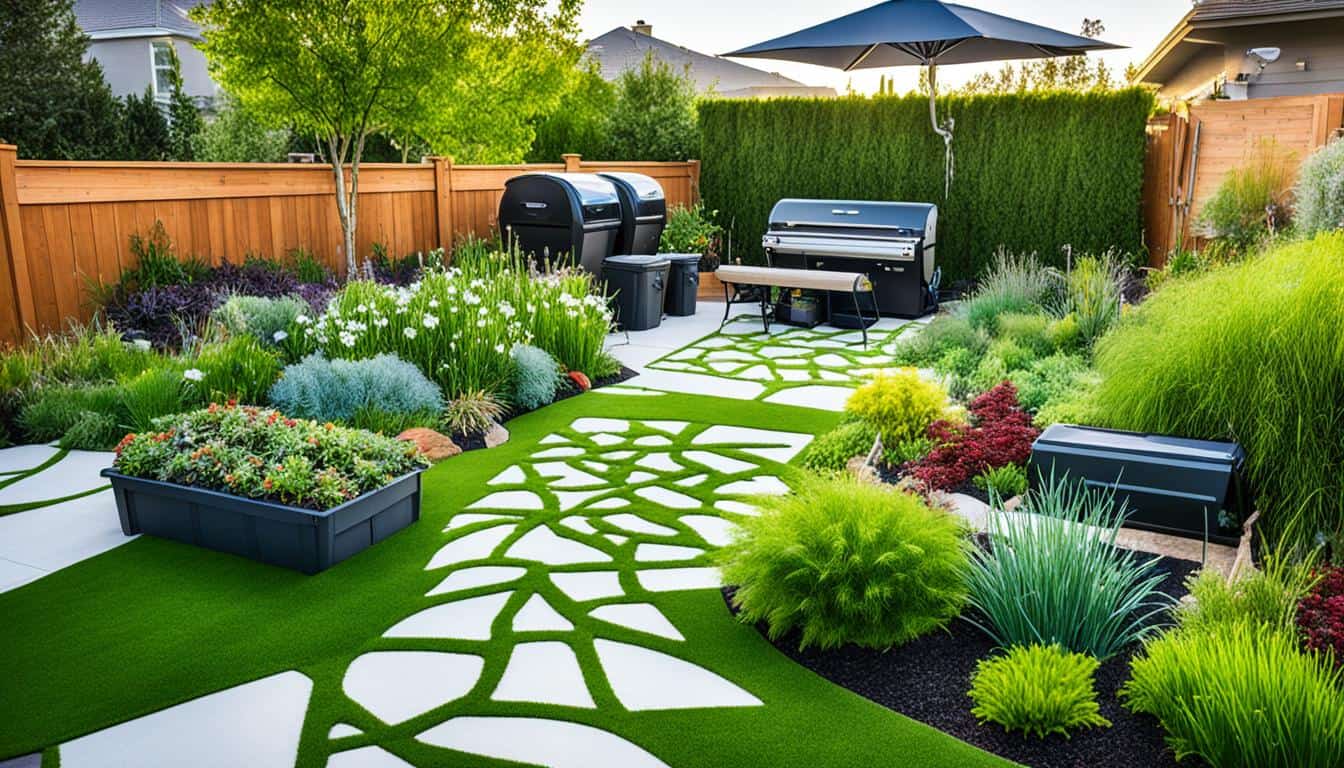
Did you know that traditional lawns use up about 9 billion gallons of water every day in the United States? This huge number points to the need for eco-friendly landscaping options. Artificial grass is a popular choice. It lets you have a beautiful, green lawn without the high water use and maintenance of real grass. By using sustainable landscaping tips that include artificial grass, you can make outdoor areas look great all the time. Plus, you help the environment.
In this article, I’ll talk about the good things artificial grass brings. I’ll also give practical tips for a landscape that needs less water and fewer chemicals. I hope my ideas encourage you to try eco-friendly lawn alternatives for your outdoor areas.
Key Takeaways
- Artificial grass significantly reduces water consumption, making it an eco-friendly alternative.
- Transitioning to sustainable landscaping tips can help create vibrant, low-maintenance green lawns.
- Utilizing eco-friendly turf contributes to minimizing the need for harmful pesticides and fertilizers.
- Artificial grass is durable and can last up to 15 years with proper care, offering long-term cost-effectiveness.
- Embracing sustainable landscaping solutions can enhance biodiversity and reduce noise pollution.
The Role of Artificial Grass in Sustainable Landscaping
Artificial grass is key in sustainable landscaping. It offers many benefits for homeowners and the environment. Its unique features make it a top choice for eco-friendly lawn alternatives.
Advantages of Using Synthetic Turf
There are strong advantages of synthetic turf. Homeowners can save around 55 gallons of water yearly for each square foot of artificial grass. This is great in regions facing water shortages. Also, artificial grass lasts about 10 to 20 years. This reduces the need for replacing it often. Fewer replacements mean less environmental harm from making and throwing away natural grass.
Environmental Benefits of Artificial Grass
The environmental benefits of artificial grass go beyond saving water. It cuts down on greenhouse gas emissions by lessening the use of gas-powered lawn tools. This means the air in our communities gets cleaner. Artificial grass also lowers noise pollution. It does this by removing the need for loud lawn equipment.
Additionally, it barely needs any chemicals to maintain. This avoids the use of dangerous pesticides, fertilizers, and herbicides, which helps the ecosystem. Artificial grass also combats soil erosion. It keeps the soil in place and stops runoff. This supports local wildlife and boosts biodiversity.
Sustainable Landscaping Tips for a Green Lawn
A vibrant and eco-friendly lawn needs smart sustainable gardening methods. These include saving water and using fewer chemicals. It makes your yard look great and helps the planet too.
Water Conservation Techniques
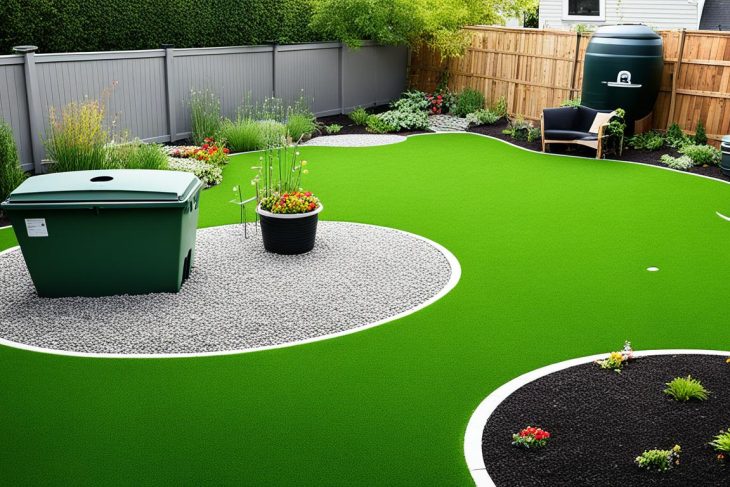
Collecting rainwater is a great way to use less tap water. It helps you depend less on city water. Adding xeriscaping to your lawn care is another smart move. You can use plants that don’t need much water and efficient watering systems. Mulching is an easy step. It keeps the soil moist, stops weeds, and makes the soil healthier.
Grow native plants to save water and help local wildlife. They don’t need much watering and love the local weather. Composting makes your soil rich and cuts down on trash. These steps will make your lawn lush and green.
Reduction in Chemical Utilization
Going green means using fewer chemicals. Native plants fight pests and disease on their own, so they don’t need much help. This keeps the ecosystem healthy and cuts down on water pollution.
Keeping your grass longer, around three inches, helps it grow strong and fights off weeds. That means you won’t need weed killers. Choose electric tools over gas ones to help the environment even more. By using these tips, your lawn can stay beautiful in a natural way.
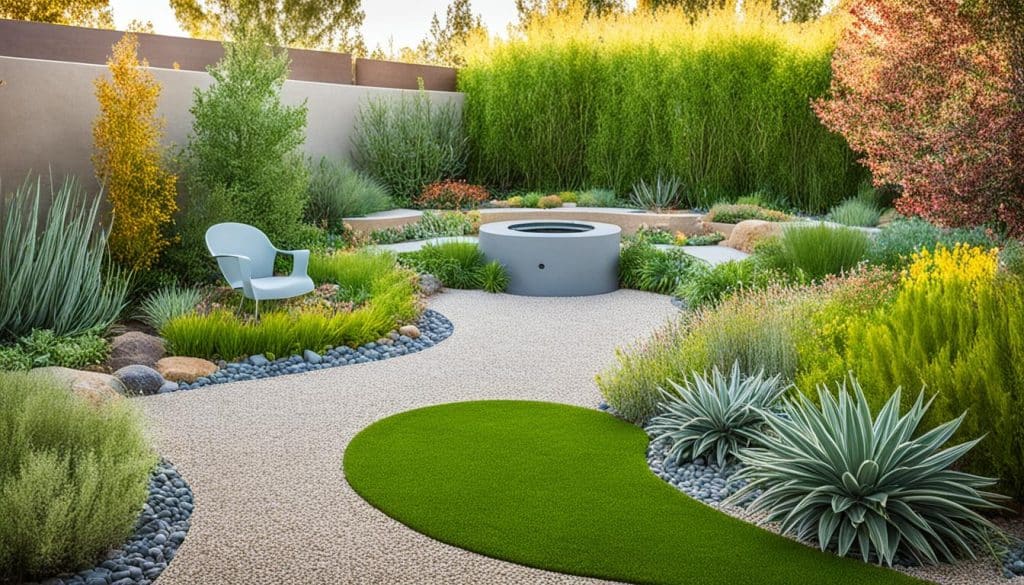
Sustainable Landscaping Tips: Creating Low-Maintenance Spaces
Creating spaces that need little upkeep is key to living sustainably. Low-maintenance landscaping saves time and costs. Using artificial grass is popular for its durability and long life.
Durability and Longevity of Artificial Grass
Synthetic turf stands up well against rough weather. It keeps looking good without needing much repair. From my own experience, artificial grass lasts years with little damage. This makes it a smart pick for lasting use. Choosing tough materials cuts waste and environmental harm from frequent replacements.
Benefits of a Low-Maintenance Lawn
Lawns that are easy to care for offer many pluses. They save homeowners time and money. You mow and water less, and use fewer chemicals. This is good for your wallet and the earth.
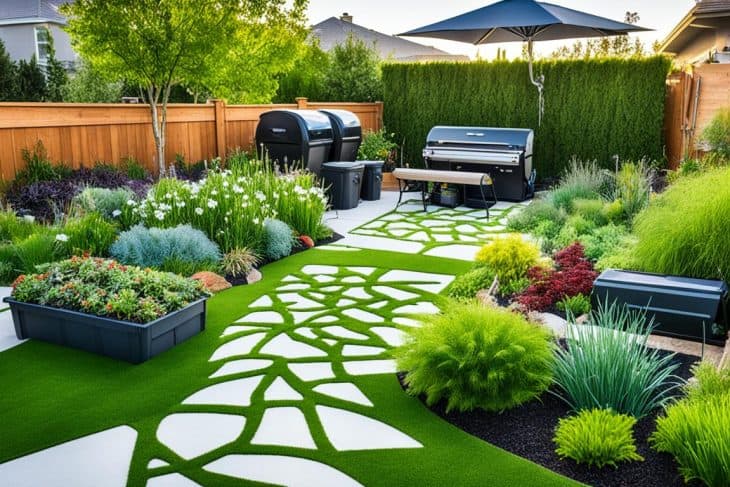
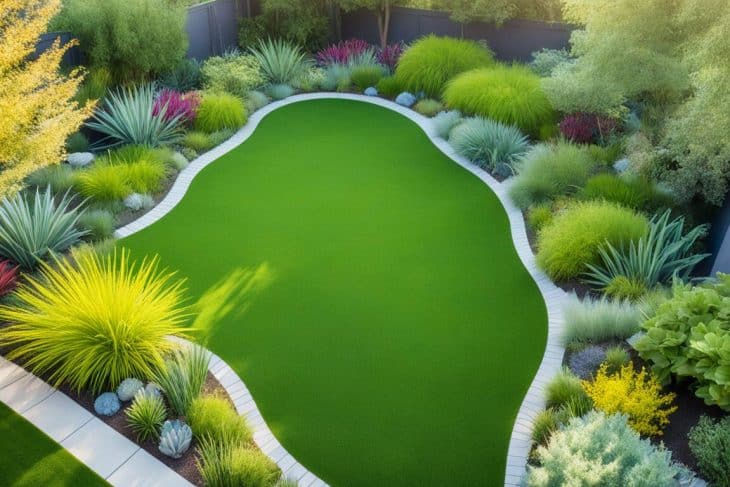
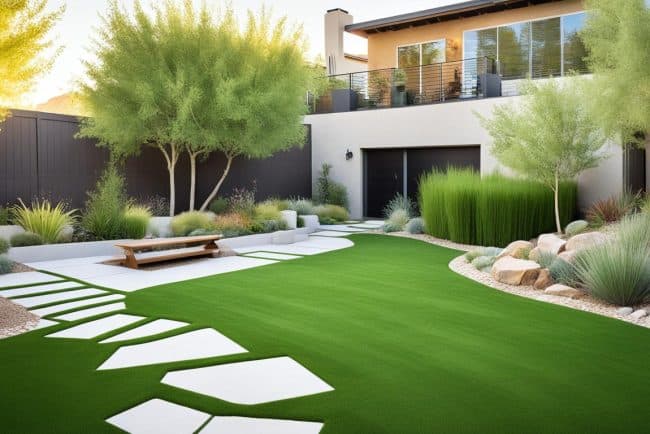
Using native plants with synthetic grass helps save water. Once these plants are established, they need much less water than others. Moving to an easy-care garden makes your life simpler and is eco-friendly.
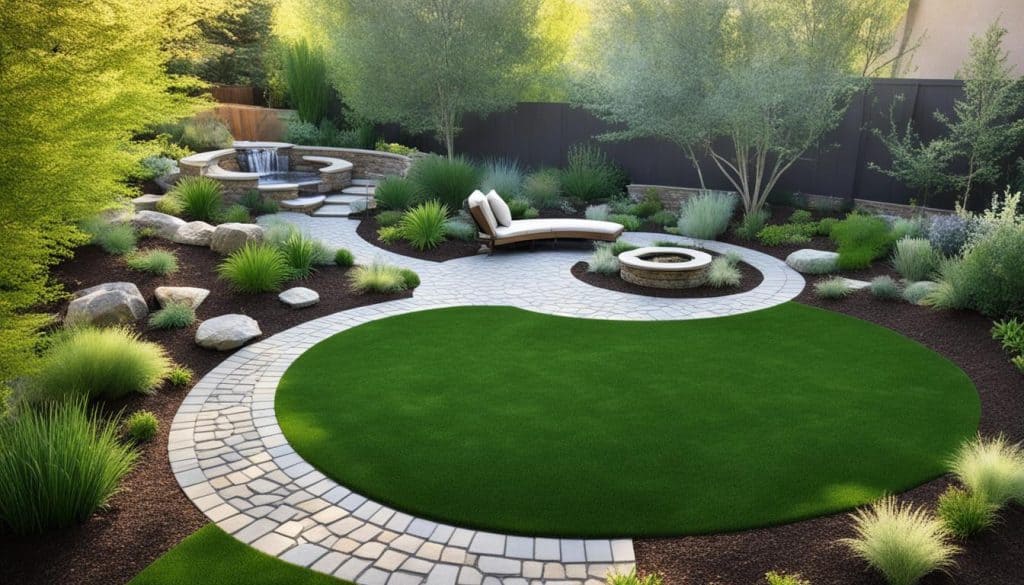
Enhancing Aesthetics with Eco-Friendly Turf
The growing shift toward sustainable practices has made the beauty of synthetic grass popular in landscaping. People looking for green lawns without the hard work of upkeeping real grass are choosing eco-friendly turf. Its bright color and even look make any outdoor space more beautiful.
Visual Appeal of Synthetic Grass
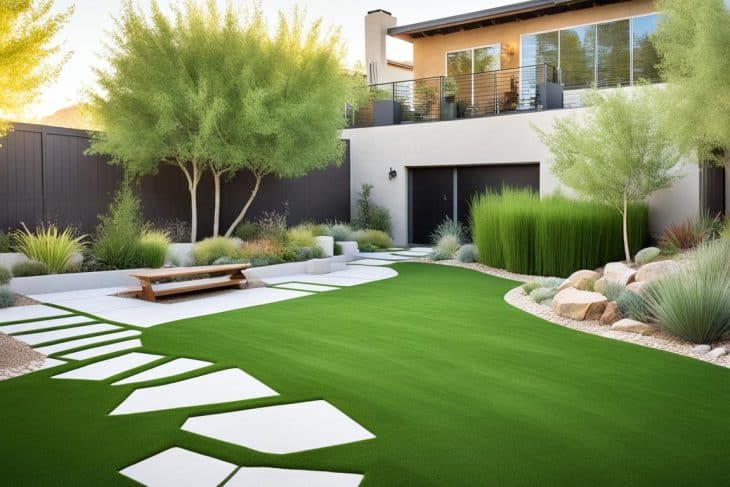
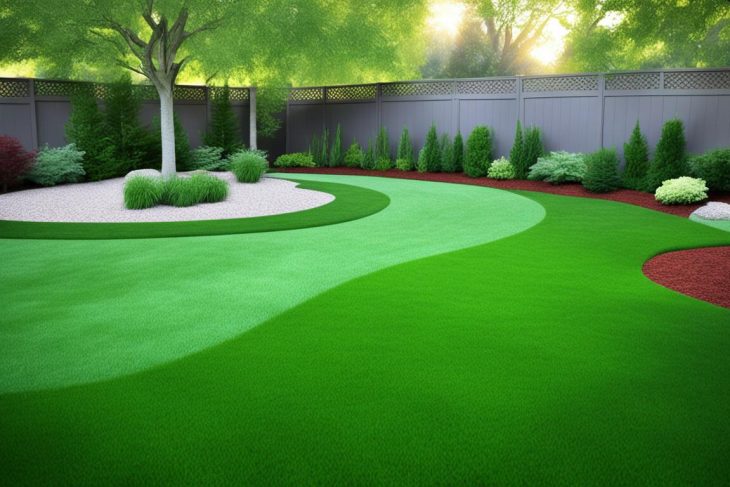
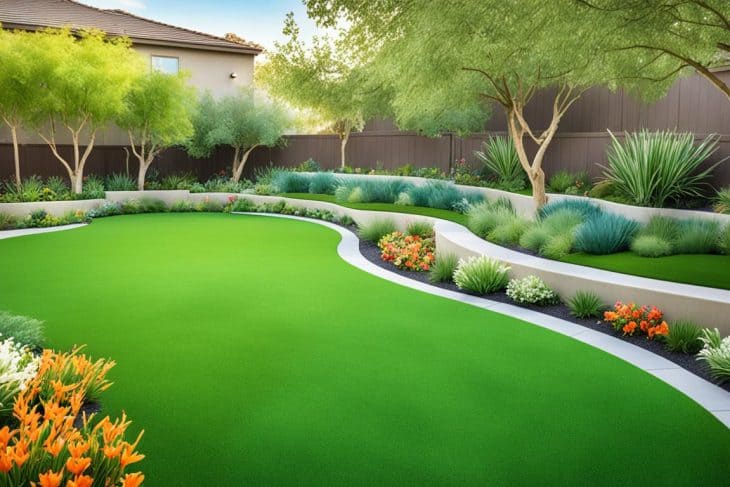
Artificial grass becomes a beautiful centerpiece in any yard, looking green all year. It stays lush while real grass can get patchy or fade. It keeps its deep green color in all weather and is easy to take care of. This means people have more time to enjoy their yards without constant work.
Versatile Applications in Landscaping
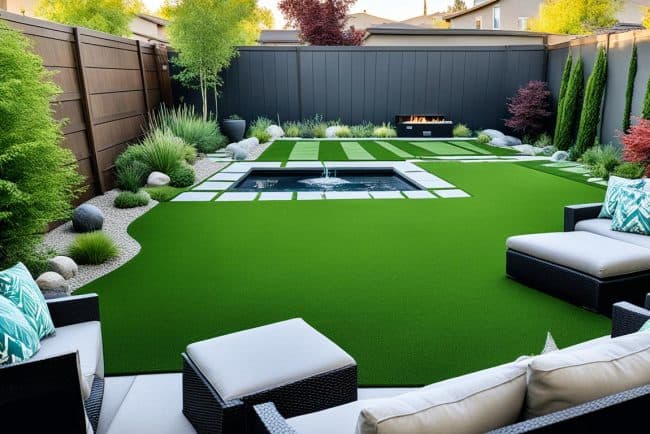
Eco-friendly turf is used in many creative landscaping designs. It’s perfect for welcoming front yards or safe play areas for kids. Rooftop gardens also look great with synthetic grass, adding a touch of green up high. It’s ideal for homes, businesses, or sports fields, showing how versatile it is for different outdoor areas.
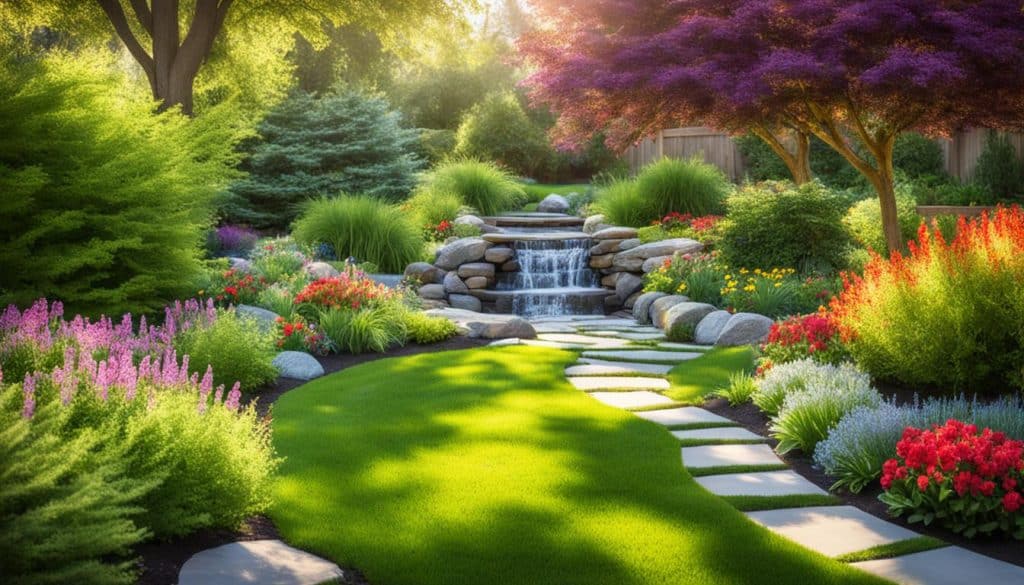
Addressing Environmental Impact with Artificial Grass
Traditional landscaping has Environment issues. I looked into artificial grass. It offers several benefits, including erosion control and less allergens. Notably, it cuts the need for harmful pesticides. This helps make the ecosystem healthier.
Switching to artificial grass saves about 55 gallons of water per square foot each year. This is key for eco-friendly landscaping. Reducing water use helps areas where saving water is critical. It also supports wise water use, benefiting our environment long term.
Artificial grass lowers the need for gas-powered lawn tools. This means less energy use and fewer air pollutants. It’s often made from recyclable materials, which is good for our planet. With a lifespan of over 20 years, choosing artificial grass is a green move.