Environmentally Conscious Lawn Care with Artificial Grass

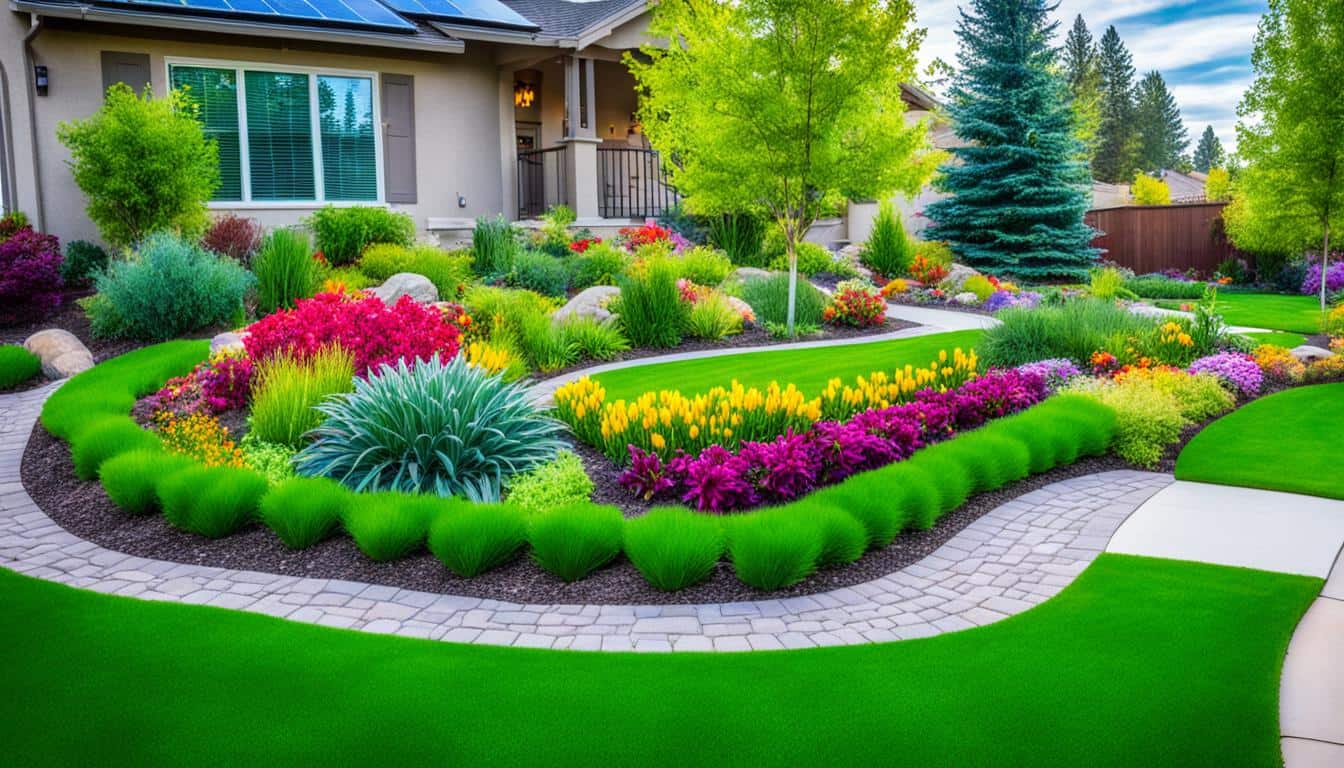
Did you know that lawns in the U.S. only cover 2% of the land? Yet, they use more irrigation water than any crop. This fact shows the big environmental impact of usual lawn care. On my journey to find eco-friendly lawn care, I discovered artificial grass. It looks lush and green and helps the planet. It uses less water, cuts down on chemical runoff, and lowers emissions from upkeep. As people choose more sustainable landscaping, artificial grass is becoming a popular choice for both homes and businesses.
Key Takeaways
- Artificial grass helps save water, keeping tens of thousands of gallons each year.
- Switching to synthetic turf can lower carbon emissions from lawn upkeep.
- It also reduces the need for harmful chemicals and fertilizers.
- Companies like SYNLawn are at the forefront of making sustainable artificial grass.
- Artificial lawns are beautiful with very little maintenance.
Introduction to Artificial Grass and Eco-Friendly Lawn Care
Artificial grass has become a popular eco-friendly choice. This synthetic turf looks and feels like natural grass but is better for the planet. It saves time and effort on lawn maintenance, making your outdoor area look great.
Artificial grass saves a lot of water. It also reduces our water bills since it doesn’t need constant watering. Plus, it’s very durable, saving money on maintenance like mowing or fertilizing.
This turf lets you enjoy your yard all year without much work. It’s great for family activities, pets, and having friends over. It also stops soil from washing away, which helps nature.
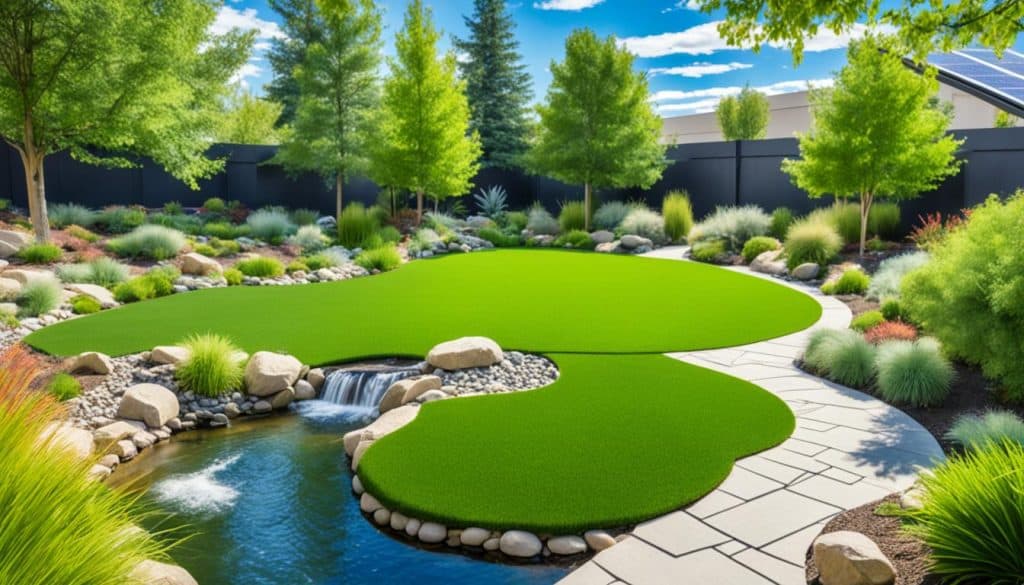
Choosing artificial grass cuts down on harmful chemicals. There’s no need for pesticides or fertilizers. It also cuts down lawn mower emissions, which is better for the air we breathe.
Learning about artificial grass showed me it’s key for eco-friendly living. With high-quality options like Smart Turf Artificial Grass, it can last up to 25 years. It means less hassle with allergies and yard waste, too.
Adding artificial grass to my yard helps the environment. It looks good and supports healthier living. Choosing this eco-friendly landscape is a smart move for a sustainable future.
Understanding Eco-Friendly Artificial Grass
Eco-friendly artificial grass is great for those who care about the environment. Not only does it look good, but it also helps the planet. It uses special materials that lower the carbon footprint compared to regular lawns.
Materials Used in Eco-Friendly Artificial Grass
Eco-friendly artificial grass uses modern, synthetic materials. These include renewable resources to keep people and pets safe. The grass is strong and long-lasting thanks to synthetic polymers. Some types even use soybean oil for a greener approach. This makes the grass durable and good for the earth.
USDA Certification and Sustainable Practices
USDA certification means eco-friendly artificial grass is made responsibly. This cert shows the grass meets high quality and environmental standards. Choosing these products supports eco-friendly manufacturing. It helps promote better agricultural practices linked with artificial grass.
Environmental Benefits of Artificial Grass
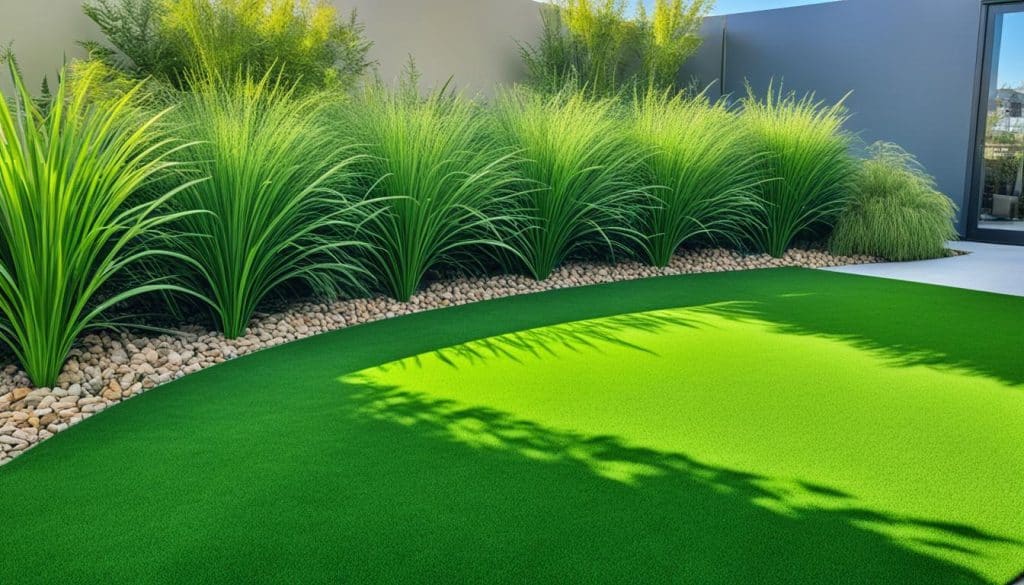
Switching to artificial grass opens up big benefits for the planet. This choice helps save water, cut down on chemicals, and provides a safe place to play. By choosing synthetic turf, I play a part in protecting our world. This makes my home a healthier place for my loved ones.
Water Conservation and Cost Savings
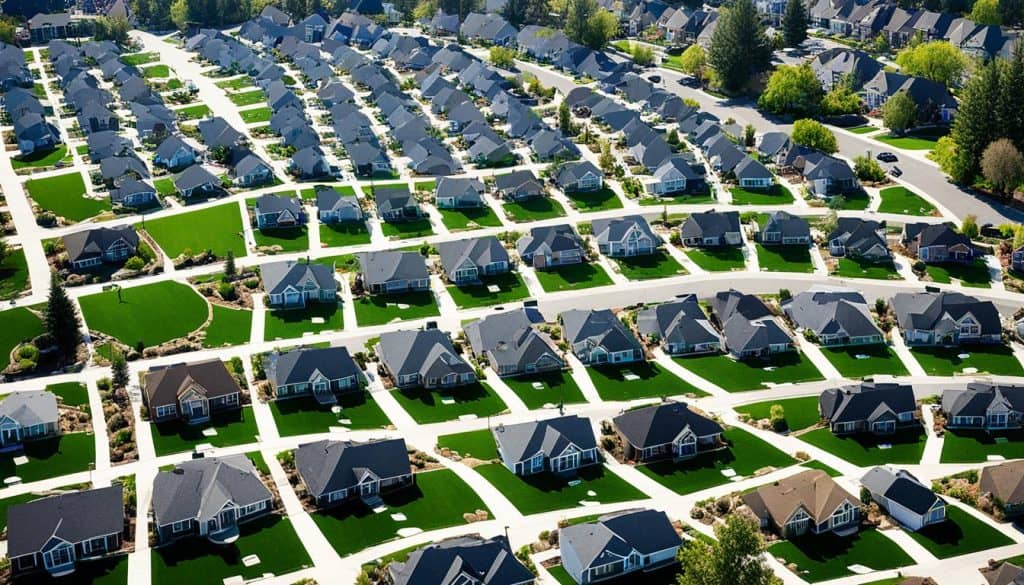
Artificial turf means big water savings. An average lawn drinks 55 gallons of water per square foot each year. This can make your water bill soar. By adopting artificial grass, families can save 22,000 gallons of water annually. In areas where water is scarce, this is especially important. Plus, lower water bills mean more money in your pocket over time.
Reduction of Chemical Use and Allergens
Artificial grass slashes the need for nasty chemicals. Regular grass needs lots of pesticides and fertilizers to look good. These can harm nature. But artificial turf is allergen-free. It creates a safe spot for kids and pets to enjoy without the worry of toxins. Moving to synthetic grass means cleaner waterways and healthier ecosystems too.
| Benefit | Impact |
|---|---|
| Water Conservation | Saves up to 22,000 gallons annually |
| Cost Savings | Reduces water and maintenance costs over time |
| Reduction of Chemicals | Limits the need for pesticides and fertilizers |
| Allergen-Free | Safer outdoor environment for families |
| Environmental Sustainability | Minimizes chemical run-off and pollution |
Environmentally Conscious Lawn Care Options
Creating a sustainable garden means using eco-friendly options. Adding native plants to your yard cuts down on water and upkeeps needs. This goes well with artificial grass, making it great for those who care about the planet.
Organic fertilizers are good for keeping your lawn healthy. They might work slower than regular ones but improve soil health over time. Always choose products approved by the Organic Materials Review Institute (OMRI) to be sure they’re eco-friendly.
Leaving grass clippings on your lawn is very helpful. They put important nutrients back into the ground naturally. It’s also good to have bugs like assassin bugs and spiders around. They control pests without using chemicals.
For weed control, pulling weeds by hand is a smart, free choice. I also try to keep my grass three to four inches tall to help plants grow strong. Taller grass means deeper roots, which makes for a lawn that can handle dry spells better.
Getting your watering right is key. Lawns need about an inch of water each week during growing times. Watering less often makes roots grow deeper, helping your lawn resist drought. Always test your soil before adding anything. This way, you add only what your lawn really needs.
In summary, making these greener choices improves my lawn’s health and fits well with artificial grass. Using these methods helps the environment. It shows how our yards can be part of eco-friendly living.
Durability and Low Maintenance of Artificial Grass
Artificial grass is known for being durable and easy to take care of. It’s a top pick for those who love eco-friendly lawns. This lawn option can last between 15 to 25 years if cared for correctly. So, homeowners can enjoy a green yard without the hard work that real grass needs.
Longevity of Eco-Friendly Turf
Eco-friendly turf is very durable. It can handle lots of use and harsh weather but still look good. People who choose artificial grass can save up to 22,000 gallons of water each year. This helps a lot with saving water. Even though it costs $6 to $20 per square foot to install, it pays off. Homeowners see savings on their water and upkeep bills in 3 to 7 years.
Maintenance Tips for Sustainable Upkeep
Keeping artificial grass looking great is easy. Just brush it regularly and rinse to remove dirt and dust. This keeps the lawn looking fresh and clean. If you spill something, clean it up quickly to avoid stains. By doing these simple tasks, you can make your eco-friendly lawn last longer. You’ll enjoy its beauty for many years without much effort.
| Feature | Natural Grass | Artificial Grass |
|---|---|---|
| Lifespan | 1-10 years (with constant maintenance) | 15-25 years |
| Water Usage | Requires regular watering | No watering required; saves 22,000 gallons/year |
| Maintenance | Frequent mowing and fertilizing | Minimal maintenance; regular brushing and rinsing |
| Installation Cost | Low initial cost (but ongoing expenses) | Higher initial cost ($6-$20/sq ft), but long-term savings |
Installation Process for Eco-Friendly Artificial Grass
Putting in eco-friendly artificial grass needs precise steps for it to last long and stay durable. First, I make sure to clear and level the ground. This creates the best foundation for the turf. It’s a crucial step to prevent water from pooling later.
Next, I lay down a base layer that helps with drainage and supports the turf. Then, I carefully roll out the grass, cutting it to fit just right. To keep the turf in place, I use either landscape staples or adhesive. This approach makes sure the grass looks good and stays put through different weather conditions.
Last, I add infill like silica sand or rubber crumb to give stability and support to the grass fibers. This step is important for the grass’s longevity and cleanliness. It even stops bacteria from growing. By following these steps, I’m able to create a nice, eco-friendly outdoor area that matches my green lifestyle.