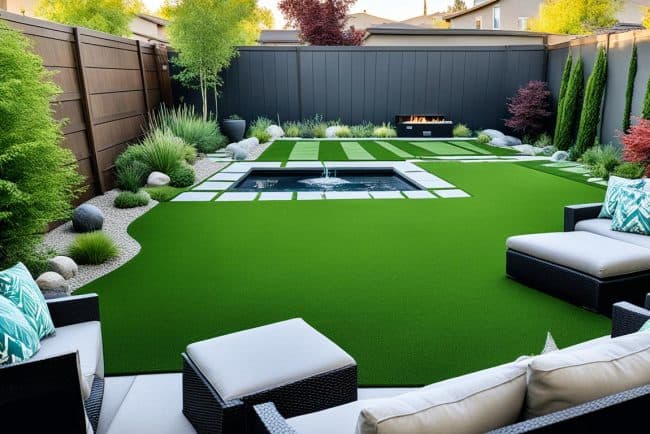
Sustainable Turf Ideas for an Eco-Friendly Lawn

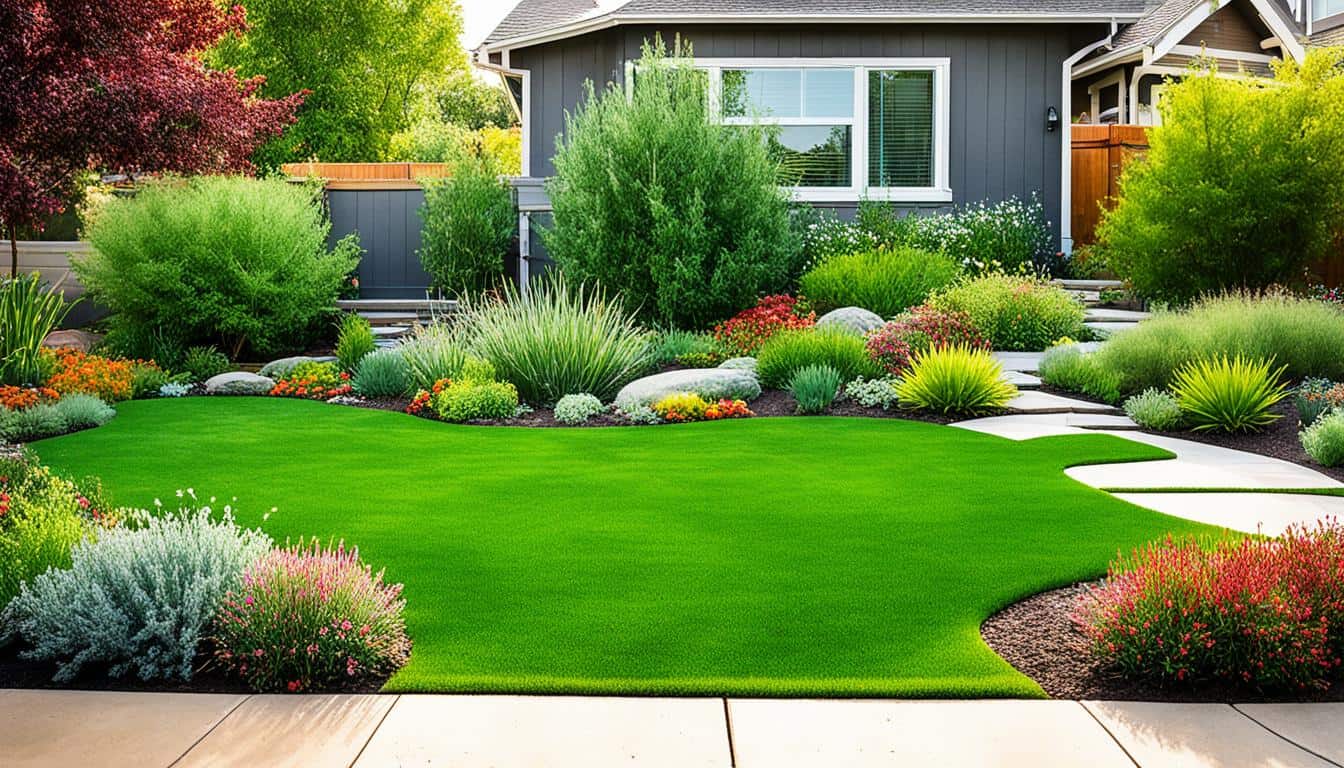
Did you know running a gas-powered lawn mower for an hour is as bad as 11 cars? We need sustainable turf ideas more as we care about the environment. Traditional lawns waste resources and pollute the air. With eco lawns, I can make a green, lively area. This area will support many forms of life and cut down on pollution.
I’ll talk about grass alternatives that look good and are eco-friendly. These include groundcovers, native plants, and grasses that don’t need much cutting. I’ll show how these options can make my yard a place that helps the planet.
Key Takeaways
- Eco-friendly alternatives like clover and moss lawns significantly reduce maintenance and resources.
- Groundcovers can help prevent erosion and improve soil quality while attracting beneficial insects.
- Native plants promote biodiversity and require less water than conventional turfgrasses.
- Wildflower meadows provide low-maintenance beauty, attracting pollinators while needing minimal care.
- No-mow and low-mow grasses not only conserve water but also lower greenhouse gas emissions.
Understanding Eco-Friendly Grass Alternatives
Exploring sustainable landscaping reveals eco-friendly grass alternatives as key for reducing our environmental footprint. These choices move away from traditional turfgrass. They need less care and resources, flourish with little water, and avoid chemicals, thus supporting a healthier planet. Eco-friendly turf includes various plants and materials that are kind to the earth.
Definition of Eco-Friendly Turf
Eco-friendly grass options excel in tough conditions where regular lawns would struggle. They don’t need much water, fertilizer, or care. These choices improve soil health and are good for local wildlife. Using plants like Mediterranean herbs or groundcovers, homeowners can have lawns that are both beautiful and good for the environment.
Benefits of Choosing Sustainable Options
Picking sustainable grass alternatives offers big benefits. For example, they can hugely cut down on water use. An average American lawn drinks about 48 gallons of water daily. Plus, they reduce the need for harmful pesticides and support local animals and plants. With a variety of grasses and clovers, I make my lawn lively and wildlife-friendly.
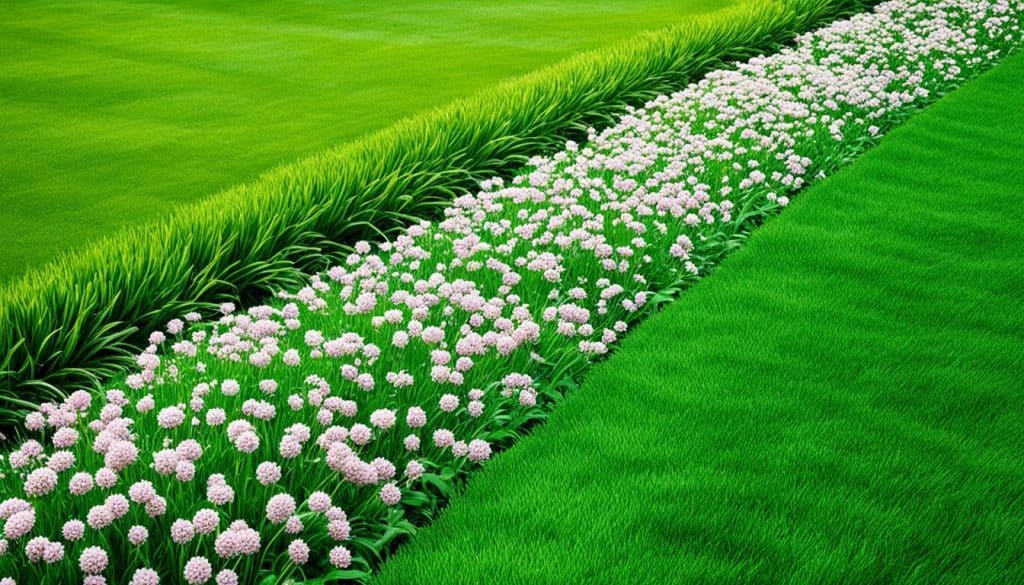
| Eco-Friendly Option | Water Requirement | Pesticide Use | Maintenance Needs | Environmental Benefits |
|---|---|---|---|---|
| Fescue Grass | Low | No | Minimal | Supports soil health |
| Groundcovers | Very Low | None | Low | Weed suppression |
| Wildflowers | Moderate | None | Low | Attracts pollinators |
| Synthetic Turf | None | Not Applicable | None | Long-lasting |
Sustainable Turf Ideas: Groundcovers for an Eco Lawn
Groundcovers are perfect for those seeking an eco-friendly lawn. These hardy plants grow well in many settings and need little care. They stay low to the ground, so you don’t have to mow often. This also means they use less water and fertilizer than regular grass.
Types of Groundcovers
There are many types of groundcovers to make your lawn eco-friendly. Here are some popular choices:
| Groundcover Type | Key Features | Ideal Conditions |
|---|---|---|
| Creeping Jenny | Vibrant yellow foliage, fast-growing | Full sun to partial shade |
| Clover | Quick-growing, improves soil quality | Four to six hours of sunlight daily |
| Thyme | Drought-resistant, low maintenance | Well-drained soil, full sun |
| Buffalo Grass | Drought-tolerant, native to North America | Sunny, dry areas |
| Moss | Good in shade, doesn’t need mowing | Moist, shaded spots |
Advantages of Groundcovers
Choosing groundcovers offers many advantages for an eco-friendly lawn. These plants boost biodiversity and improve soil health. They need less water, fertilizers, and pesticides than standard grass. Groundcovers also help with soil stability, decrease erosion, and keep water in the ground. Plus, they look great and vary in color with the seasons. Using low-maintenance groundcovers lets homeowners have lovely lawns with little effort. This is good for both them and the planet.
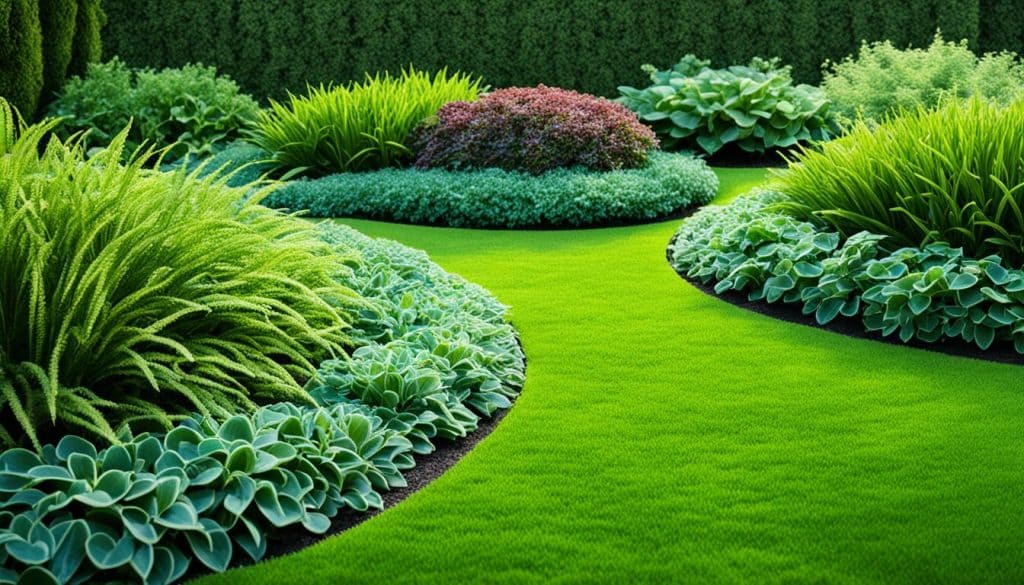
Native Plants: The Key to an Eco-Friendly Lawn
Using native plants is crucial for an eco-friendly lawn. They need less water and thrive well in their local area. This not only saves water but also supports birds and bugs that are vital to our ecosystem. When I use native plants instead of regular grass, I’m helping the environment and supporting wildlife.
Importance of Native Plants
Native plants are great for sustainable gardens. They fit perfectly with the local weather and help the ecosystem. They offer homes for birds and bugs. These plants use much less water than usual lawns do. This is especially important in dry areas. Having native plants helps solve the problem of lawns that use too much land in the U.S.
Best Native Plants by Region
| Region | Best Native Plants | Biodiversity Benefits |
|---|---|---|
| Northeast | Golden Alexander, Eastern Bluebell | Supports pollinators like bees and butterflies. |
| Midwest | Black-eyed Susan, Prairie Dropseed | Enhances soil quality and attracts diverse wildlife. |
| South | Purple Coneflower, Coreopsis | Provides habitat restoration opportunities. |
| West | California Poppy, Western Redbud | Encourages local ecological balance. |
Adding native plants to my lawn makes it look nice and helps nature. By picking these plants, I’m making my garden green in more ways than one. It’s a step towards taking care of our planet.
Creating a Wildflower Meadow
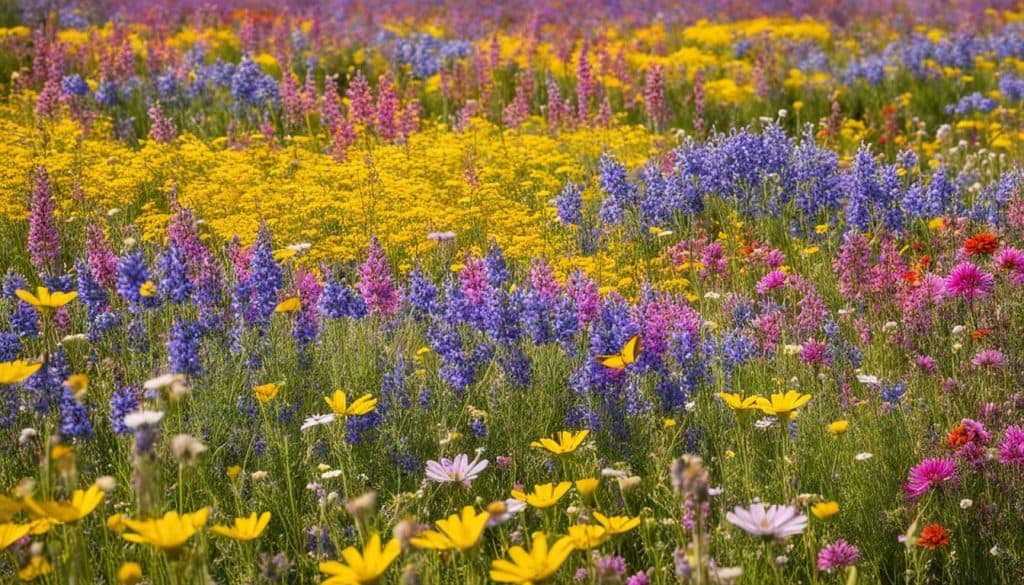
A wildflower meadow is a beautiful and sustainable choice over regular lawns. It fosters biodiversity and supports eco-friendly landscaping. Here, we’ll look at the best wildflower species for meadows and how to start your colorful area.
Species of Wildflowers to Consider
Choosing the right wildflowers is key. Purple coneflower, milkweed, and daisies attract many pollinators. Adding ajuga and clover improves beauty and ecological value.
Steps to Establishing Your Meadow
Starting a wildflower meadow takes planning and patience. First, stop mowing your lawn for a month. This helps wild plants grow and attracts wildlife. Choose seeds native to your area that do well in your climate.
To prepare the soil, reduce its fertility. Remove all plants when mowing to control the grass and help wildflowers. Making a lawn into a diverse meadow takes years but is very rewarding.
In the first year, mow weekly to control grass. Don’t use fertilizers or weedkillers. This lets wild plants grow. Plant wildflowers in groups for a natural appearance. A wildflower meadow changes with the seasons, offering stunning colors and variety.
No-Mow and Low-Mow Grasses
In exploring sustainable gardening, I’ve learned that no-mow and low-mow grasses are key for a green lawn. Varieties like buffalograss and hard fescue need little water and maintenance. Hard fescue, for example, requires mowing just once or twice yearly. This choice helps cut down on mowing and gas use.
Choosing these grasses means I can have a beautiful lawn and help the environment. Gas lawn mowers create about 5% of the U.S.’s air pollution, says the EPA. So, using these grasses reduces that pollution.
Your Options for Low-Maintenance Lawns
UC Verde buffalograss is a top pick for a lawn that doesn’t need much mowing. Zoysia tenuifolia is also great because it handles dry conditions well and needs only two mowings a year. White Dutch clover and microclover look good without needing to mow, water, or use chemicals.
Moss lawns are perfect for moist, shaded spots. They don’t need mowing to flourish. This lets me create a gorgeous, natural lawn space.
Environmental Benefits of Low-Mow Grasses
Low-mow grasses offer big environmental pluses. They make lawn care easier and help the earth. By picking these grasses, I cut down on greenhouse gases from lawn upkeep and use fewer harmful chemicals.
This way of gardening helps bring back natural areas for plants and animals. Growing a low-mow or no-mow lawn looks good and is a big step towards living more sustainably.