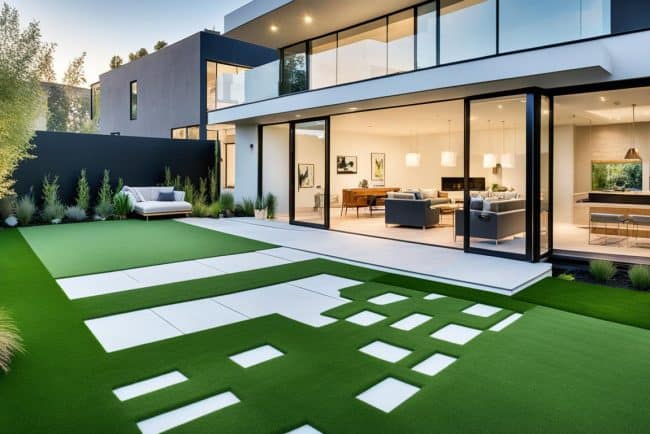
Did you know the average American lawn uses about 10,000 gallons of water each year? In areas often hit by droughts, this fact points to a big need for new yard ideas. I found out that using eco-friendly artificial grass can greatly lower the need for daily watering. It also helps a lot in saving the environment. In this piece, I’ll show how synthetic grass can be a good choice for yards. It can cut down on water bills and the work needed to keep a yard looking nice. Let’s look into the advantages, how to put it in, and ways to take care of it. By doing this, you can have a green yard that’s also kind to the planet.
Key Takeaways
- Artificial grass eliminates the daily watering needs associated with natural grass.
- Choosing synthetic turf contributes to reduced carbon emissions and healthier ecosystems.
- Homeowners can experience significant savings on water bills with eco-friendly artificial grass.
- The initial investment in synthetic turf pays off through lower maintenance and watering expenses.
- Artificial grass is 100% recyclable, making it an environmentally friendly choice.
Understanding Eco-Friendly Artificial Grass
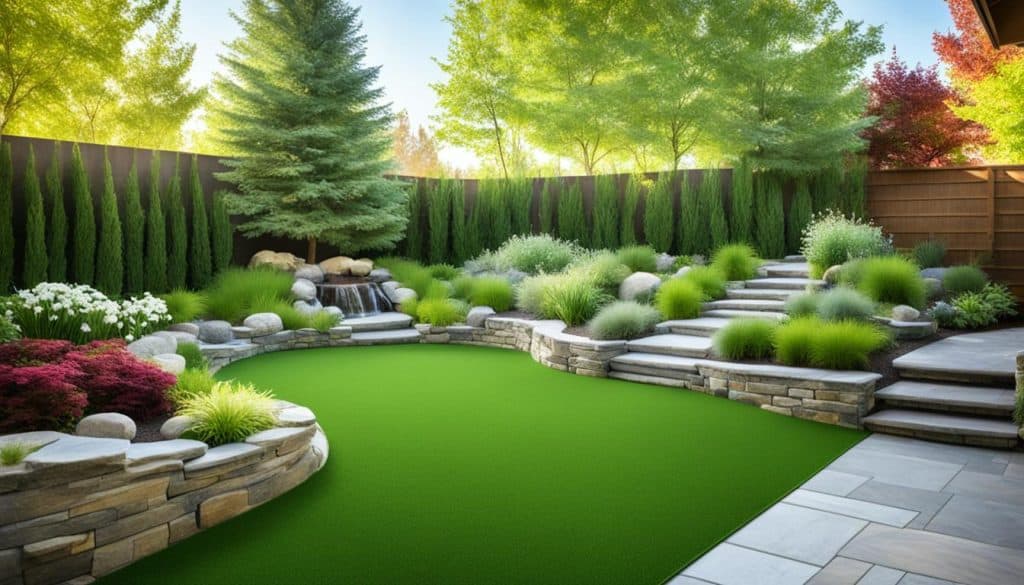
Eco-friendly artificial grass is ideal for those looking for greener landscaping choices. It looks like real grass but is better for the planet. It’s made from advanced synthetic materials that are safe for both families and pets.
It uses renewable resources like plant fibers from sugar cane and soybean oil. This greatly lowers its carbon footprint. These innovations make it a green choice for buyers.
Eco-friendly turf lasts up to 25 years, offering great value. It doesn’t need much upkeep and saves a lot of water. Compared to regular grass, it can save up to 22,000 gallons of water per year for a home.
In the US, USDA certification means the turf is sustainable. This certification ensures it’s made safely and supports local farmers, especially those growing soybeans.
This artificial grass changes how we think about gardening. It pushes us towards eco-friendly choices. It’s perfect for those wanting to make their outdoors greener.
Environmental Benefits of Eco-Friendly Artificial Grass
Switching to eco-friendly artificial grass helps the environment a lot. It saves tons of water. In dry places like San Diego, it needs almost no water. This means lower water bills and more saved water, especially during droughts.
Artificial grass also stops the need for harmful chemicals. Regular lawns often use products that harm our water and wildlife. Eco-friendly grass means no more pesticides or fertilizers. It’s a big win for our planet’s health.
Mowing your lawn adds to air pollution. The U.S. EPA points out the harm of lawn equipment. But with artificial grass, you don’t need these polluting tools. This cuts down on air pollution significantly.
The making of artificial turf usually involves recycled materials. It’s a key part of its eco-friendly claim. Even though it’s made with some plastics, the benefits like saving water and reducing chemicals make a strong environmental case.
Advantages of Creating a Sustainable Lawn with Artificial Grass
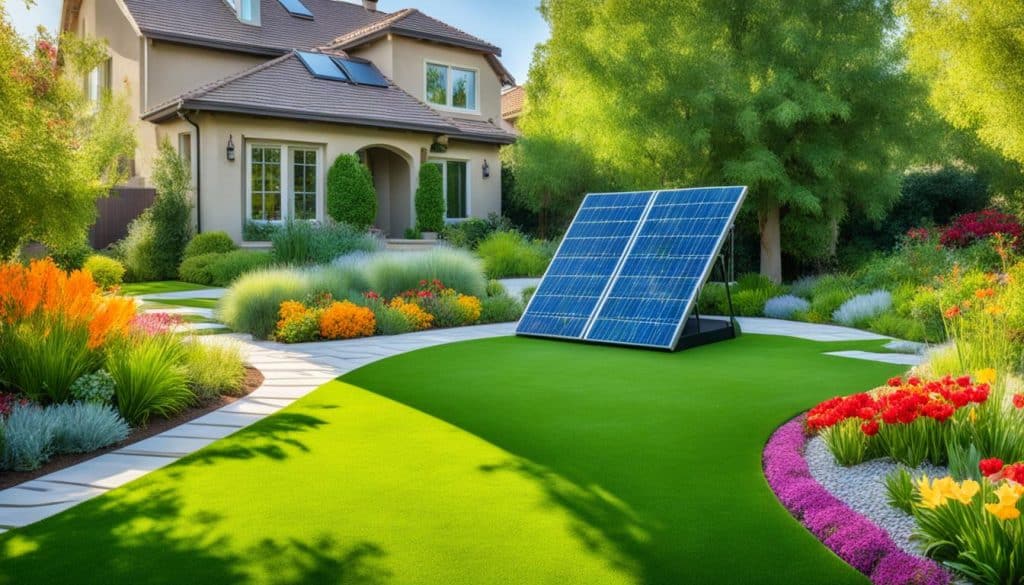
Choosing artificial grass brings many benefits to my outdoor space. It does more than just look good. It also helps the environment and saves money. By saving water and making upkeep easier, a sustainable lawn becomes a great choice.
Water Conservation and Cost Savings
Artificial grass significantly cuts down on water use. This means lower water bills for me. With artificial grass, there’s no need for regular watering. This choice saves on irrigation costs over time. The savings from using less water and spending less on maintenance make it a smart option.
Low Maintenance and Long Lasting Durability
Artificial grass means less work for me. There’s no need to mow, fertilize, or use pesticides. This saves time. It’s also made to last, staying good for up to 25 years. With this durability, my lawn looks great all year. Choosing artificial grass is indeed a cost-effective investment.
Installation of Eco-Friendly Artificial Grass
Putting in eco-friendly grass needs careful steps for great results and lasting use. My installation guide lists key actions for a good setup.
- Clear the Area: Take away old grass, weeds, and rubbish. This makes the ground smooth and ready.
- Add a Base Layer: Put down crushed rock or gravel. This makes a solid base that’s important for the turf to work well.
- Lay the Turf: Roll out the synthetic grass on this base. Make sure it’s flat and there are no folds or spaces.
- Secure the Turf: Fix the edges with landscape staples. Using a lawn roller gets rid of any bumps.
- Add Infill: Put sand or rubber on top. This makes the turf more stable and cushy, so it lasts longer.
Using the best setup methods, my eco-friendly grass helps the planet. It also lasts a long time. It has a drainage system that handles rain well. This stops bad chemicals from getting into our water. I think this is very important. It helps nature and keeps our water clean.
Maintenance Tips for Your Synthetic Turf
Maintaining synthetic turf is easy and keeps it looking good. By following simple tips, I make sure my artificial grass stays bright. This care can help synthetic grass last up to 25 years, a smart choice for many.
Regular Brushing
Brushing the turf often is key to its neat look. I brush against the grain to lift the grass blades, making them look real. Then, I gently brush along the grain with a softer brush to keep the turf inviting.
Debris Removal
It’s important to keep the turf free of leaves and dirt. I use a leaf blower or rake for this job, avoiding sharp tools. This stops pests from coming. Removing spills quickly with a gentle soap and water keeps the grass safe. I rinse the turf to keep it clean from dust and pollen.
Following these steps, I ensure my synthetic grass looks great and lasts long. It needs little care and works well for years. With regular attention, my artificial lawn stays beautiful.
Supporting Sustainable Practices and Local Agriculture
Choosing eco-friendly artificial grass helps improve my lawn. It also supports local farmers and sustainable practices. This choice is part of a larger movement focused on environmental health, economic viability, and social equity.
Materials like soybean oil are used in the making of artificial grass. They support renewable resources and boost local economies. This approach highlights the need for resilience, adaptability, and diversity in agriculture for it to survive challenges.
Adopting sustainable landscaping practices can increase biodiversity. Combining artificial grass with native plants reduces the need for harmful chemicals. This keeps the ecosystem healthy and lowers maintenance needs.
By choosing sustainable options, I support the environment and local farming. This commitment ensures future generations will enjoy our natural and cultivated landscapes.
Health and Safety Benefits of Artificial Grass
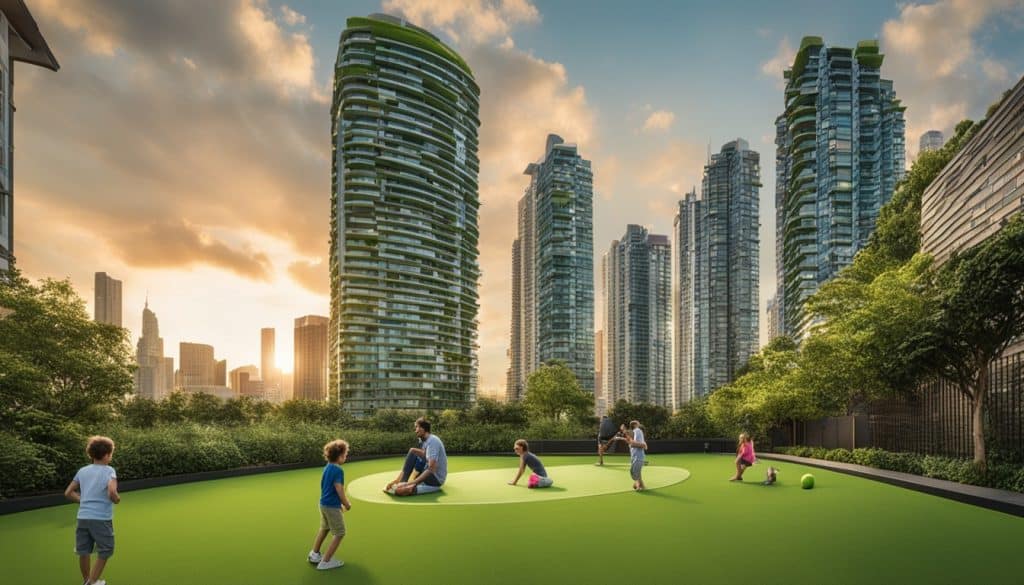
Choosing eco-friendly artificial grass makes my lawn look better and promotes good health. Synthetic turf’s lack of harmful chemicals protects my family, pets, and local wildlife. It ensures a safer environment for my kids to play in without chemical threats.
Artificial grass is great for those with allergies, like me. It helps us breathe easier by cutting down on allergens. Also, because it doesn’t attract pests, I don’t have to use harmful pesticides or herbicides. This makes my backyard healthier for everyone.
Switching to artificial grass lets me know my family’s space is safe and lively. It shields us from toxins and supports our health. This smart choice makes our outdoor time more enjoyable, focusing on the wellbeing of those I care for.