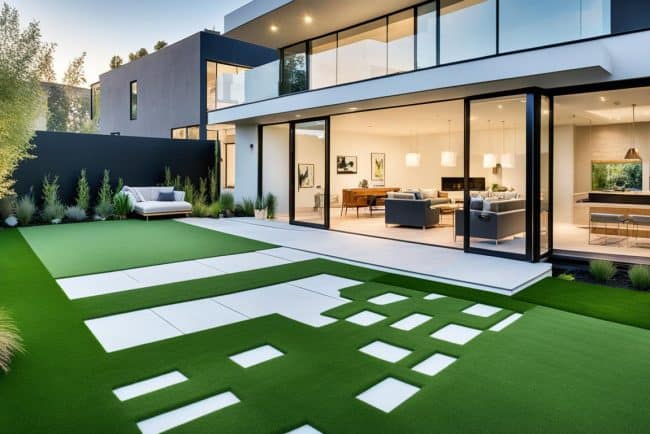
Green Lawn Care: Eco-Friendly Artificial Grass Solutions

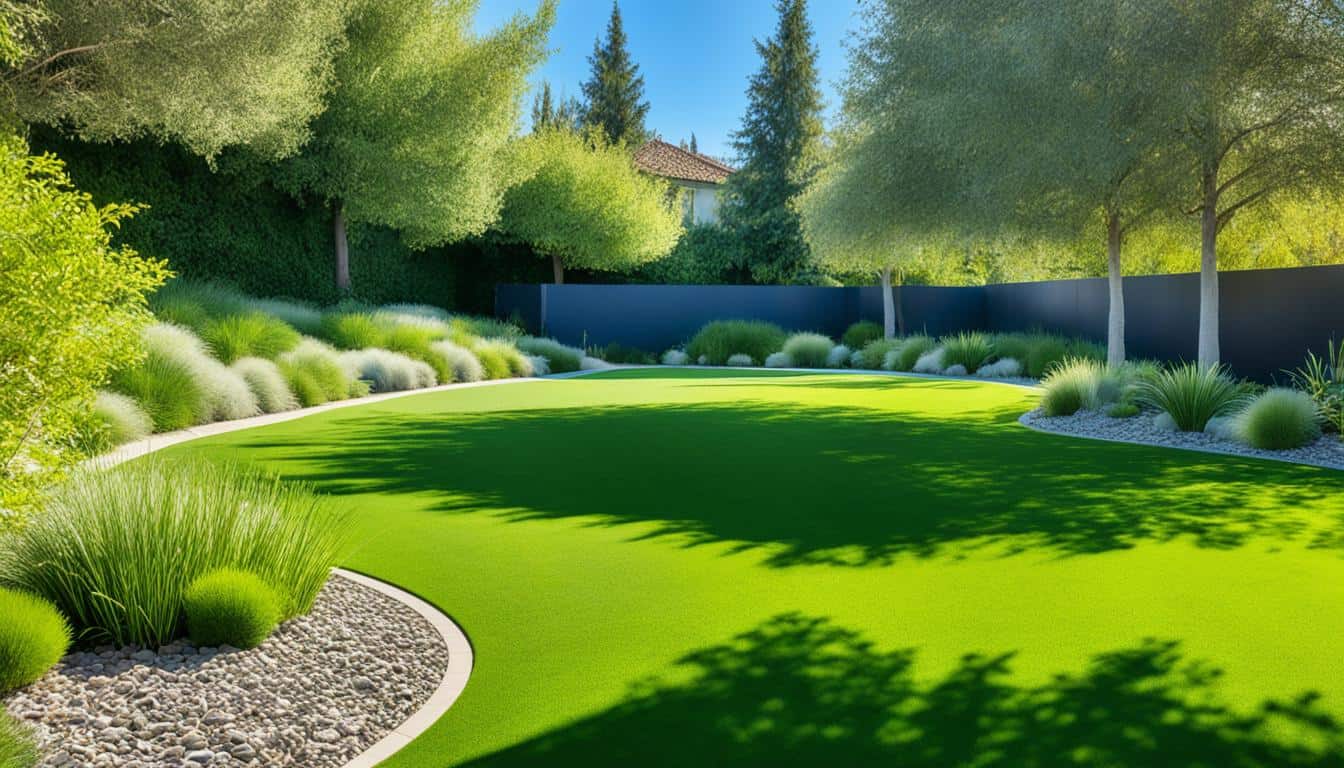
Did you know a typical American home uses about 320 gallons of water a day for outdoor watering? This fact shows we need better ways to keep our yards green. Eco-friendly artificial grass saves water, helps the planet, and lowers yard upkeep costs. It’s more than just a pretty option.
As we look into these green landscaping choices, I’m thrilled by how they’re changing our lawn care views. With proper setup and materials, you can have a stunning yard without hurting the environment. Let’s explore how artificial grass plays a part in keeping lawn care eco-friendly.
The Benefits of Eco-Friendly Artificial Grass
Eco-friendly artificial grass makes outside areas stunning and helps the planet. It saves water, cuts down on chemicals, and is cost-effective over time.
Water Conservation
Water conservation is a big reason to choose synthetic turf. Real grass needs lots of water, especially in dry places. With artificial grass, there’s no need for daily watering. This helps save a large amount of water.
Using less water is good for the environment. It’s especially true when considering sprinkler systems that run on timers. This choice lessens water waste a lot.
Reduced Chemical Use
Choosing artificial grass means using fewer chemicals. Regular lawn care demands pesticides and fertilizers, harming wildlife. Artificial grass keeps my yard chemical-free. It’s better for my loved ones and my pets.
Also, it doesn’t attract allergens. This makes our living area healthier.
Cost-Effectiveness for Homeowners
Artificial turf also saves money in the long run. The start may cost more, but you’ll save on water and upkeep later. I spend less on watering, fertilizers, and mowing.
It’s a smart choice for those watching their budget. Eco-friendly artificial grass is both beautiful and budget-friendly.
Understanding Sustainable Turf Technologies
Sustainable turf technologies are changing how we use artificial grass, with a focus on the environment. Companies are innovating to make products that are good for the planet. They aim to meet sustainability goals with these eco-friendly solutions.
Innovations in Soy-Based Backings
The use of soy-based backings in artificial grass is a key innovation. It shows a move towards renewable resources instead of using petroleum. SYNLawn is leading with durable turf that’s also eco-friendly. This shift towards plant-based materials shows a commitment to the environment without losing quality.
Eco-Friendly Material Integration
Adding eco-friendly materials to synthetic grass shows a dedication to protecting nature. For example, sugarcane is being used to lessen environmental harm while maintaining high quality. These efforts make it clear that sustainable options for a greener landscape are growing. By combining soy-based materials with other eco-friendly innovations, the turf industry is becoming more responsible.
| Feature | Soy-Based Backings | Traditional Materials |
|---|---|---|
| Environmental Impact | Utilizes renewable resources | Derived from petroleum |
| Durability | Enhanced longevity | Variable lifespan |
| Chemical Use | Reduced reliance on harmful chemicals | Typically requires chemical treatments |
| Performance Standards | Meets high-performance criteria | Performance may vary |
Green Lawn Care: How Artificial Grass Supports Sustainable Landscaping
Artificial grass introduces an eco-friendly way to design landscapes. It needs little care and stays beautiful for a long time. Many homeowners pick it to make their yards look great without harming the planet.
Minimal Maintenance Requirements
Synthetic turf benefits start with hardly any upkeep. You don’t have to mow, water, or use chemicals like with real grass. It doesn’t need watering. Sometimes, just rinsing it off is enough. This means you use much less water compared to regular lawns.
Long-Term Durability and Aesthetics
Top-notch artificial grass lasts many years with little sign of wear. Its durability and waste reduction are key for sustainable landscaping. Also, it looks just like real grass. Modern options include plant fibers and recycled rubber, lowering our carbon footprint. This helps make our environment healthier.

| Feature | Artificial Grass | Natural Grass |
|---|---|---|
| Water Usage | No watering required | High water consumption |
| Maintenance | Minimal maintenance needed | Frequent mowing and care |
| Environmental Impact | Low carbon emissions | Higher carbon footprint |
| Durability | Lasts for decades | Requires regular replacement |
| Chemicals Used | No pesticides or fertilizers | Often requires chemical treatments |
Choosing artificial grass is good for the planet and our health. It makes outdoor areas safer for everyone. It cuts down on allergens and gets rid of harmful chemicals. This choice shows we care about the earth and our future.
Environmental Impact of Traditional Lawn Care Practices
Traditional lawn care practices harm the environment in big ways. This includes using too much water and letting chemicals run off into nature. These old methods often mean watering the lawn a lot, which uses a great deal of water. This can make water scarcity worse in many places. Choosing sustainable options helps fix these problems and is better for the health of our planet.
Water Usage and Scarcity Issues
Regular lawns need a lot of water, about 1 to 1.5 inches per week in the growing season. This equals around 25,000 gallons yearly for a normal-sized lawn. In dry areas, up to 80% of a home’s summer water use can be just for the outside. But, using drought-resistant grasses can cut down on how much water is needed. Types like Bermudagrass need much less water, which helps with water scarcity.
Chemical Runoff and Ecosystem Health
Fertilizers and pesticides in traditional lawn care harm local water and the environment. These chemicals can end up in waterways, causing nutrient overload and “dead zones” where sea life can’t survive. The EPA says lawn runoff is a major source of water pollution in the U.S. Using eco-friendly landscaping helps local wildlife and reduces the bad effects of chemical runoff.
| Aspect | Traditional Lawn Care Practices | Sustainable Alternatives |
|---|---|---|
| Water Usage | 25,000 gallons/year for average lawn | 0.5 to 1.5 inches/month for drought-resistant grasses |
| Chemical Application | Daily use of pesticides and fertilizers | Minimal to no chemical inputs |
| Ecosystem Impact | Contaminated water sources, harmful algal blooms | Enhanced biodiversity, healthier local ecosystems |
| Maintenance | Frequent watering, mowing, and chemical treatments | Lower maintenance with native plants and smart irrigation |
Applications of Artificial Turf in Residential and Commercial Settings
Artificial turf is more than just a substitute for real grass. It’s used in homes and businesses, showing its flexibility. People like its look and practical benefits. It brings beauty and function to outdoor spaces.
Versatile Installations for All Outdoor Spaces
In commercial spaces, artificial turf upgrades the look of areas. It’s used on rooftops, terraces, and outdoor dining spots. This grass makes places like hotels and patios look better, welcoming guests with its charm. Shops also use it for paths and kids’ zones, drawing more visitors.
Home landscapes also embrace artificial turf. Homeowners choose it for pet-friendly yards or personal golf areas. It makes kids’ play spaces safer and outdoor areas prettier with less upkeep.
Pet-Friendly and Play Area Solutions
Dog owners love artificial turf for its durability and safety. It’s great for dog play zones and easy to clean up. The turf designed for pets keeps spaces clean and enjoyable.
Artificial turf’s versatility is clear in Orlando, where it’s in theme parks, sports areas, and golf courses. It boosts appearance for businesses and creates useful, attractive home spaces. Artificial grass is gaining popularity for both designs and practical uses.
Cost Savings and Long-Term Investment in Synthetic Turf
The benefits of synthetic turf include big cost savings. The initial cost of artificial grass might seem high. But for homeowners, the long-term savings are clear and significant. Sustainable landscaping has become more popular, and synthetic turf fits right in.
In places like Phoenix, households use up to 70% of their water outdoors. By choosing artificial grass over real lawns, water bills can drop sharply. Plus, without the need for water, fertilizers, or lawn tools, the savings add up fast. In the Dallas-Fort Worth area, homeowners could save about $1,000 every year by switching to artificial grass.
Synthetic turf can last between 15 and 25 years, much longer than real grass that often needs reseeding. This durability leads to less need for replacements and adds to the savings over time. This investment isn’t just good for your wallet; it’s also eco-friendly. Choosing artificial grass shows that making green choices can save money too.