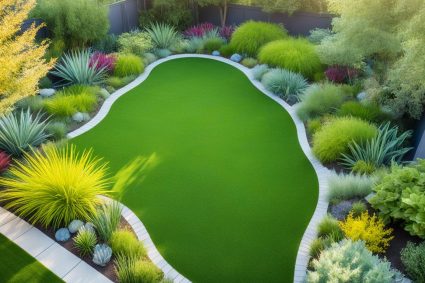
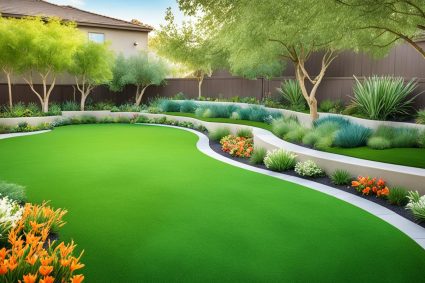
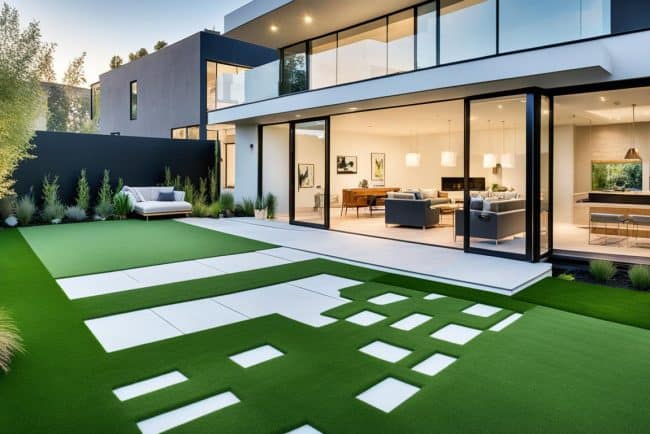
Green Lawn Alternatives: Eco-Friendly Artificial Grass


Did you know that traditional turfgrass uses trillions of gallons of water each year? With growing concerns about water scarcity, many people are looking for green lawn alternatives. These options save water and add beauty to outdoor spaces. This article will talk about eco-friendly artificial grass and other sustainable choices for lawns.
There are many choices available today, like drought-resistant plants and synthetic grass. These alternatives are good for the environment and make any yard look better. Let’s explore the benefits of choosing greener options for our lawns and gardens.
Key Takeaways
- Traditional turfgrass lawns consume trillions of gallons of water annually.
- Eco-friendly artificial grass and alternatives are essential in addressing water conservation needs.
- Many ground cover options, such as clover and buffalo grass, require significantly less water.
- Synthetic grass can last over 25 years, providing a long-term landscaping solution.
- Alternative lawn solutions can enhance soil quality and conserve water while minimizing maintenance efforts.
What Are Green Lawn Alternatives?
Lawn alternatives are eco-friendly choices that go beyond traditional grass. They include native plants, ornamental grasses, and groundcovers. These options need less water and fewer chemicals. They help your yard thrive in your local climate. This means saving water and cutting down on pollution.
Traditional lawns can hurt the environment a lot. For example, people waste 17 million gallons of gas every year just refueling lawn mowers. Also, lawns usually need about 1.5 inches of water every week. That’s a lot of water and can be tough on local water supplies.
Choosing plants like moss or creeping thyme can save you from mowing often. Moss hardly needs any water, and creeping thyme is good during dry spells. These options show you can have a beautiful yard without wasting water. They are perfect for sustainable gardening.
Adding plants like Micro-clover or Sweet Woodruff can make your garden better. Micro-clover helps the soil, and Sweet Woodruff fights weeds with little effort. These plants make your yard look good without needing a lot of water or care.
| Alternative | Water Requirements | Maintenance Level | Benefits |
|---|---|---|---|
| Moss | Low | Minimal | Grows in shade, no mowing |
| Creeping Charlie | None | Low | No mowing or fertilizing |
| Micro-clover | Little | Very Low | Soil conditioning, quick spread |
| Ornamental Grasses | Varies | Low | Disease resistant, low pesticide use |
Why Choose Eco-Friendly Lawn Solutions?
The choice to adopt eco-friendly solutions shows my want to be more sustainable. Regular lawn care eats up a lot of resources, like water. Just one hour with a gas lawn mower puts out as much pollution as 11 cars do. By choosing green options, I help lessen that impact.
Groundcover plants need less water and hardly any mowing. Plants like Carpet sedum, Creeping thyme, and Clover let me make beautiful spaces while saving water. These plants thrive in various light conditions and help local wildlife.
Using native plants also cuts down on water and fertilizer needs. Plants such as Cardinal flower and Showy milkweed grow easily on their own. They’re key in keeping the local ecosystem healthy.
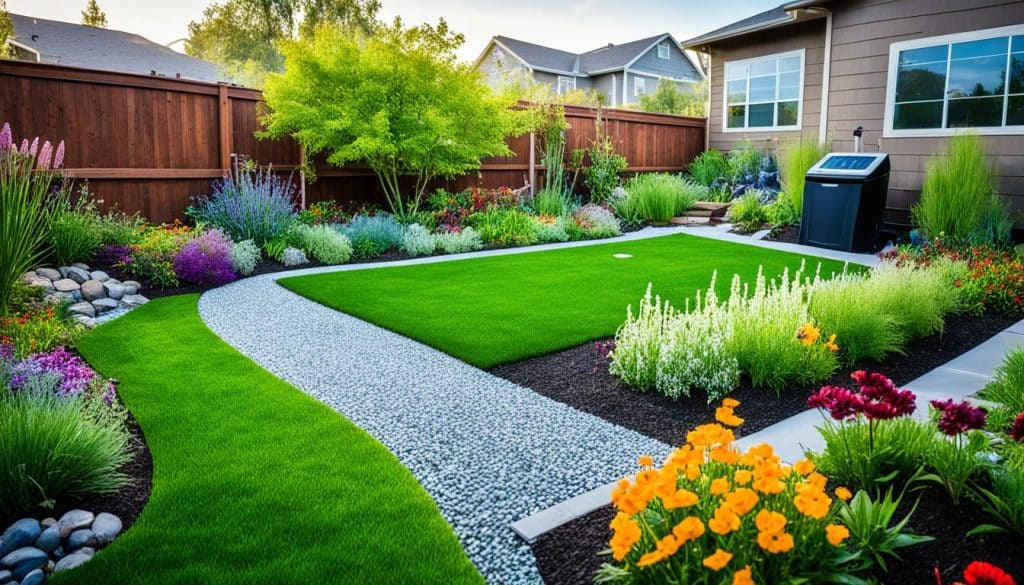
Wildflower meadows are another great idea. They need mowing just once yearly and invite good insects like butterflies and bees. This step towards biodiversity makes for a healthier environment. Choices like hard fescue grass let me keep my yard green without the pollution from mowers.
Moving to an eco-friendly yard reduces the downsides of traditional lawns. It shows my commitment to being sustainable and saving water. This not only helps the planet but also makes my home look better.
Green Lawn Alternatives: Enhancing Your Yard with Sustainable Turf
Switching to green lawn alternatives helps the environment greatly. Traditional lawns soak up 4 to 5 liters of water per 10 square feet. This puts a lot of pressure on our water supply. Gasoline-powered lawn tools also add harmful pollutants to the air including CO2. It’s clear we need to move towards more eco-friendly yard care.
The Impact of Traditional Lawns on the Environment
Keeping up with traditional lawns poses big environmental problems. They need a lot of water, regular cutting, and chemicals that hurt nature. These chemicals can end up in our rivers, contaminating the water. Even though emissions have dropped by 21% from 2011 to 2018 thanks to better lawnmower standards, traditional lawns still harm our planet.
Benefits of Adopting Eco-Friendly Options
There are so many benefits to using groundcovers and native plants. They are tough, need little care, and don’t use much water. Plants like thyme and clover look great and are easy to keep up. Moss loves the shade and you don’t have to mow or water it. These plant choices save water and help local wildlife.
Adding native plants makes a safe place for birds and bees and makes the soil healthier. This way, I help stop soil from washing away and keep my yard looking good with little work. My garden is not just low-maintenance but also supports nature simply by being itself.
Top Eco-Friendly Grass Alternatives
People in places like Colorado have started to save water. They are choosing easy-to-care-for plants for their yards. This choice helps the environment and creates a lovely garden with little work.
Groundcovers for Low Maintenance
Replacing lawns with groundcovers is a smart move for the eco-conscious. Creeping thyme and clover don’t need much water but look great. Dymondia’s green and silver leaves don’t need to be mowed. This makes it good for a pretty, low-effort yard.
Carex Glauca is great for dry spots because it can handle drought. Lilyturf covers ground fast but isn’t good for places people walk on a lot.
Native Plants: Local Solutions for Your Lawn
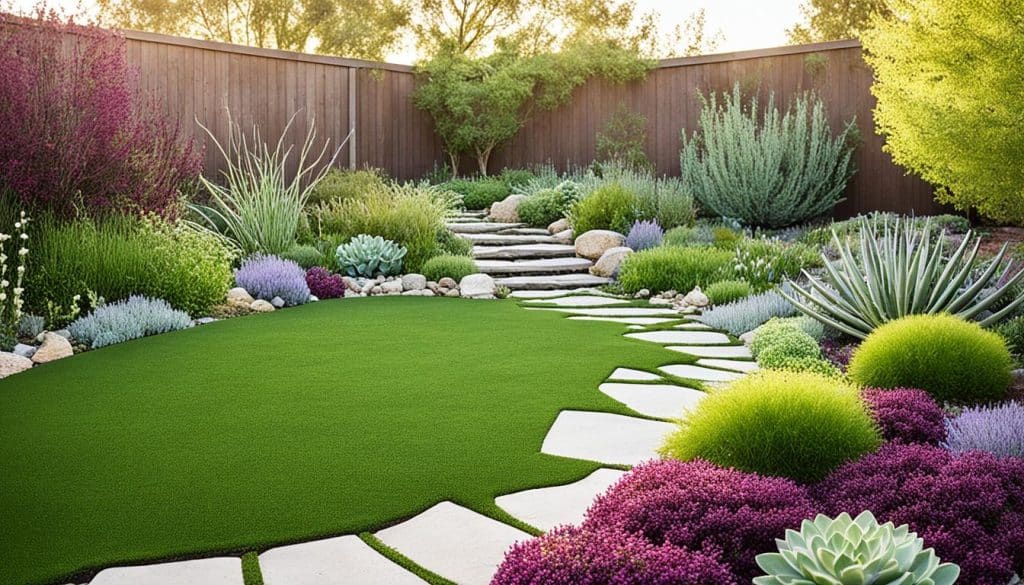
Using native plants makes my yard look better and helps the earth. Plants like wild bergamot and butterfly milkweed pull in bees and butterflies. They also need less water than other plants. Bluestraw grasses add beauty without needing much water.
In places like Colorado, using less water is important for gardening. Picking native and water-wise plants lets me have a beautiful garden that’s easy on water use. This way, my yard does well and doesn’t need much water.
Exploring Wildflower Meadows and Their Benefits
Wildflower meadows are stunning and help increase local biodiversity. By turning my yard into a wildflower ecosystem, I attract bees and butterflies. This enriches my garden and aids the environment’s health.
These meadows need little care once they’re set up. They grow well in poor soil and need mowing once a year. This makes them perfect for homeowners who don’t want lots of yard work.
In the U.S., homes have over 24 million acres of lawns. Many people are switching to more wildlife-friendly options. Starting a wildflower meadow means planting native grasses and flowers. It can take up to three years, but the outcome is worth it.
Wildflower meadows look great and help wildlife. They offer food and homes for butterflies, birds, and small mammals. By using native plants, I help the natural local wildlife. It’s important to avoid harmful plants that could damage the ecosystem.
| Feature | Wildflower Meadows | Traditional Lawns |
|---|---|---|
| Maintenance | Low (annual mowing) | High (weekly mowing, watering, fertilizing) |
| Installation Time | 2-3 years to establish | Immediate but typically requires ongoing care |
| Biodiversity | High (supports various species) | Low (limited species) |
| Soil Health | Improves with native plants | Can degrade with constant mowing and chemicals |
Choosing wildflower meadows makes a positive impact on the environment. These natural scenes add to landscaping beauty and support eco-friendly choices. This benefits both my garden and local wildlife.
No-Mow and Low-Mow Grasses: An Innovative Approach
No-mow and low-mow lawn options are great for those who love the environment. These types of lawns need less upkeep, making life easier for me. With choices like Zoysia tenuifolia and buffalograss, they adapt to different weathers. They cut down on mowing, reduce harmful emissions, save water, and lessen the need for chemicals.
On average, Americans spend 70 hours a year caring for their lawns. By switching to low-mow solutions, I save time for family or hobbies. Dutch white clover works well in poor soil and likes shade, making it a top choice for ground cover. Adding thyme plants can also make my yard look nicer, as they grow about six inches yearly.
Choosing no-mow grasses could raise my property’s value because they are good for the planet. Grass types like fine fescue need less mowing than regular grass. That means I can have a beautiful lawn that’s good for nature. Plus, I’ll spend less on yard work, saving money now and later. Indeed, no-mow and low-mow grasses are smart for sustainable gardens.
The Role of Hardscapes in Sustainable Landscaping
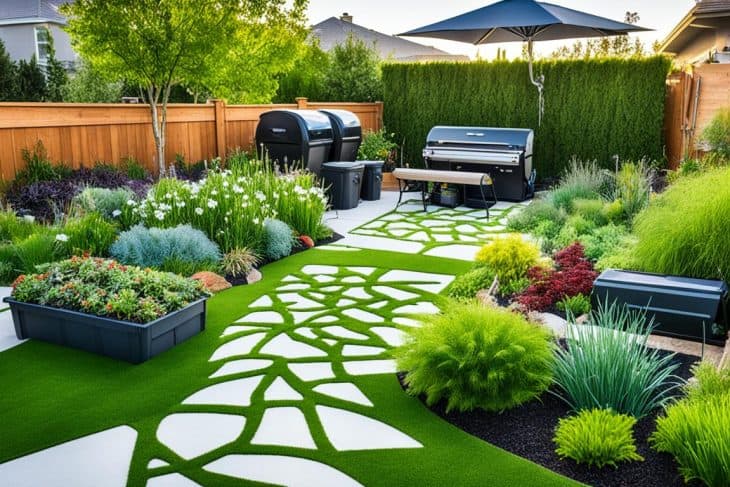
In my journey through sustainable landscaping, adding hardscape parts is key. They make my eco-friendly gardens work better and help the environment too. Hardscapes need less water, fight erosion, and make outdoor areas look good.
Permeable pavers are a big step forward in eco-friendly landscaping. These surfaces let rainwater soak in, cutting down on runoff and making soil healthier. I value using recycled and local materials to lower carbon footprints and help the planet. Green roofs are amazing for keeping buildings warm or cool, managing rainwater, and helping plants and animals. They turn my city garden into a lush place that draws different species and saves on energy.
Adding mulch beds and rock gardens is smart for my landscapes. They stop erosion and make a good home for many plants. With grasscycling, I use natural resources well by leaving grass clippings on the lawn. This cuts down on fertilizer need and improves soil with organic bits. Composting has also made my soil better at holding water and letting rain through.
| Hardscape Feature | Benefits |
|---|---|
| Permeable Pavers | Reduces runoff and improves soil health |
| Green Roofs | Provides natural insulation and supports biodiversity |
| Rock Gardens | Limits soil erosion and enhances water flow |
| Mulch Beds | Controls erosion and enriches soil with organic matter |
| Composting | Improves soil texture and conserves water |
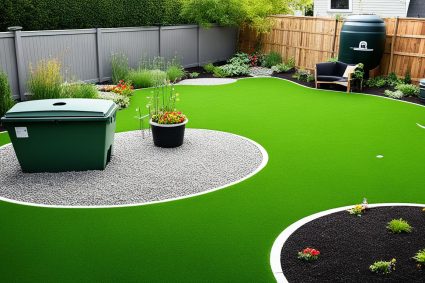
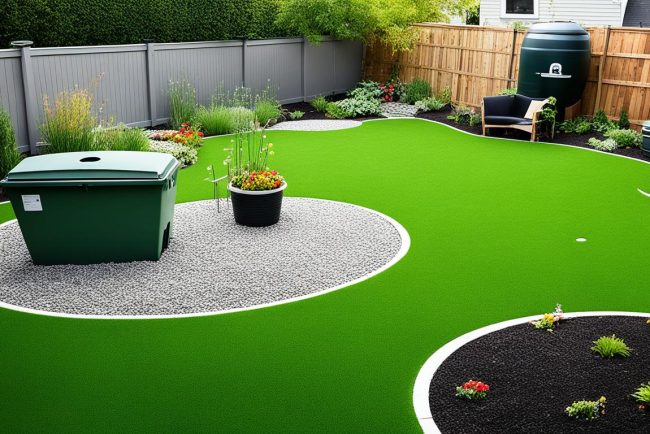
I also use rain barrels and catchment systems, which are important for my green gardens. They gather rainwater for later use, reducing the need for city water. In making gardens eco-friendly, it’s clear hardscapes are not just functional but part of a bigger sustainable plan. This careful design shows my dedication to a green, balanced outdoor space.
How to Transition to an Eco-Friendly Lawn
Switching to an eco-friendly lawn starts by checking my current landscape. To redo my yard, I must look at my current grass type. I then pick the best green grass options for my area. Removing the old turf is key, and I should use green methods to protect nature.
When picking my new eco-friendly lawn, options like groundcovers, clover, or moss are great. These plants make the soil better and protect it from erosion. They also help my yard use water more efficiently. They cut down on air pollution by lessening the need for mowing. This means fewer harmful gases like carbon monoxide.
After choosing my new plants, I’ll have a garden that’s easy to care for and looks great. Using grasses that hardly need cutting will mean less work and less water. Moving to a green lawn is more than making it look nice. It’s about creating a healthier place and helping local wildlife.