Eco-Friendly Outdoor Design with Artificial Grass

Synthetic grass can last up to 15 years, reducing the need for frequent changes seen with natural lawns. Today, as water scarcity becomes a global issue, turning to eco-friendly outdoor designs is essential. Artificial grass provides a sustainable choice, making outdoor areas lively with little upkeep.
Artificial grass saves water and cuts out the need for harmful chemicals. It’s perfect for those who love low-maintenance living. Families and pet owners find it ideal, offering safe outdoor spaces all year. Besides looking good, it solves the need for eco-conscious landscaping. Let’s dive into how artificial grass can revolutionize green outdoor spaces.

Understanding Eco-Friendly Outdoor Design
Eco-friendly outdoor design is key for making outdoor areas sustainable and nature-friendly. It aims to lower the environmental harm of landscaping, while making gardens look beautiful. By using green landscaping practices, we save resources, save water, and help wildlife.

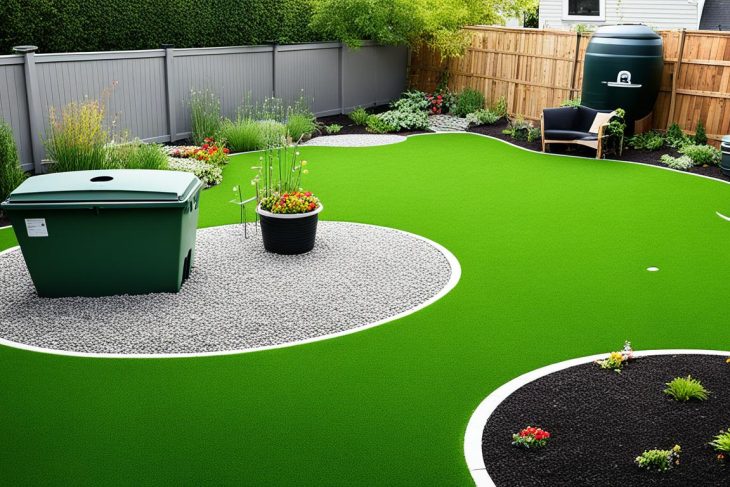
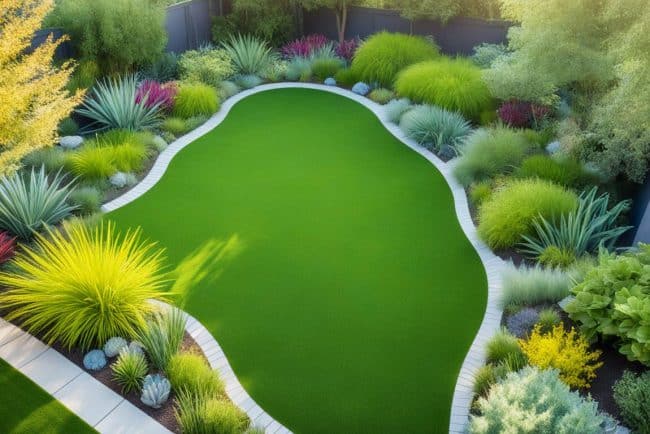
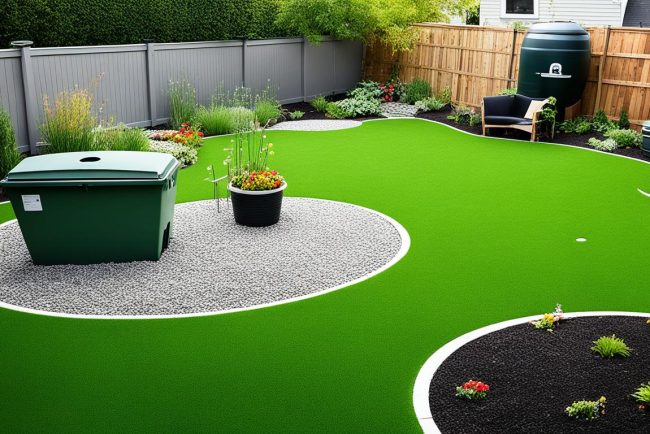
Choosing native plants is crucial for eco-friendly gardens. These plants do well in local weather and need less care. They also need less water and attract local animals. Using smart ways to manage water, like collecting rainwater, cuts down on water use. This makes keeping a garden both green and cost-effective.
Opting for eco-friendly materials cuts down on carbon emissions from getting and moving these materials. Using smart design ideas, like xeriscaping, helps use resources wisely. It keep ecosystems healthy. Making your outdoor space sustainable is not only good looking but also good for the planet.
Adding mulch to your garden helps keep the soil moist. This means you won’t have to water as much. Using drip irrigation and smart watering systems makes watering efficient. These methods show that being stylish and being eco-friendly can go hand in hand. Sustainable landscaping can create spaces that are both beautiful and good for the environment.
Benefits of Artificial Grass in Sustainable Landscaping
Artificial grass is great for eco-friendly gardens. It saves water, cuts down chemical use, and lasts a long time. It’s a top choice for those who care about the planet.
Water Conservation and Drought Resilience
Artificial grass is key in saving water. It doesn’t need daily watering, which lowers water use. This saves money on water bills and helps areas that don’t get much rain. The materials in artificial grass need very little water, making it a sustainable option.
Reduced Chemical Use in Lawn Care
With artificial grass, we use fewer chemicals. It doesn’t need fertilizers or pesticides. This makes our yards safer for kids and pets. It keeps the air cleaner and reduces allergies. This improves the quality of our outdoor areas.
Enhanced Durability and Longevity
Artificial grass saves money over time because it lasts long. It’s made strong to handle a lot of use and still look good. It doesn’t need much care, cutting down maintenance costs. This makes it a great choice for a low-upkeep garden.

Eco-Friendly Outdoor Design with Artificial Grass
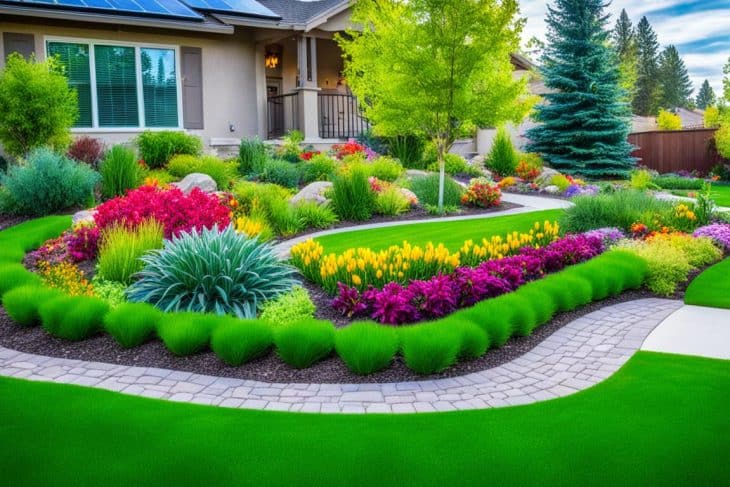
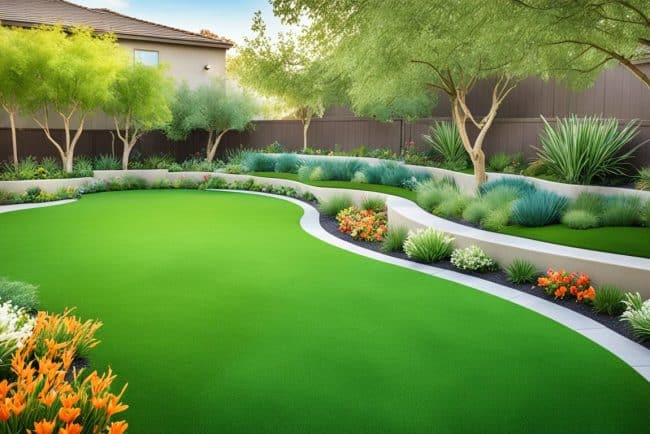
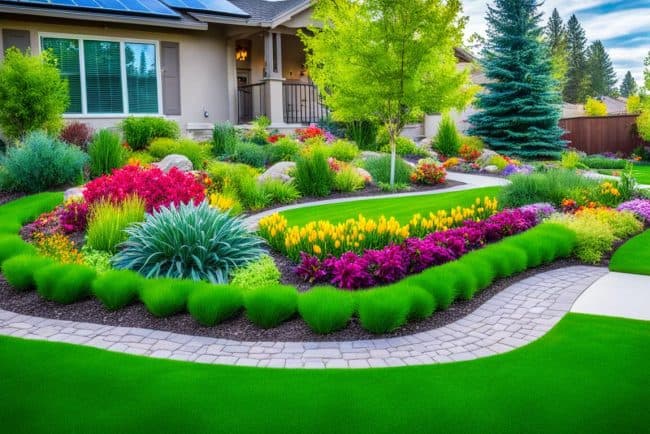
Keeping a beautiful outdoor space all year long can be tough. I’ve discovered artificial grass makes outdoor areas look better, no matter the season. It stays green without the constant care needed for real grass. Artificial grass advantages are many, making it a great choice for upgrading landscape looks.
Maintaining Aesthetics Year-Round
Artificial grass means no more watering, mowing, or fertilizing. It’s perfect for those with a busy life. It’s tough too, handling lots of walking and play from pets and kids. This keeps it looking good all year, showing off year-round greenery.

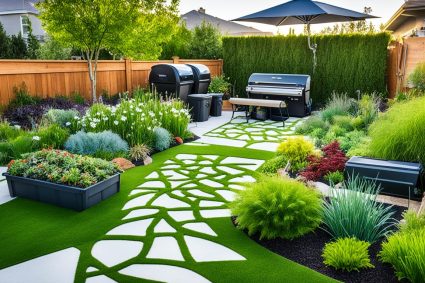
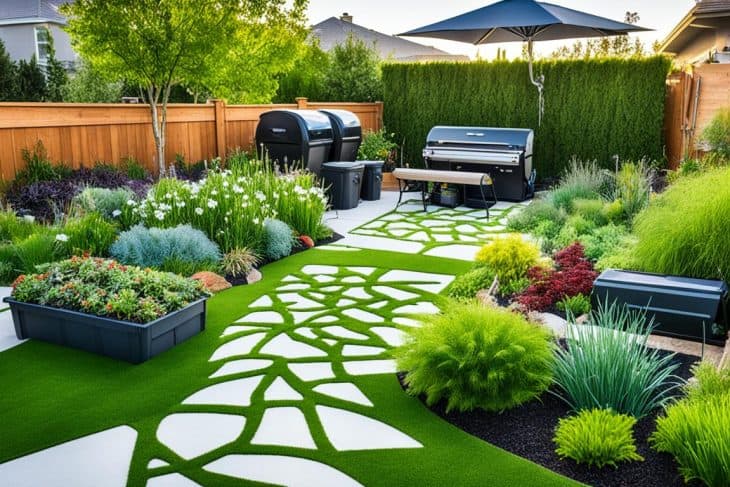
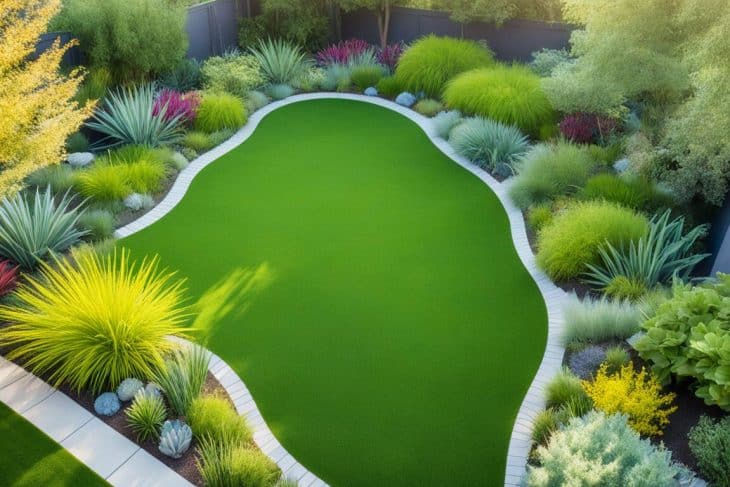
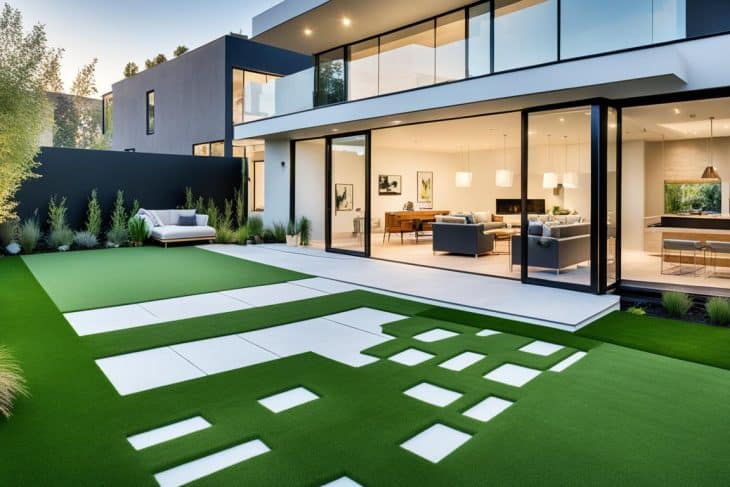
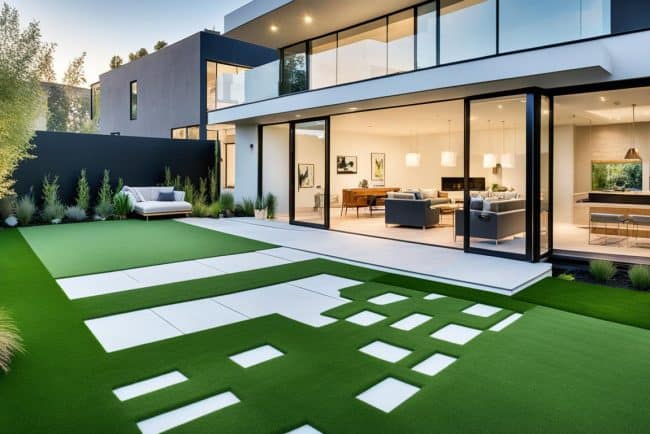
Using artificial grass makes designing an outdoor space easy and fun. You can add paths, patios, and play areas. It all comes together with a cool modern look that artificial grass brings.
To wrap it up, artificial turf makes outdoor spaces beautiful and easy to take care of. It’s lively and looks great no matter the season. For hassle-free, lovely landscapes, artificial grass is a smart choice.
Creating Versatile Spaces with Artificial Grass
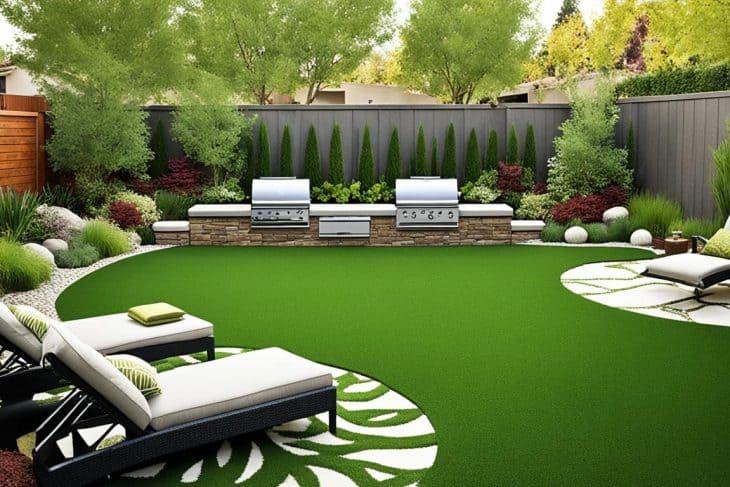
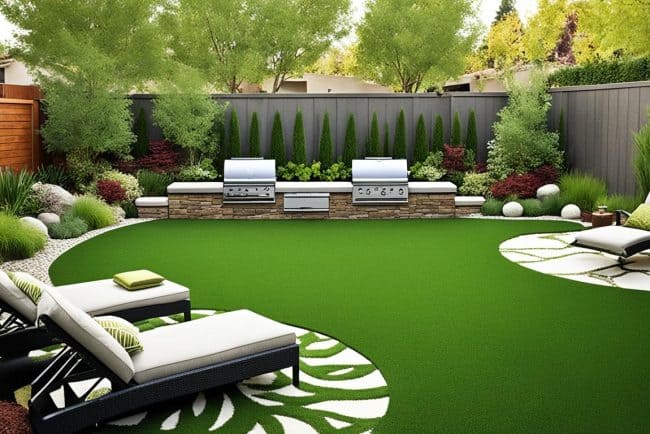
Artificial grass can change outdoor areas into useful spots. You can entertain, play, or chill in these vibrant spaces. It blends well with paths and patios, boosting both looks and usefulness.
Integrating with Pathways and Patios
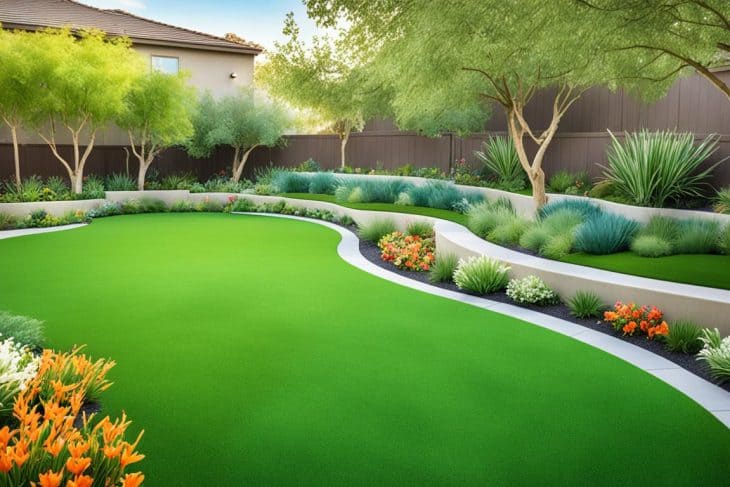
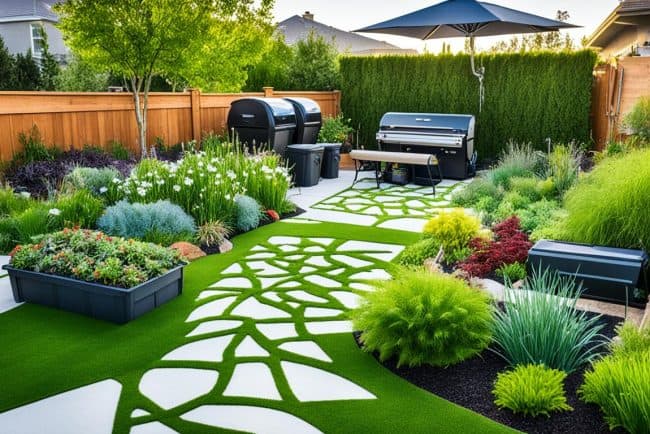
Artificial grass pathways make outside spots welcoming. They are softer than traditional paths, making walking comfy. This mix can make areas seem bigger and more interesting to explore.
Using artificial grass near fire pits and seating adds harmony to designs. It unites areas for fun gatherings or quiet moments. With this, I can make spaces that are pretty and useful.
Designing Play Areas for Children and Pets
Artificial grass is great for kids and pets to play on safely. Its softness helps prevent injuries. It’s a top choice for active families who want fun and safety.
This grass lets me create fun spots, like mini golf or bocce areas. These play areas boost my outdoor space and bring people together.
Adding artificial grass in designs boosts my outdoor areas. It fits in with modern living because it’s tough and easy to keep up. This makes ordinary spots into vibrant and useful areas.
Environmental Impact of Artificial Grass
Artificial grass offers more than good looks; it benefits the environment too. It has a real effect on our world’s health.
Decreased Emissions and Pollution
One big plus of artificial grass is its role in reducing emissions.
Lawn care usually needs gas-powered tools. These add to air pollution and greenhouse gases. Choosing artificial grass means less use of these devices. So, air quality gets better. With fewer emissions, artificial grass is great for those who care about the planet.
Erosion Control and Soil Stability
Artificial turf is also great for soil stability and stopping erosion. It keeps the soil in place and reduces water runoff. This is especially useful in erosion-prone areas.
By keeping a cover of vegetation, it supports local habitats. Thus, it’s both environmentally sound and looks good. This makes artificial grass a smart pick for eco-friendly landscaping.
Choosing the Right Artificial Grass for Your Needs
When picking artificial grass, it’s important to know about different types. This knowledge ensures it meets your needs and desires. Materials like polyethylene, polypropylene, and nylon offer unique benefits. They suit various uses due to their comfort and strength.
Understanding Material Composition
Artificial grass comes in three main types: polyethylene, polypropylene, and nylon. Each serves a special role outside. Polyethylene is great for homes because it looks real and feels soft. Nylon is very tough, perfect for places lots of people walk. Polypropylene is cheaper and good for places not often used. Knowing the benefits of each helps pick the best grass for your project.
Evaluating Pile Height and Density
The height and thickness of synthetic grass change its look and feel. High-traffic spots need shorter grass, from ⅜ to ⅝ inches, to avoid damage. For a soft, rich look, choose grass that’s between 1 ¼ to 2 ½ inches tall.
Thicker grass, with more blades per inch, looks more like real grass and lasts longer. The weight of the grass also shows its quality and durability. Considering these factors helps find the right grass for your style and needs.
| Material | Advantages | Typical Applications |
|---|---|---|
| Polyethylene | Soft texture, realistic look | Residential lawns, playgrounds |
| Polypropylene | Cost-effective | Temporary installations, low-traffic areas |
| Nylon | Superior durability | High-traffic locations, sports fields |
Installation Tips for Artificial Grass
Starting your artificial grass project with a good plan is vital. First, get rid of any plants and level the ground. This helps the artificial grass last longer and lay smoothly. Make sure you follow a detailed guide to cover important steps like drainage.
Choosing the right materials is key in DIY landscape projects. You’ll need faux grass rolls, base materials (like crushed rock), and seaming tape. Don’t forget a geotextile fabric to block weeds. Measure your area well because artificial grass comes in 15-foot rolls. You should have a 3-4 inch deep base for support.
It’s important to secure the turf with spikes along the edges for stability. Brushing the turf regularly also keeps it looking good longer. A smart installation approach makes your outdoor space look great. It also brings the benefits of being sustainable and easy to maintain. Adding artificial grass has made my outdoor area better in both function and looks.