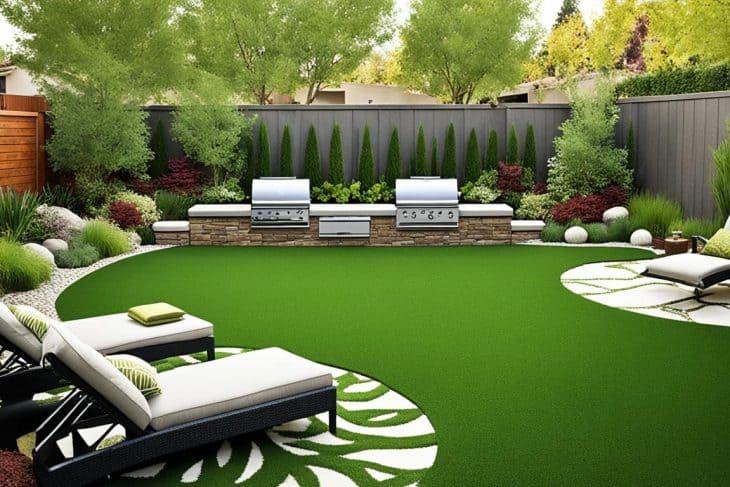
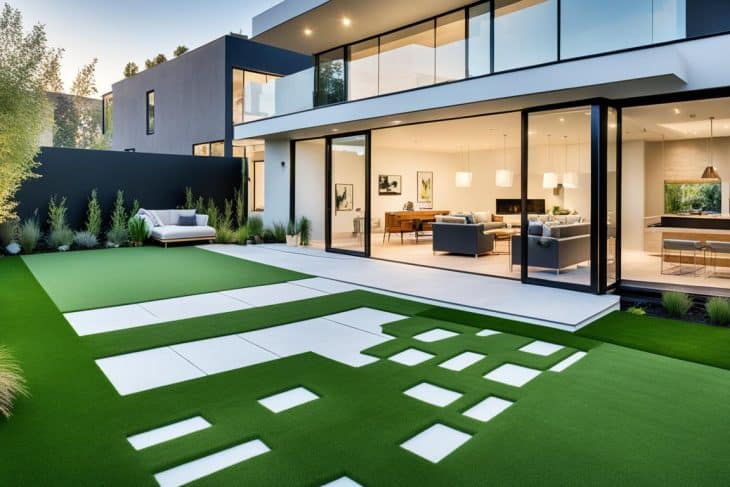
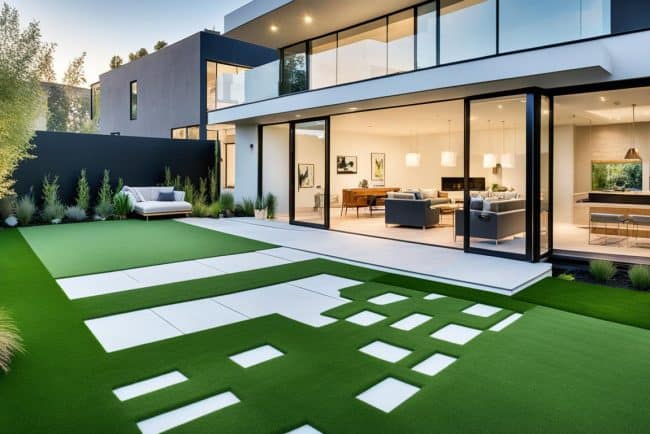
Eco-Friendly Choices for Artificial Grass

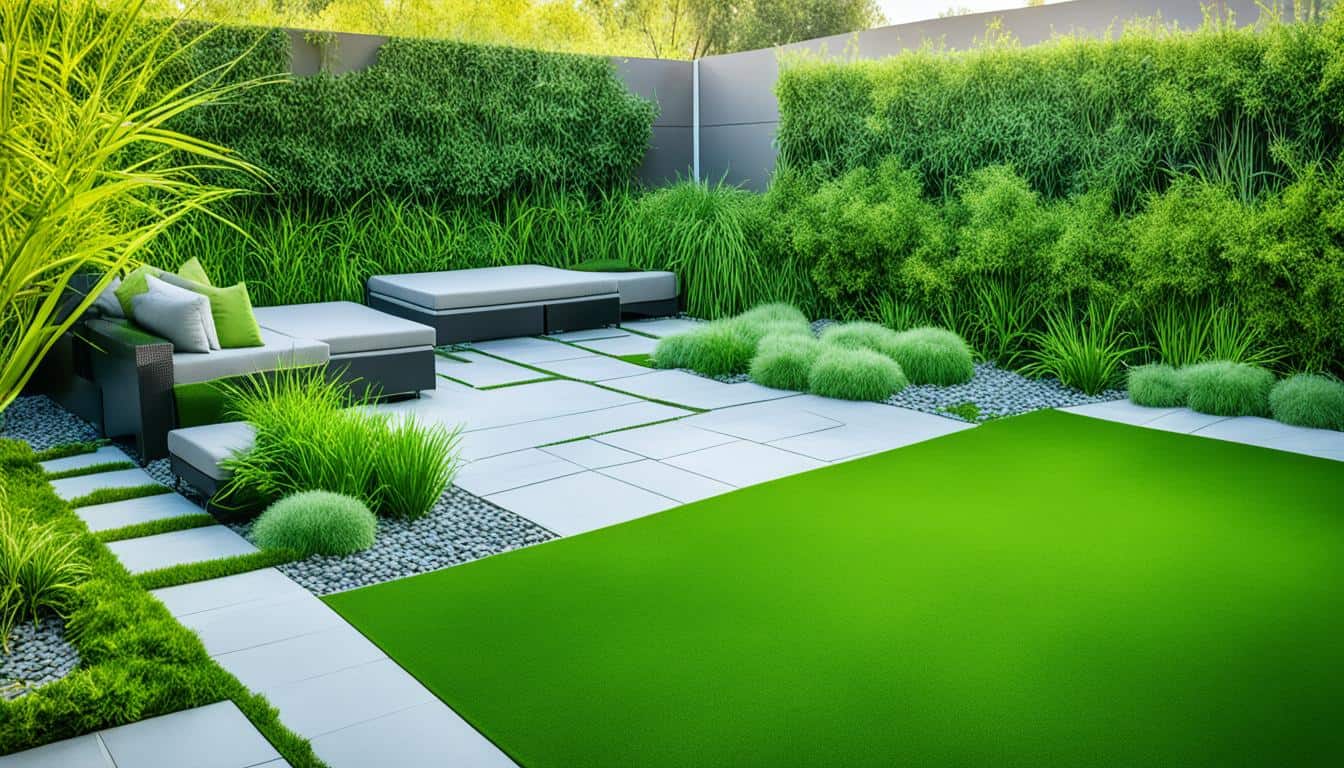
Did you know eco-friendly artificial grass can save homeowners up to 22,000 gallons of water every year? Many people are now choosing options that keep their lawns green and help the environment. Using synthetic turf saves water, which is very important today.
Eco-friendly artificial grass comes in different types that are good for our planet. This article talks about the materials used, why it’s good for the environment, how to put it in, how to take care of it, and how it saves money over time. By switching to sustainable turf, we can lessen our environmental footprint and still have a beautiful lawn.
Key Takeaways
- Eco-friendly artificial grass can save homeowners up to 22,000 gallons of water annually.
- Its lifespan can reach up to 25 years, proving to be durable and cost-effective.
- This sustainable turf requires no mowing, fertilizers, or pesticides, reducing maintenance efforts.
- Choosing eco solutions significantly cuts down on water bills and helps conserve natural resources.
- USDA certification guarantees that eco-friendly grass meets strict environmental standards.
What is Eco-Friendly Artificial Grass?
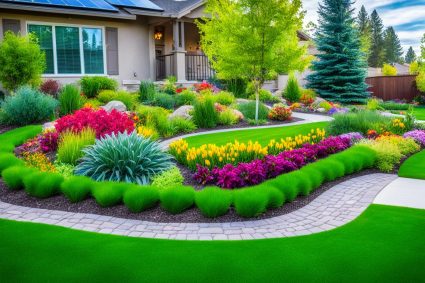
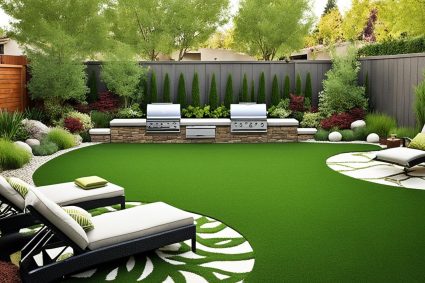
Eco-friendly artificial grass is a top choice for green landscaping. It looks and feels like real grass but is better for the planet. Thanks to new materials, this type of turf supports a green lifestyle.
Understanding Synthetic Turf
Synthetic turf has come a long way, now focusing on being eco-friendly. In dry areas like San Diego, it’s especially useful. It needs little water, cutting down on waste.
Artificial turf helps fight against high water costs. This makes it great for people in dry places.
Materials Used in Eco-Friendly Grass
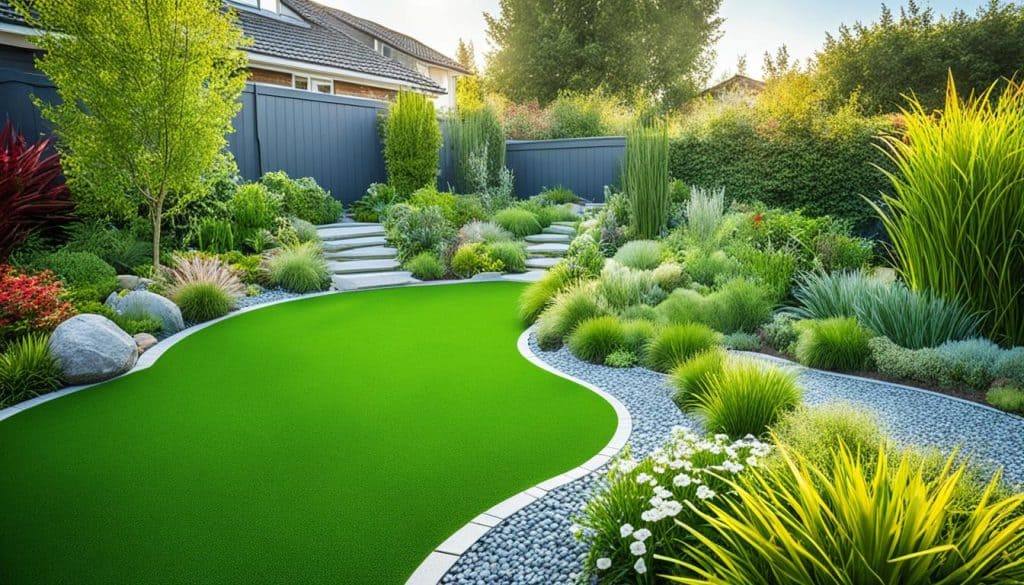
The making of eco-friendly artificial grass shows care for the environment. Some are made from plant-based materials like sugar cane or recycled stuff. This reduces the need for unsustainable resources.
Things like soy oils are also used to make them last longer. This way, they don’t add harmful chemicals to nature. Understanding these materials shows us a landscaping choice that is both green and durable.
| Feature | Eco-Friendly Artificial Grass | Natural Grass |
|---|---|---|
| Water Consumption | Minimal to none | High, requires regular watering |
| Lifespan | 10-20 years | Varies, often shorter |
| Pesticide Use | None required | Regular applications needed |
| Environmental Impact | Significantly lower | Higher due to maintenance equipment |
| Long-Term Cost | Reduced from lowered bills | Higher due to maintenance |
Environmental Benefits of Eco-Friendly Artificial Grass
Switching to eco-friendly artificial grass helps our planet in many ways. It saves water, cuts down carbon emissions, and stops harmful chemicals from being used. These changes show the real worth of choosing synthetic over natural grass.
Water Conservation
Water saving is a big plus of eco-friendly artificial grass. Regular grass needs lots of water, which wastes a lot. Artificial grass can save 55 gallons of water per square foot every year. That means around 8 billion gallons of water are saved daily in the U.S. People can lower their water bills and help local water supplies by choosing synthetic turf.
Reduction of Carbon Emissions
Reducing carbon emissions is another big environmental advantage. Artificial grass means no need for gas lawn mowers, which pollute the air. This change can cut down carbon dioxide emissions by 56.5 million pounds yearly from lawn mowers. Also, using eco-friendly materials for synthetic turf can drop residential water use by 30%. This helps combat climate change.
Elimination of Harmful Chemicals
Synthetic turf also reduces the need for harmful chemicals. Unlike natural grass, which often needs fertilizers and pesticides, artificial grass doesn’t. This can cut nearly 95% of harmful chemicals from reaching our water. It keeps the environment safe and is better for families and pets, making a healthier living space.
Eco-Friendly Choices for Artificial Grass
I believe it’s vital to pick eco-friendly artificial grass with USDA certification. This means it meets top standards for being sustainable. It shows the grass uses renewable resources and cuts down on bad chemicals.
USDA Certification and Its Importance
Choosing USDA-certified grass means I support sustainable farming. This certification means the grass is made with safe materials, good for the earth. It helps U.S. farmers, like those growing soy for turf backing. So, it helps our communities and the planet.
Support for Sustainable Agriculture
By picking USDA-certified turf, I back up sustainable farming. This move helps reduce harm to our environment and aids local economies. It’s cool to think every piece of synthetic grass saves over 15,000 gallons of water a year. Actions like this save water and help nature.
Installation Process for Eco-Friendly Artificial Grass
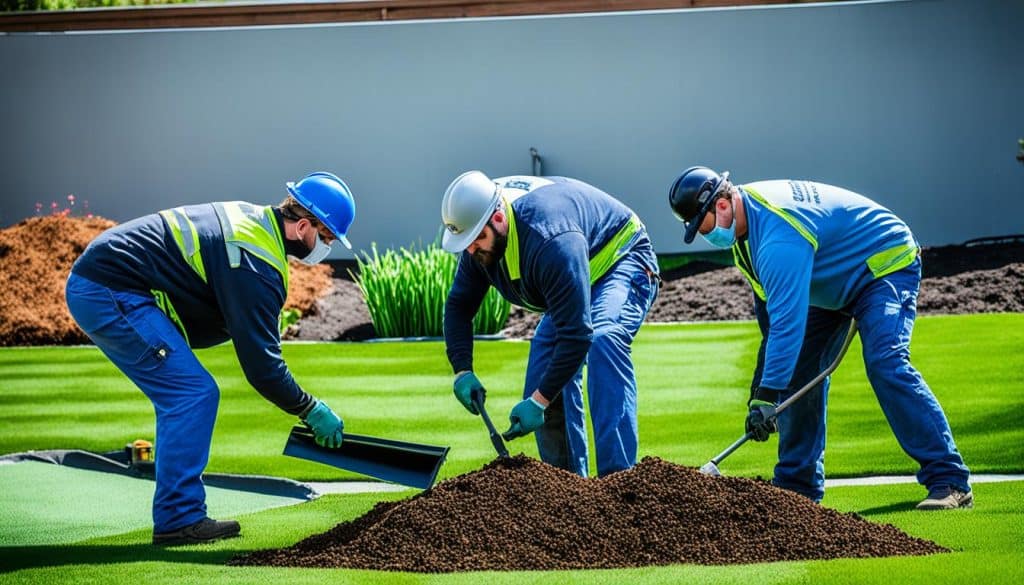
Installing artificial grass involves key steps for the best performance and long life. Each part of the process is important for a solid foundation, making the turf work well and look good. Knowing these steps helps me do the job well and quickly.
Preparation and Area Clearance
The first step is about getting the area ready. It’s important to remove all plants, stones, or trash. This makes the ground even, which is crucial for putting in the artificial grass right. During this time, I use tools like a tape measure and a wheelbarrow to measure and move stuff. Preparing the area well is key for the steps that follow.
Base Layer Addition and Leveling
The next step is to put down a base layer of crushed stone or gravel, about 2-3 inches thick. Making this layer compact and level is important for drainage and stability, which helps the artificial grass last longer. The stones must be spread out evenly to avoid any spots that could mess up the drainage.
Securing and Finalizing Installation
With the base ready, I then lay the artificial turf. I use landscape staples to keep it in place. An infill material might be added next, giving extra stability and softness. Now, the artificial grass is brushed to make it look its best and keep its shape for many years.
| Step | Description | Tools Needed |
|---|---|---|
| Preparation | Clear area of vegetation and debris | Tape measure, wheelbarrow |
| Base Layer | Add and level crushed stone or gravel | Shovel, rake |
| Installation | Lay and secure turf | Landscape staples, seam tape |
| Infill | Apply and brush infill for stability | Dropped infill tool |
Maintenance Tips for Eco-Friendly Artificial Grass
Maintaining artificial grass is easier and takes less time than real lawns. I focus on certain practices to keep my grass looking good. This ensures it stays colorful and welcoming.
Regular Cleaning Practices
Cleaning your artificial grass regularly is key. I brush areas with a lot of foot traffic to help the blades stand tall. Removing leaves and twigs often helps the grass stay pretty and healthy.
Rinsing lightly with water gets rid of dust and dirt. For deeper cleaning, I use products made for artificial grass. Using non-toxic, pet-safe cleaners keeps my lawn safe and pretty.
How to Handle Spills and Stains
Quickly dealing with spills makes a big difference. I use vinegar or mild soap and avoid harsh chemicals. For tough stains, I dab gently to avoid harming the grass.
Following these steps helps me keep my artificial lawn beautiful with little work. With proper care, artificial grass can look great for up to 25 years.
| Maintenance Activity | Frequency | Purpose |
|---|---|---|
| Brushing | Weekly | Keep blades upright and natural-looking |
| Debris Removal | As needed | Prevent buildup and maintain aesthetics |
| Rinsing | Monthly | Remove dust and dirt buildup |
| Stain Treatment | Immediately | Prevent deep-setting stains |
| Professional Cleaning | Annually | Enhance longevity and appearance |
Cost-Effectiveness of Eco-Friendly Artificial Grass
Turf proves its value by looking at the costs of keeping a lawn beautiful. Eco-friendly artificial grass costs more at first than natural grass. Yet, its long-term savings make up for the upfront cost. The best part is synthetic turf can last for over 20 years with proper care. This means you don’t have to spend money regularly on reseeding or re-sodding like you would with a natural lawn.
Long-term savings come from using less water. Artificial grass doesn’t need watering. This is a big plus in areas where drought is common. In fact, homeowners can save up to 70% on their water bills with artificial grass. Making it a smart choice for both your wallet and the planet.
The care for artificial grass is simple and cheap. You won’t need to mow, fertilize, or deal with pests. This cuts out many hidden costs. Many homeowners find that switching to artificial turf lets them save money. They can use these savings for other important projects.
| Cost Factor | Natural Grass | Artificial Grass |
|---|---|---|
| Initial Installation Cost | Lower | Higher |
| Annual Water Bills | High | Low |
| Maintenance Costs | Frequent | Minimal |
| Longevity | 2-5 years | 20+ years |
| Reseeding/Re-sodding | Frequent | None |
Choosing eco-friendly artificial grass also raises your property’s value. A neat lawn boosts curb appeal and can be a smart investment. The longer synthetic turf stays, the more it shows its worth. This comes through in less maintenance costs and environmental pluses.
Conclusion
Choosing eco-friendly artificial grass is a big step towards helping my home and the environment. It lets me cut down on water and reduce the use of harmful chemicals. These actions help in making lawns that look good and are better for the planet.
As cities use more and continue to grow, eco-friendly options like artificial grass become key. This choice helps me lower my impact on the earth and save resources for coming generations. Eco-friendly turf also means I get to enjoy green space all year without hurting the environment.
Getting eco-friendly artificial grass shows I care about our planet and want to live more sustainably. It offers many benefits, fitting well with my wish for a lovely, eco-conscious yard. It’s a way for me to make a difference with just one decision.