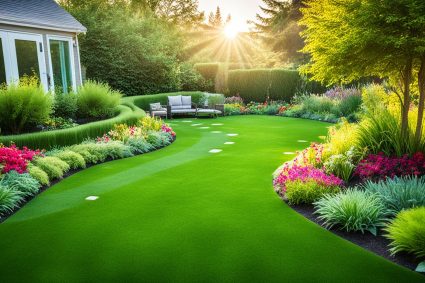
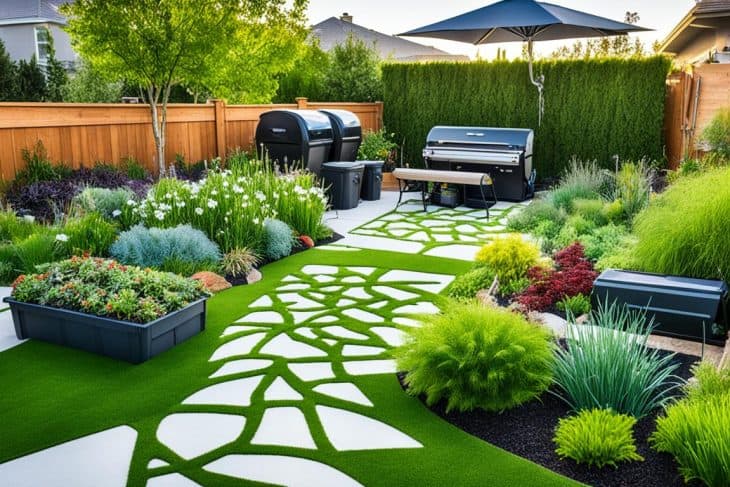
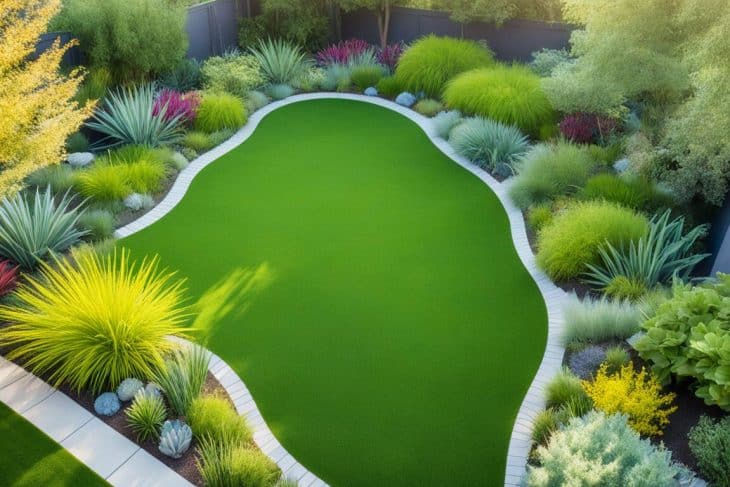
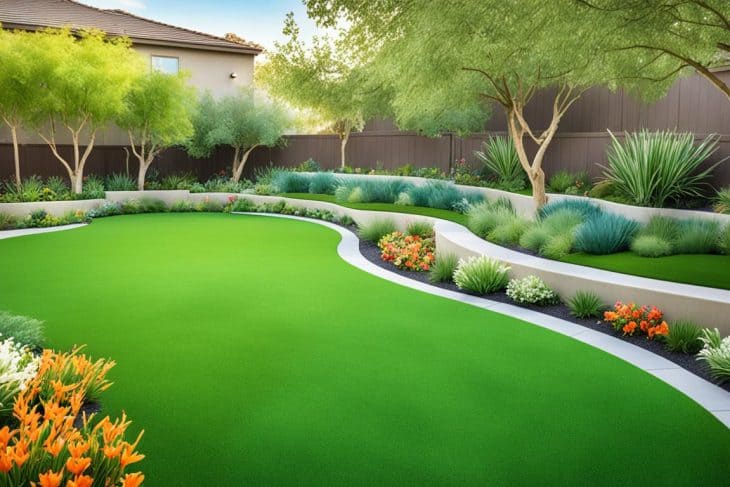
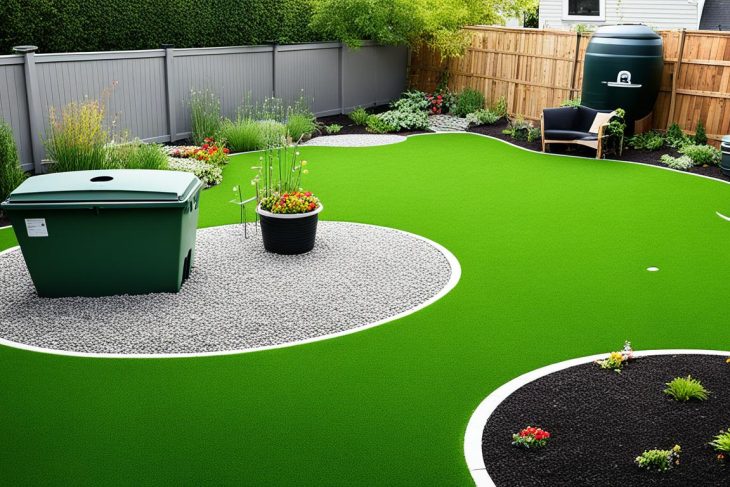
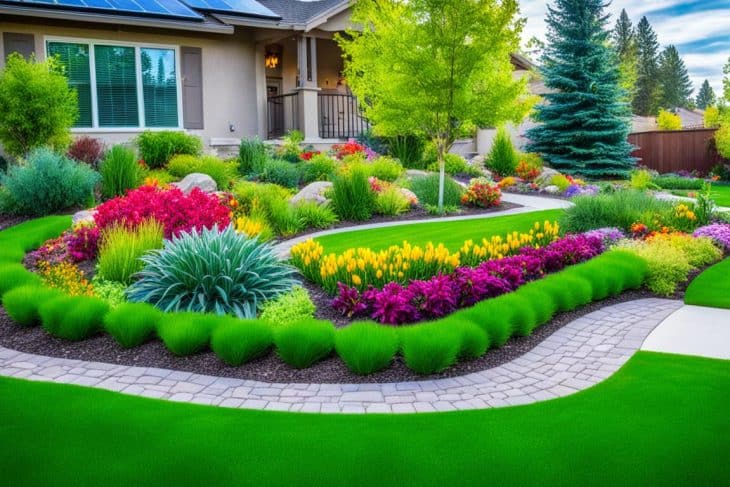
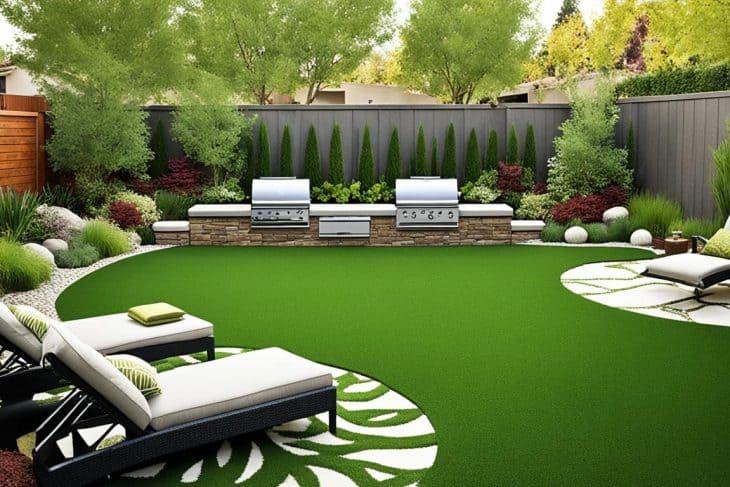
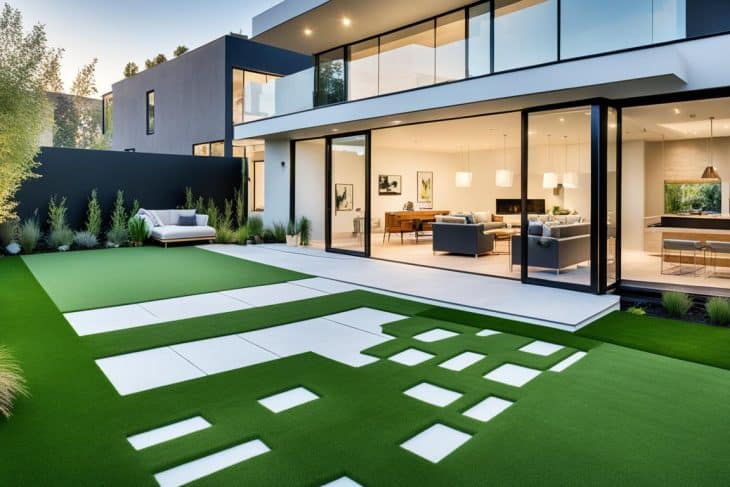
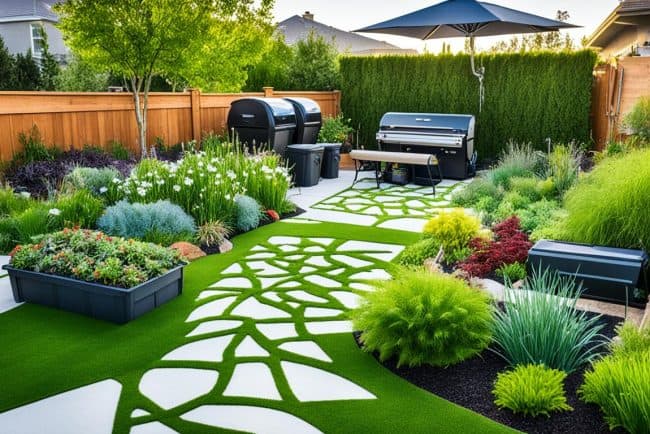
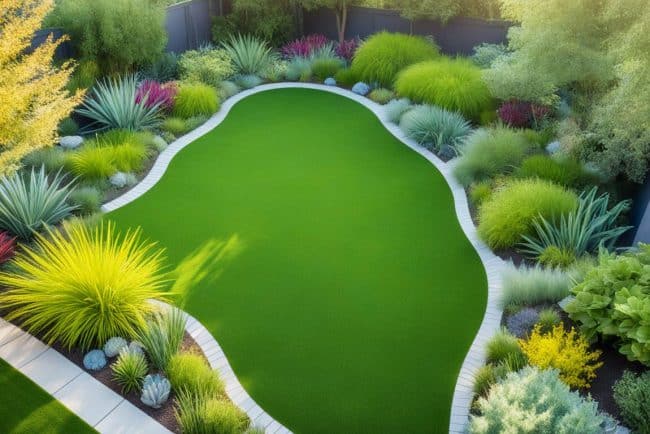
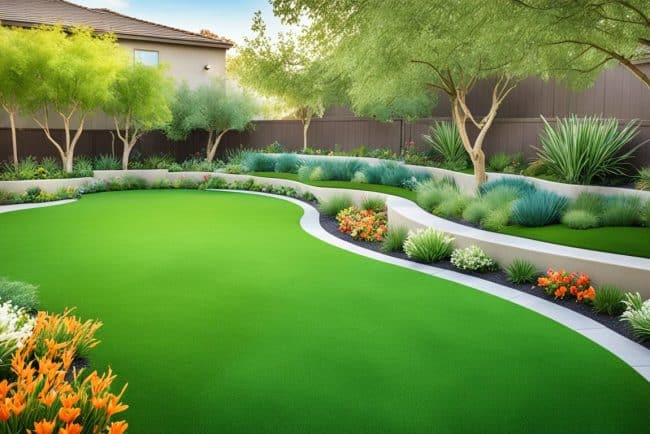
It was a warm Saturday morning when I decided it was time for a change. My yard had been patchy for years, fighting the heat and weeds every summer. And every winter, it turned into a muddy mess. I wanted something beautiful and easy to care for. That’s why I looked into artificial grass.
I pictured a lush, green space I could enjoy all year without the upkeep. Starting my Easy Grass Setup was exciting, diving into DIY artificial lawn installation.

This guide will take you through every step, from measuring your space to picking the right materials and tools. You’ll be able to have a beautiful lawn in no time. Whether your yard is big or small, artificial grass makes the perfect outdoor area just a weekend away. Let’s get started!
Key Takeaways
- Understand the benefits of choosing artificial grass for a low-maintenance yard.
- Proper planning and measurement are essential for a successful installation.
- Gather the right materials and tools before starting your DIY project.
- Preparing the turf base meticulously can ensure durability.
- Follow a step-by-step installation process for best results.
- Regular maintenance will help extend the longevity of your artificial lawn.
Understanding Artificial Grass and Its Benefits
Artificial grass is a top pick for homeowners wanting to improve their outdoor areas. It offers many benefits, like a lush look without the need for constant upkeep. Learning about the benefits of artificial grass and synthetic turf can help you decide.
Why Choose Artificial Grass?
There are many reasons to pick artificial grass for your yard. One big plus is saving a lot of water. The Environmental Protection Agency says you can save about 22,000 gallons of water a year by using artificial turf.
Artificial grass also means no more watering, unlike real grass which needs about 1 inch of water weekly. This makes it a wise, eco-friendly choice.
The cost to install it ranges from $6 to $20 per square foot. But, it saves money over time by cutting down on watering, mowing, and pest control costs. It lasts 15 to 25 years, making it a smart investment. Plus, it looks great with its dense pile and vibrant green color.
Eco-Friendly Advantages of Synthetic Turf
Choosing synthetic turf is good for the planet in many ways. It doesn’t need pesticides, fertilizers, or gas mowers. These can emit as much pollution as over 11 cars per hour, says the EPA.
This means less chemical use and cleaner air. It makes outdoor spaces safe for families and pets.

Artificial grass does need some regular cleaning to stay in good shape. But, its eco-friendly benefits and lower upkeep make it a great choice. Switching to synthetic turf means a beautiful yard with less work and a healthier planet for the future.
Planning Your Turf Install
Starting your turf installation planning is key to a great-looking lawn. Measuring your lawn space right is crucial for a natural look. It also helps in planning the grass direction, making it look more real.
Measuring and Designing Your Space
First, measure your yard’s dimensions. Use a tape measure and mark where you’ll put the artificial grass. This is a key step in planning your turf installation.
Don’t forget about uneven areas that need leveling. I suggest using a class two road base, about three inches thick, for a solid foundation.
| Measurement Type | Recommended Size |
|---|---|
| Lawn Depth for Base Material | 3 inches |
| Thickness of Ideal Weed Barrier | 2 to 6 mm |
| Edge Nail Length | 3 to 5 inches |
| Distance to Cut Turf from Borders | ¼ inch |
Choosing the Right Artificial Grass Product
After measuring, pick the right artificial grass. I’ve seen many options, like those from SGW, which mimic real grass well. Your choice depends on your needs, like if you have pets or kids.
Look for a product with a good warranty. SGW offers up to a 15-year warranty, one of the best around. Their focus on technology and customer service makes them a top pick for homeowners.

Easy Grass Setup: Essential Materials and Tools
For a successful installation, it’s important to gather the right materials and tools. Having everything ready beforehand makes the process smoother. Here’s a detailed list of what you’ll need.
List of Required Installation Materials
When starting your artificial grass project, remember these essential materials:
| Material | Description |
|---|---|
| Synthetic Grass | Available in 15-foot rolls, comes in various styles and colors. |
| Base Material | Crushed gravel, Decomposed Granite (DG), or builder’s sand is recommended for drainage. |
| Seaming Tape | Used to join sections of artificial grass securely. |
| Turf Adhesive | Essential for bonding seams effectively. |
| Infill Material | Sand or other materials like Zeolite to protect the turf and minimize odors. |
| Landscape Edging | Plastic bender boards or concrete to provide a clean finish. |
Recommended Installation Tools for a Smooth Process
The right tools are key to a seamless lawn. Here are some essential tools for turf setup:
| Tool | Purpose |
|---|---|
| Utility Knife | For precise cutting of artificial turf. |
| Tape Measure | Accurate measurements ensure the correct amount of grass. |
| Compactor | To ensure a stable and level base. |
| Rake | To spread base materials evenly. |
| Shovel | For digging and moving materials as required. |
| Roller | Helps to compact the base material efficiently. |
| Carpet Knee Kicker | Used for removing wrinkles from the turf. |
| Silica Sand | Infill material that aids in keeping the grass fibers upright. |

Preparing the Turf Base for Installation
Getting the turf base ready is key for artificial grass installation. It makes sure the grass lays flat and looks great for years. I start by preparing the area well to avoid problems like sinking spots or bumps.
Removing Existing Grass and Soil
First, I remove the sod and soil. Clearing two inches of grass and soil is crucial for the base layer. It’s best when the ground is dry, so I wait a day or two before starting. Tools like a sod cutter or shovel help me get a clean removal, ready for a solid base.
Applying Weed Killer and Scouting for Roots
After removing the grass, I apply weed killer to the soil. This stops unwanted plants from growing through my new turf. I also look for any roots that could mess up the leveling foundation for artificial grass. Getting rid of these roots makes the base stable and smooth.
Creating a Level Base with Decomposed Granite
For the final step, I use decomposed granite to level the foundation. This material is perfect for a level base that can support the turf. I aim for a 2-3 inch thickness, making sure it’s packed down tight. This supports the artificial lawn and helps with drainage, preventing mold later on.
| Step | Description | Tools Needed |
|---|---|---|
| Removing Sod | Clear about 2 inches of grass and soil. | Sod cutter, shovel, rake |
| Applying Weed Killer | Prevent future weed growth. | Sprayer, gloves |
| Leveling Base | Install decomposed granite to create an even foundation. | Wheelbarrow, compactor, measuring tape |
Step-by-Step Guide to Installing Artificial Grass
Installing artificial grass can make any outdoor space look great. It’s important to follow clear steps for a smooth process. This guide will show you how to lay synthetic turf, from start to finish.
Unrolling and Laying the Turf
Start by unrolling the turf over the base. Make sure the grass blades face the same direction for a natural look. If needed, cut the turf to fit around edges and obstacles.
Plan your layout carefully. Make sure the turf covers the whole area without too many overlaps.
Seaming Multiple Pieces Together
If you’re using more than one piece of turf, secure the seams well. Use strong adhesive and the “zipper method” for seams. This method creates a strong bond and hides the seams well.
Stretching and Securing the Artificial Grass
After laying the turf and securing seams, stretch it out. This step removes wrinkles and makes the turf even. Then, use stakes or pins to hold the edges and seams in place, about 6 inches apart. This keeps the turf looking great.
| Installation Step | Description |
|---|---|
| 1. Unroll Turf | Lay out the turf with blades aligned for consistency. |
| 2. Seam Turf | Use adhesive and the zipper method for connecting pieces. |
| 3. Stretch Grass | Eliminate wrinkles by stretching the grass evenly. |
| 4. Secure Edges | Fasten the perimeter with stakes every 6 inches. |
Follow these steps for a successful artificial grass installation. Enjoy your beautiful, easy-to-maintain lawn for years!
Maintaining Your Artificial Lawn for Longevity
To keep my artificial lawn looking great for years, I stick to a strict maintenance plan. Brushing the turf often keeps the blades standing tall and looking good. Adding infill also helps with this and makes the grass feel softer underfoot. Plus, artificial grass uses much less water than real grass, which is great for saving water in places like Dallas-Fort Worth.
Now and then, I clean the turf by removing debris, pollen, and dust. I also check for weeds and use eco-friendly weed killers to get rid of them. With the right care, my artificial grass can last up to twenty years.
Regular rinsing and cross-brushing are key to keeping my lawn looking perfect all year. If I get stains like cola or grease, I use a hose and a plastic-bristle rake to clean them up. For tough stains, a bit of mineral spirit works well.
If stains are really hard to remove, I know I can call DFW Turf Solutions at 940.365.9165. They’ve been helping in this area since 2014. Keeping my artificial lawn in top shape makes my outdoor space more enjoyable, without the work of real lawn care.

More Stories