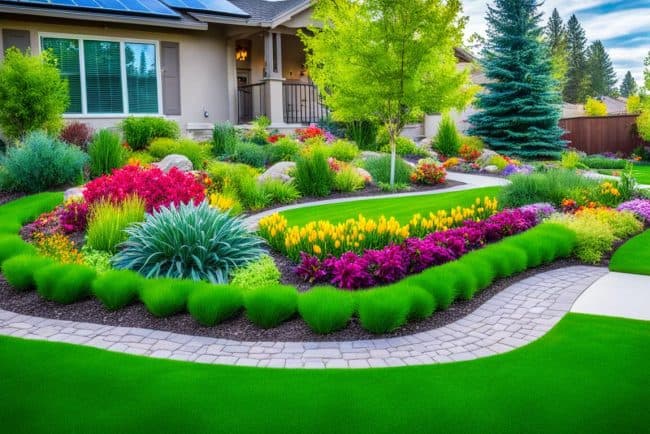
Sustainable Grass Options for an Eco-Friendly Lawn

Did you know a gas-powered lawn mower makes as much pollution in an hour as *11 running cars*? This fact makes many homeowners look for better, sustainable grass options. By choosing these alternatives, our lawns can stay green. And we avoid harming the earth.
In this article, let’s explore eco-friendly grass choices. They look great and are good for our planet. We’ll look at groundcovers, native plants, and wildflower meadows. These options save water, cut down on pollution, and help all kinds of life thrive. Let’s make our outdoor areas beautiful and planet-friendly together.
Key Takeaways
- Gas-powered lawn mowers significantly contribute to air pollution.
- Eco-friendly grass alternatives thrive on minimal watering and no pesticides.
- Groundcovers provide an attractive, low-maintenance solution for lawns.
- Native plants are adapted to local climates, requiring less attention.
- Wildflower meadows bring beauty and require little maintenance.
- No-mow and low-mow grasses lessen greenhouse gas emissions from mowers.
- Transitioning to sustainable grass options helps preserve biodiversity.
Understanding Eco-Friendly Grass Alternatives
Shifting to eco-friendly grass alternatives is great for having a beautiful yard and helping the planet. These alternatives use fewer resources and support healthy environments. Homeowners like them for garden care that doesn’t harm the earth.
What Makes Grass Eco-Friendly?
Eco-friendly grass thrives with less water and fewer chemicals. Traditional lawns use a lot of water, covering 50 million acres in the U.S. They use about 3 trillion gallons of water every year. Using alternatives can lower water use and help the planet.
Options like thyme and clover are good for the earth. They help local wildlife and don’t need much care. Moss is great for shady spots because it doesn’t need cutting or watering. This saves water and reduces pollution.
Benefits of Sustainable Grass Options
Choosing sustainable grass has many perks. They use a lot less water and don’t need harmful chemicals. This can cut down on pollution from using gas mowers. Over 200 million gallons of gas are used each year just for mowing lawns.
These eco-friendly choices make our ecosystem healthier. Clover, for example, makes soil better and attracts bees. Using sustainable grass makes outdoors prettier and safer for everyone.
Best Sustainable Grass Options for Your Lawn
Choosing sustainable grass options can make your lawn eco-friendly. Ground covers, native plants, and wildflower meadows beautify outdoor spaces. They also boost biodiversity and support ecosystems. These options need less upkeep than regular grass. This makes them great for those wanting to garden sustainably.
Groundcovers: A Low-Maintenance Choice
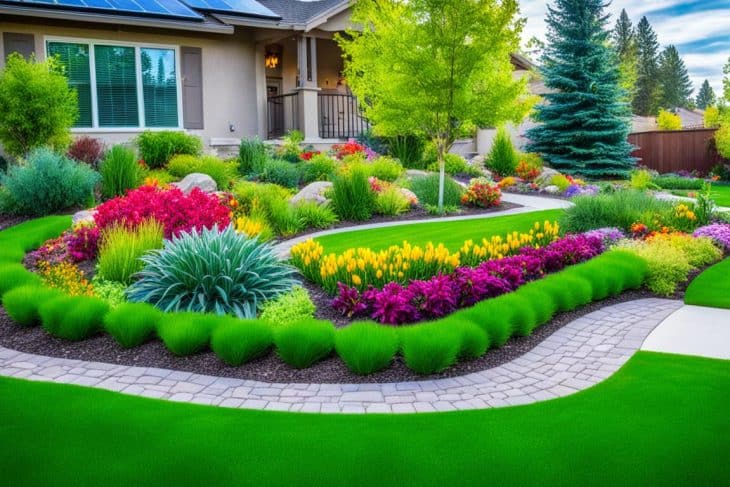
Groundcovers like creeping thyme and clover are top choices for easy lawns. Clover needs just four to six hours of sunlight daily. These plants cut down on the need for fertilizers and lots of watering. They also stop soil erosion and create homes for pollinators. By choosing native groundcovers, they fit well with local areas. This enhances biodiversity and helps wildlife.
Native Plants: Thriving in Local Ecosystems
Native plants excel in sustainable gardening. They grow well in their own ecosystems without much help. Take butterfly milkweed or blue wood aster. They handle drought well and don’t usually need fertilizers. These plants make my garden more colorful. Plus, they support wildlife by providing food and shelter. Adding native plants makes your yard blend with local nature.
Wildflower Meadows: A Colorful Alternative
A wildflower meadow turns a lawn into a colorful scene. Black-eyed Susans and coneflowers add beauty. They also aid pollinators. Wildflower meadows hardly need maintenance. They get by with natural rainfall and love sunny spots. The perks are huge; they boost biodiversity and improve air and soil quality.
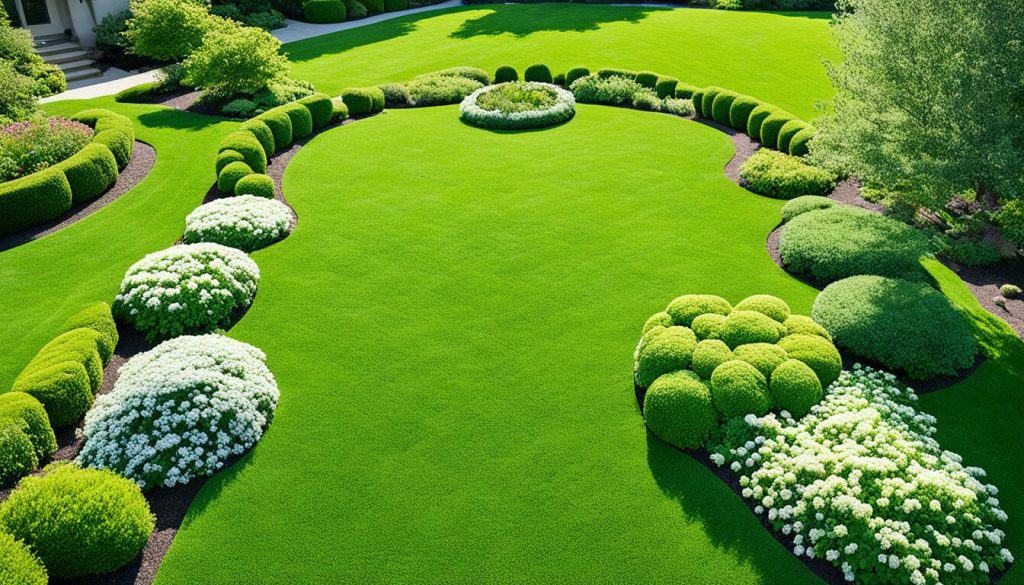
Sustainable Grass Options: No-Mow and Low-Mow Grasses
Choosing no-mow and low-mow grass options cuts down on yard work and resources. Hard fescue and Frog Fruit ground cover work great for this. They adapt well and look lush with very little effort.
A 5-pound bag of hard fescue seeds covers about 1,000 square feet and costs around $50. It needs cutting only once or twice a year. Plus, no-mow grasses like White Dutch clover and Kurapia help pollinators and make gardens better.
Going for these grass types is more than just handy. The Environmental Protection Agency says that gas lawn mowers create 5% of the US air pollution. Using these grasses means less need for those mowers, so I pollute less and save on resources.
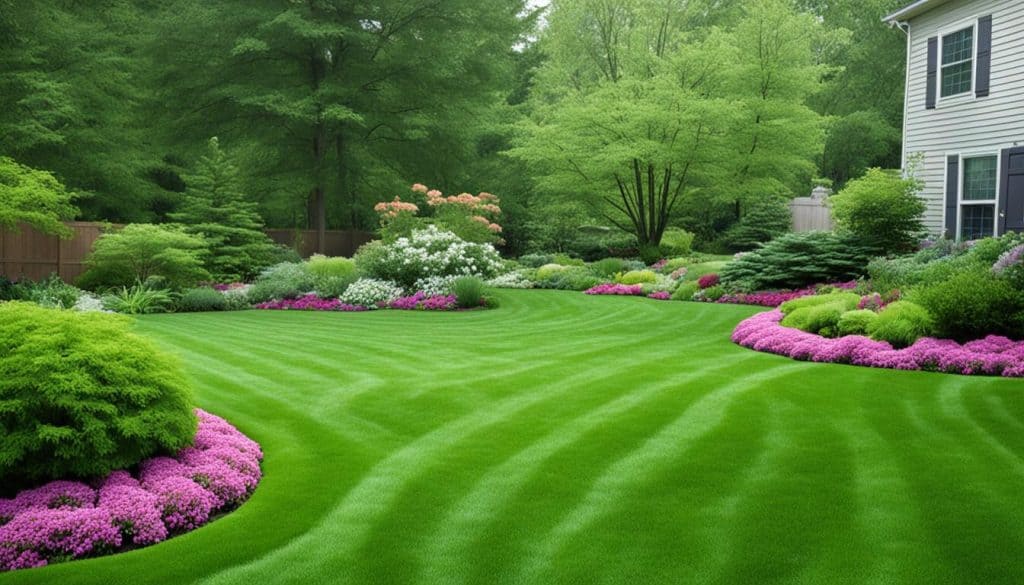
Buffalograss and Zoysia tenuifolia are also low maintenance. Buffalograss, from the Great Plains, likes clay and alkaline soils and needs one mow a year. Zoysia is bright green and needs cutting twice a year but doesn’t attract pests.
Using creeping thyme and clover makes the garden better for biodiversity and resilience. These choices make switching to sustainable grasses both rewarding and a smart move.
Additional Eco Solutions for Your Lawn
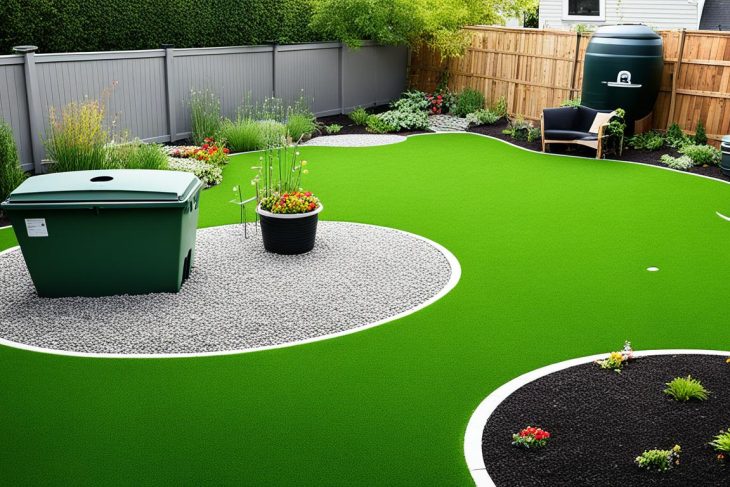
Exploring eco-friendly options can make my yard look better and be more sustainable. Adding a rain garden and using hardscapes like rock gardens can help manage stormwater. They also support diverse plant and animal life.
Planting a Rain Garden
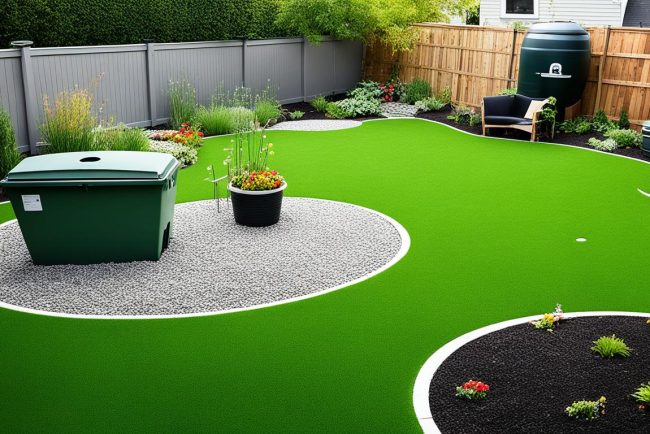
A rain garden is both pretty and practical for dealing with rainwater runoff. It uses native plants to filter stormwater, improving the soil and providing homes for local wildlife. The design also helps prevent erosion and boosts groundwater. It brings a touch of nature to my yard and plays a key role in managing stormwater.
Incorporating Hardscapes and Rock Gardens
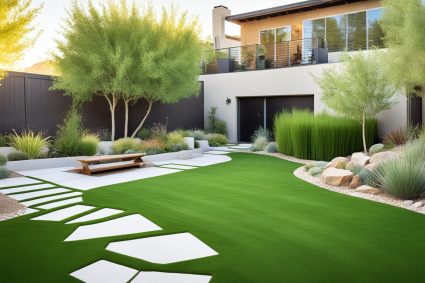
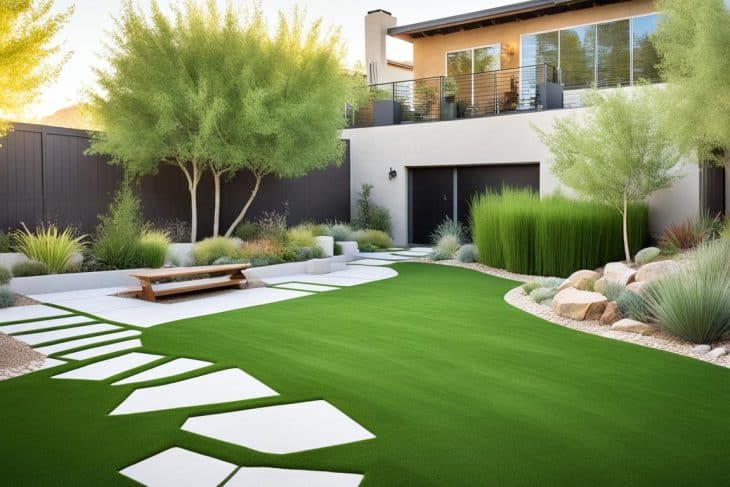
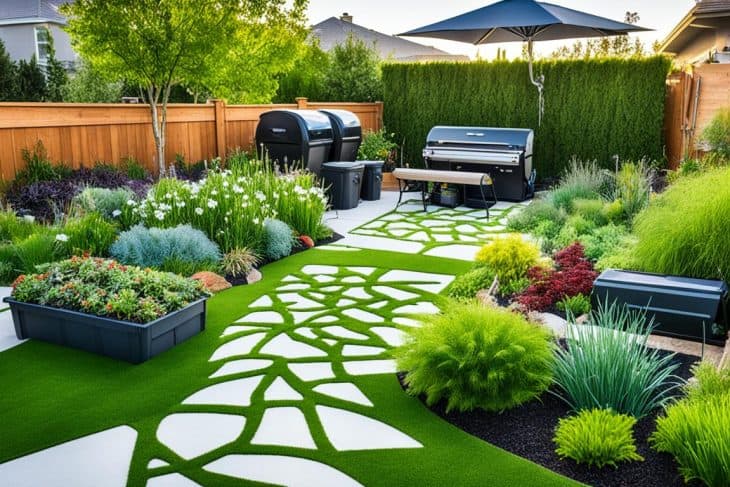
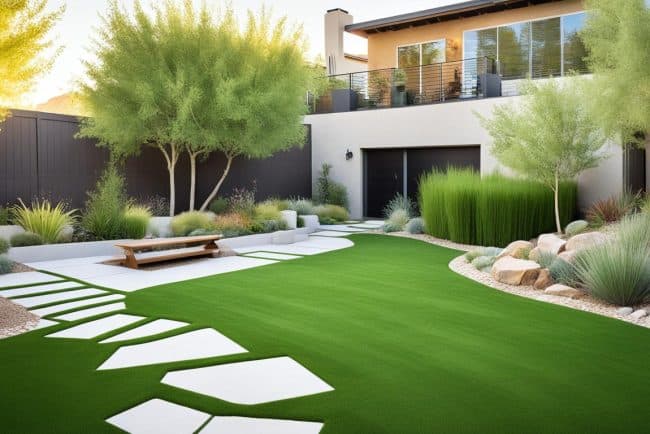
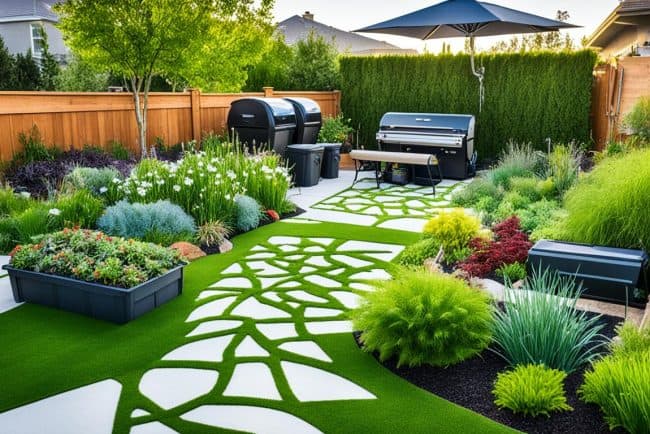
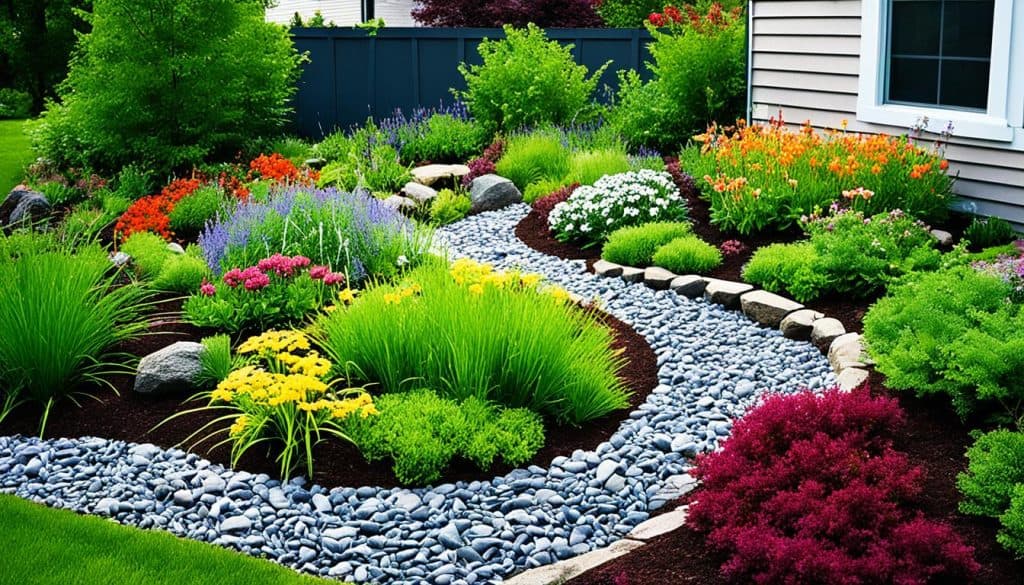
Adding hardscapes and rock gardens means less grass that needs constant care. For example, replacing some lawn areas with pathways or decorative rocks saves water and offers a distinctive look. These areas are easier to take care of than normal grass and make for great outdoor spaces. They can also feature drought-resistant plants, making my landscaping efforts even more sustainable.
| Feature | Rain Garden | Hardscapes/Rock Gardens |
|---|---|---|
| Environmental Impact | Reduces stormwater runoff and enhances groundwater recharge | Minimizes water use and supports biodiversity |
| Maintenance Level | Low maintenance with native plants | Requires minimal upkeep compared to grass |
| Visual Appeal | Attractive addition with colorful native flora | Offers unique textures and design possibilities |
| Wildlife Support | Provides habitat for pollinators and beneficial insects | Can attract various species with native plantings |
Choosing both a rain garden and rock gardens not only makes my yard look good. It also supports sustainable and low-maintenance landscaping. This is good for the planet and my free time.
How to Transition to an Eco-Friendly Lawn
Starting to make my lawn eco-friendly takes careful planning. I begin by slowly replacing parts of my regular grass. I use plants, grasses, or covers that fit my area’s weather. This means picking the right types that grow well locally and help the environment.
I get a lot of help by talking to local experts. They guide me towards the best eco-friendly choices for my place. By doing this, my lawn looks better and also helps the local wildlife. For example, adding native flowers can help bees, which are important for pollinating plants.
Switching to an eco-friendly lawn is a step-by-step journey for me. I choose grasses that don’t need much water and avoid harmful chemicals. This lowers my environmental impact and also makes my lawn healthier. In the end, my efforts help support a rich ecosystem right at home. This shows that you can have a lovely lawn that’s also good for nature.