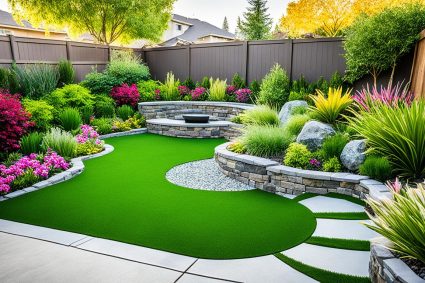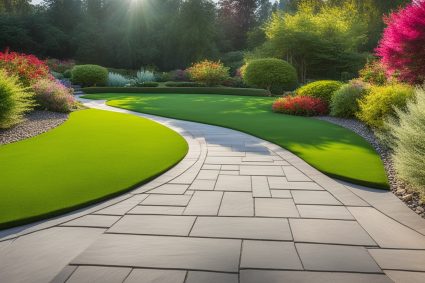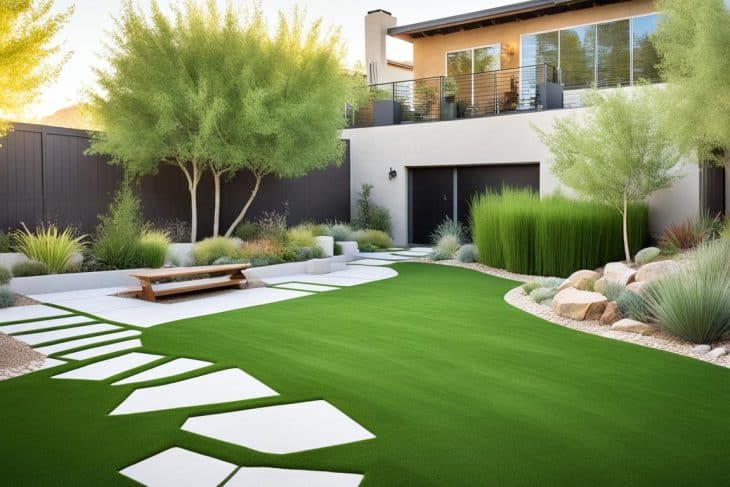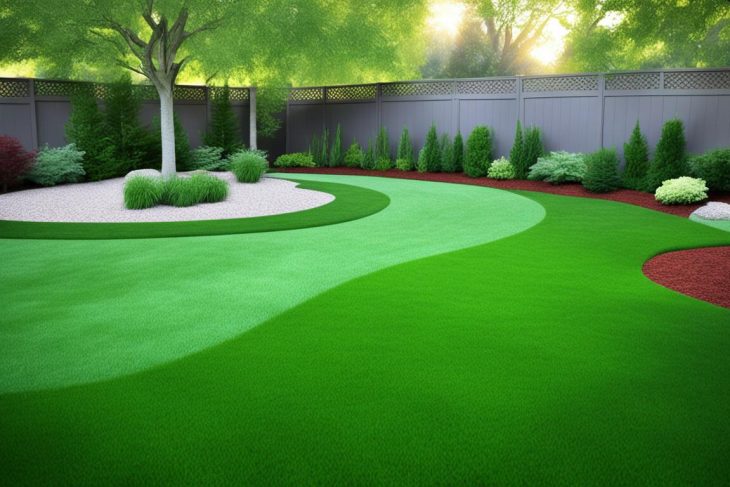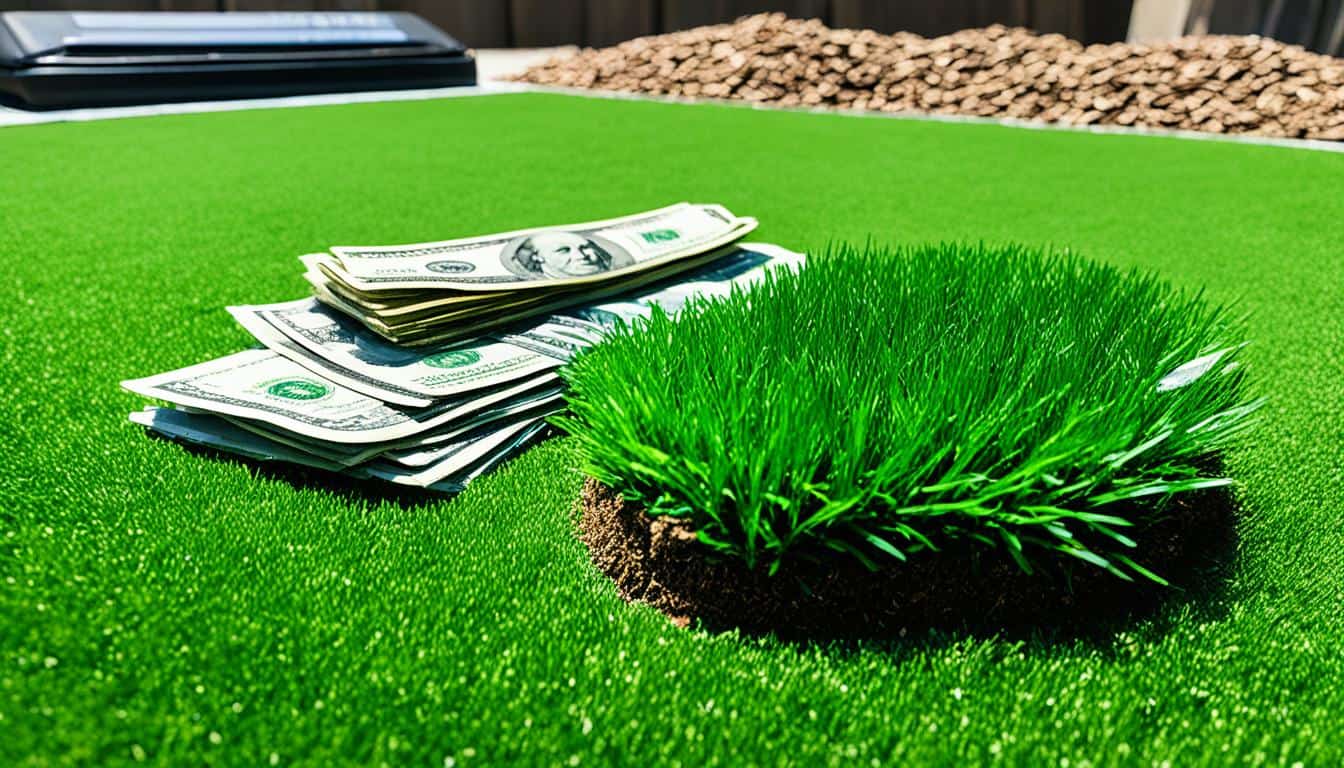
When I thought about putting artificial turf in my backyard, I was both excited and unsure. In my Midwest home, summer droughts often left my lawn patchy and brown. I dreamed of a lush, green space that was easy to care for. But one big question lingered: what are the real artificial turf costs?
There are many options, from polyethylene to nylon, each with its benefits. I realized I needed to look closely at the cost analysis. My choices would affect my budget now and my lawn’s future. I considered everything, from yard size to the type of material. Knowing the synthetic grass value was key. This was more than a beauty choice; it was an important financial decision.
Let’s dive into the details of artificial turf costs together. If you’re thinking about making your yard greener and more sustainable, join me. We’re just getting started on this journey.
Understanding the Basics of Artificial Turf
Exploring artificial turf means looking at what it’s made of and how it works. It’s made from three yarn types: polyethylene, polypropylene, and nylon. Each contributes to the turf’s quality and how it performs.
Over time, synthetic grass has improved a lot. Earlier versions weren’t as realistic as today’s options. Now, technological advancements have led to products that look like real grass. They can also handle more wear and tear. For example, denser turf with more stitches lasts longer. The pile height, which varies, adds to synthetic grass’s versatility.
When looking at artificial grass, it’s important to understand a few things. The face weight tells you about its quality; heavier means more durable. A backing weight over 26 ounces is good for high-traffic areas. Features like thatch color, blade shape, density, and how well it drains make a big difference in looks and function.
Caring for synthetic grass is easy. Using infill like silica sand helps the blades stand up and look good. A good drainage system stops water from pooling. If installed right, artificial grass can save money on water and upkeep in 3 to 5 years.
People like artificial grass for its practical and environmental benefits. Using turf that looks natural and fights microbes is great for a clean, green yard. More people are choosing eco-friendly options for their lawns today.
Factors Influencing Artificial Turf Costs
Several factors impact the cost of artificial turf. These include yard size, installation location, and the type of material. Understanding these factors helps estimate the total cost of your project.
Yard Size and Shape
The size and shape of your yard matter a lot. Larger yards mean more material and higher costs. A typical yard costs about $10 to $18 per square foot for homes. Irregular shapes can make installation harder and more expensive.
Larger areas can cost less per square foot, thanks to economies of scale.
Installation Location
Where you install the turf also affects the price. Front yards are cheaper, costing $10 to $15 per square foot. Backyard installations are more, at $12 to $18 per square foot. This is due to their complexity and the extra work needed.
Tough spots like slopes or rooftops can cost $15 to $25 per square foot. The specific site conditions determine preparation and installation methods, influencing the budget.
Material Types
The type of material chosen for the turf also influences the price. Polyethylene (PE) turf is durable and costs $2 to $4 per square foot. Polypropylene (PP) turf is more affordable, priced at $1.90 to $6.75 per square foot. Nylon turf, known for its strength, costs between $5.05 to $5.83 per square foot.
Each material offers unique benefits and looks. This choice can greatly impact the project’s cost and final appearance.
Lawn Investment Guide: Cost Breakdown of Artificial Turf
This text talks about the costs of putting in artificial turf. It looks at the price of materials and labor. It also considers other spending you might have to do.
Material Costs
The price of materials for artificial turf changes a lot, from $2.20 to $6.40 per square foot. This happens because of the different kinds of materials. Here they are:
- Polyethylene turf: $2.20 to $4.10 per square foot, good for places with not too much foot traffic.
- Polypropylene turf: $2.00 to $6.35 per square foot, it feels soft and looks real.
- Nylon turf: $5.00 to $6.40 per square foot, best for very sunny and busy places.
Choosing well can save you money upfront. It also makes sure your lawn lasts a long time.
Labor Costs and Installation Fees
Labor usually makes up half to 60% of the whole cost. The price to put it in ranges from $3.45 to $12 for each square foot. For a yard of 500 square feet, labor can cost from $1,725 to $6,000. If your yard is sloped, it might cost more because it’s harder to do.
Additional Expenses to Consider
On top of materials and labor, you might have other costs:
- Weed barrier fabric: It costs between $0.05 and $0.85 for every square foot.
- Road base: This is about $0.30 to $0.70 per square foot to make sure the ground is stable.
- Artificial grass infill: It keeps the turf stable. The price changes depending on who makes it.
- Sodding costs: This is usually $1 to $2 per square foot, and it includes the work done.
These extra costs can add up. So, it’s wise to plan for them to make sure your project goes well.
Comparing Different Types of Turf
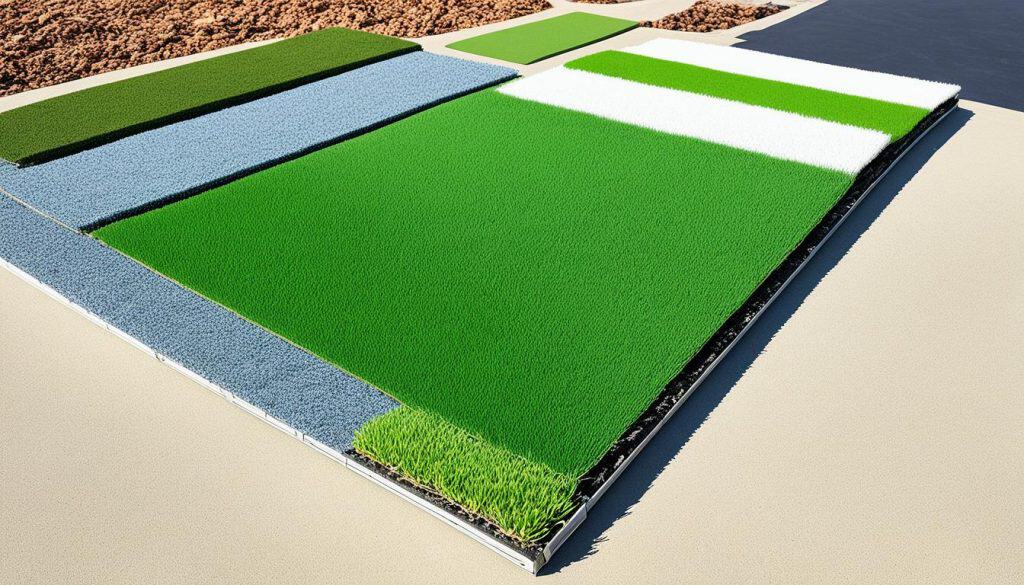
Exploring artificial turf means knowing the differences between types. There are polyethylene, polypropylene, and nylon turfs. Each has unique traits for different uses. I’ll help you choose based on your needs.
Polyethylene Turf
Polyethylene turf is great for homes on a budget but still looks great. It feels like real grass, perfect for yards. Prices range from $2 to $3 per square foot. Its look and feel make it a top choice for landscapes.
Polypropylene Turf
Polypropylene turf stands up well in moderate traffic and costs under $2 per square foot. However, it’s less resilient under intense use. It resists fading, ideal for play spaces or decorative areas.
Nylon Turf
Nylon turf is the top choice for busy areas, despite its higher cost of $3 to $5 per square foot. It’s tough, enduring heavy use and weather. Its realism makes it great for sports fields and other high-use settings.

In summary, each artificial turf type has its advantages. Your choice could be budget-friendly polyethylene, durable polypropylene, or tough nylon. Knowing these differences helps pick the right one for you.
The Role of Infill and Base Preparation
Installing artificial turf involves two key factors: infill and preparing the base. Choosing the right infill is crucial. It affects how well the grass lasts and performs. Infill keeps the turf stable and soft, and makes it look better. There are many kinds of infill, like crumb rubber and silica sand. Some are even eco-friendly. They help the grass stay good as new, longer.
Most of the time, you’ll need about two pounds of infill per square foot. The way you install it really matters. Before adding the infill, I brush up the grass blades. This helps spread the infill evenly. Doing this right makes the turf perform better and last longer, even with lots of use.
Getting the base right is just as important. A good base stops weeds and makes sure water drains well. I start by getting rid of old plants and making the ground even. I compact the soil to make a strong base. Also, I use a weed barrier below the turf. This keeps the lawn looking great for a long time.
These steps show why infill and a good base are crucial for artificial turf. Putting in the effort early on leads to a tough, beautiful lawn. It will fulfill your outdoor needs well.
Long-Term Benefits of Artificial Turf Investments
Investing in artificial turf brings benefits that last. It saves a lot of water. In cities like Phoenix, households use up to 70% of their water outside. Synthetic grass cuts this down. Homeowners save on water bills and help the environment.
Plus, it lowers ongoing costs significantly.
Water Conservation and Reduced Maintenance
Artificial turf also needs little upkeep, perfect for people on the go. While natural grass needs about 70 hours of care each year, fake grass needs only 5.
In 25 years, you could spend over $50,000 maintaining a grass lawn. On the other hand, artificial turf costs around $7,000 during the same period. So you save time and money for other activities.
Year-Round Aesthetic Appeal
Synthetic grass looks good all year. Real grass often turns brown and patchy with the seasons. But the fake stuff stays green and full.
It makes your property look better and can even increase its value. A nice lawn might boost home value by about 10%. So, artificial turf is good for your wallet and your view.

More Stories