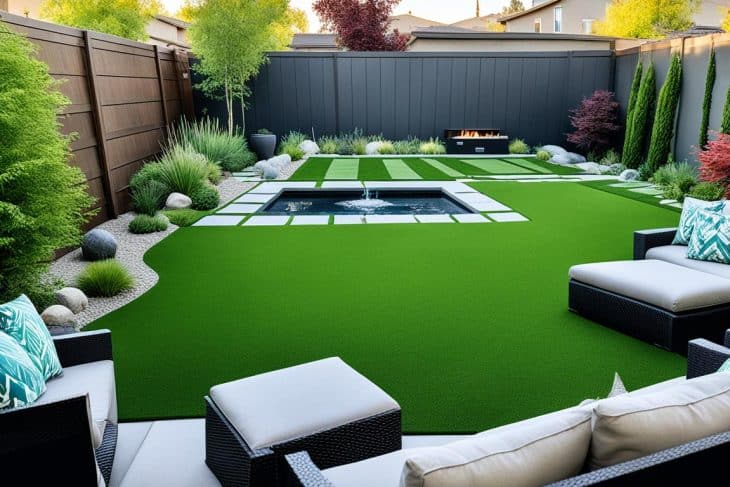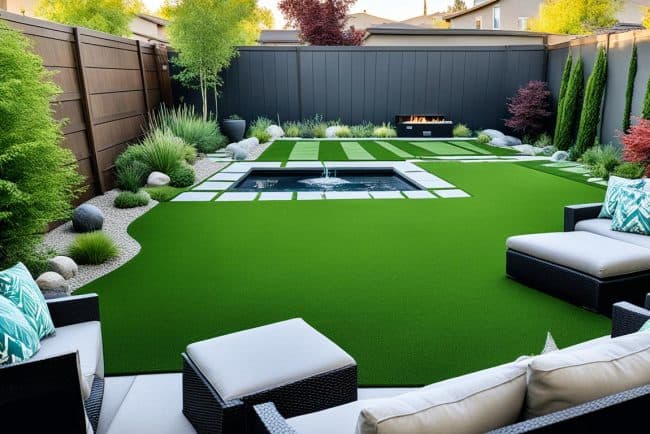
I dreamed of a lush green lawn at my new home. It would be a perfect place for kids to play and hosting summer barbecues. Yet, maintaining a grass lawn was harder than I thought. The chores like mowing, watering, and fighting weeds were overwhelming. It also cost a lot of money. That’s when I came across Turf Factory Direct and their affordable turf.
Their synthetic grass looked amazing and was wallet-friendly. It also meant saying goodbye to fertilizers and pesticides. This was important for keeping my family safe from chemicals. With these budget-friendly options, I found the perfect lawn solution. It met my needs without draining my wallet. Let’s explore the most affordable turf options that can beautify your outdoor area affordably.
Understanding the Costs of Affordable Turf Options
Exploring the costs of synthetic grass is key when looking for affordable turf options. It’s different based on material, yard size, and how it’s installed. Understanding these costs helps make a smart choice.
Breakdown of Synthetic Grass Costs
Synthetic grass prices change based on the turf type. Here’s a quick guide:
- Polypropylene turf: A budget-friendly choice, costs around $2 to $6.35 per square foot.
- Polyethylene turf: A good balance of quality and price, ranging from $2.20 to $4.10 per square foot.
- Nylon turf: It’s more expensive, $5 to $6.40 per square foot, but very durable.
- Blended turf: This type mixes quality with affordability.
Installing synthetic grass adds more to the cost, usually $3.45 to $12 per square foot. For a project around 500 square feet, total installation costs are about $7,400 to $9,350 for mid-range work. Extra fees for labor could be added for areas with unusual shapes or slopes.
Long-term Financial Benefits of Artificial Turf
Artificial turf brings big long-term savings. It cuts water use, which means lower utility bills. While natural lawns cost $1,500 to $6,000 yearly, artificial turf needs only $250 to $350 for upkeep.
Since it stands up well to heavy use, artificial turf stays green all year. And it can last 15 to 20 years with good care. All this makes artificial turf a smart long-term investment for homeowners.
Affordable Turf Guide: Grass Alternatives for Your Lawn
Looking into grass alternatives helps create a lively and green place. This means less work and money spent on upkeep. I can pick from various plants that look like grass. This lets me change how my lawn looks while saving on resources.
Benefits of Choosing Low-Maintenance Ground Covers
Choosing low-maintenance ground covers over regular grass has many perks. Let’s look at some:
- Reduced Water Use: These plants need less water than grass. This means I can spend less on water bills.
- No Mowing: Plants like golden carpet sedum and dwarf cinquefoil don’t need mowing. This saves my time and effort.
- Aesthetic Appeal: These additions bring unique colors and textures to my yard, making it stand out.
- Environmental Benefits: By choosing these, I help the environment. They give homes to helpful insects and pollinators.
Here are some great choices for my lawn:
- Thyme: Costs between $3 and $6 per plant. Thyme spreads around 6 inches a year, slowly adding beauty to my space.
- Golden Creeping Jenny: This one stays below 3 inches tall but spreads fast. Its bright green leaves can be kept in check with edges.
- Dwarf Cinquefoil: Grows 3 to 4 inches high and spreads about a foot. It blooms with lovely gold flowers.
- Golden Carpet Sedum: A low-growing succulent, only reaching 4 inches high. It’s easy to care for and doesn’t need much water.
- Dutch White Clover: Does well even in poor soil and shady spots. It’s a low-effort choice for my lawn.
Plants that Mimic the Look of Grass
For those who want their lawn to look like traditional grass without the hard work, there are some great options. These choices are not only nice looking but also useful for the lawn.
- Clover Lawn: This plant improves soil health and stays green all year. It doesn’t need much water, making it a top pick.
- Herb Lawns: Using herbs like creeping thyme and oregano is smart. They can stand a bit of walking on and taste great.
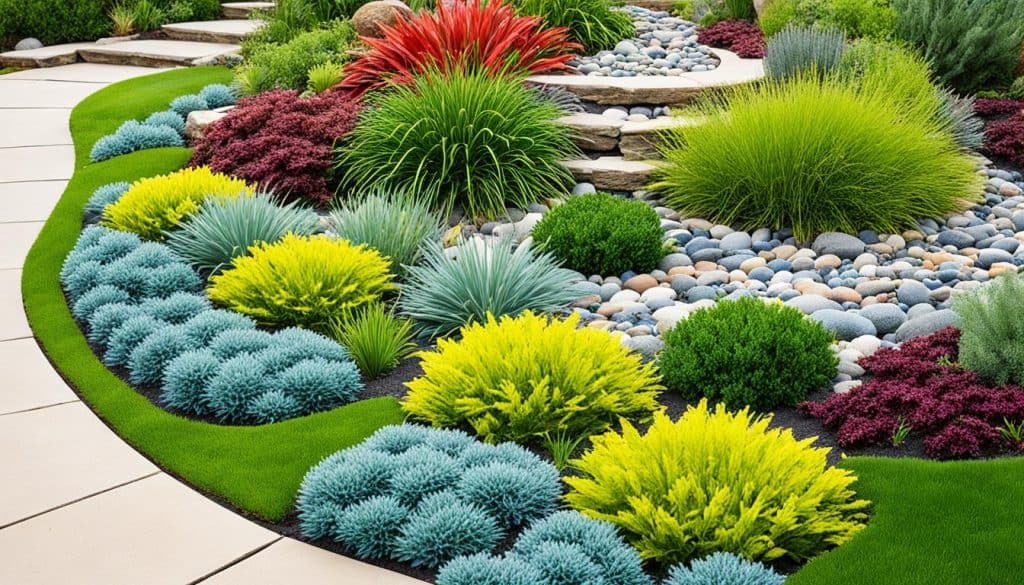
- Rock Gardens: Though different from usual lawns, rock gardens are stunning. They also don’t ask for much care.
- Meadows: Starting a meadow takes time but is worth it. It boosts local wildlife and creates a welcoming space.
Tips for Budget Planning Your Turf Investment
Planning your garden’s turf budget involves a few key steps. It’s important to get the most from your investment and avoid waste. We’ll look at how to measure your needs accurately. This way, you can save money, whether you’re hiring help or doing it yourself.
Estimating Size and Quantity Needed
Knowing how much turf you need is vital. First, measure your intended area accurately. Be sure to account for variations by taking several measurements. This will give you a clear idea of the square footage required.
Don’t forget to consider obstacles, slopes, and walkways. You should:
- Mark the area with stakes and string for exact boundaries.
- Multiply length by width to determine the square footage.
- Add an extra 10% for potential mistakes or cuts.
This planning stage helps prevent buying too much. Thus, you make a smart investment in your turf project.
Understanding Installation Costs vs. DIY Options
Deciding between professional installation or doing it yourself is big. Hiring pros might be pricier but saves time and guarantees quality. DIY can cut costs significantly by avoiding labor charges. Consider:
- Removing old grass by hand is cheap and effective.
- A sod cutter rental, costing $70 to $100 a day, makes big jobs easier.
- Herbicides, at $20 to $30 a gallon, offer an easier option but slow you down by two weeks.
Turf prices vary, from $5 to $20 per square foot. Professional help can range from $4 to $25 per square foot. Infill material choice also affects your budget. Silica sand is a budget-friendly option, while organic choices may cost more. This balance is key to meeting your long-term budget goals.
Best Budget-Friendly Synthetic Grass Options
Looking for the best budget-friendly synthetic grass means considering different types. Since the 1960s, there’s been a huge increase in choices. This includes options for homes, playgrounds, and spaces for pets. Polyethylene turf is a favorite for its balance of cost and versatility. It’s priced between $2.25 and $4.50 per square foot. On the other hand, nylon grass offers more durability. However, it’s pricier, costing between $5.05 to $7 per square foot.
Types of Synthetic Grass and Their Price Points
When picking synthetic grass, it’s more than just price to think about. The grass’s face weight, pile height, and density are key to finding the right fit. For example, EasyTurf’s prices range from $1.90 to $4.75 per square foot. This makes it a great choice for those watching their budget. SYNLawn, which costs between $2.25 to $7.50 per square foot, might suit those seeking quality without overspending. Paying attention to these details helps make sure the investment is smart.
How to Find High-Quality Repurposed Turf
Finding high-quality repurposed turf is a smart move for budget watchers. It can cut costs by 50% to 75% compared to buying new. I often look to local suppliers or online markets for lightly used synthetic grass. It’s important to check the turf’s condition and the backing weight before buying. This ensures it still looks good and lasts long. With some research, finding affordable options that make lawns look great is entirely possible.